
Fall arrives inside an apartment before it shows up in the decor. Evening comes earlier, corners lose definition, and a cool ceiling bulb can make a familiar room feel flat. The highest-leverage seasonal change is already waiting in the sockets: warmer light with enough range to soften as the night settles in.
Fix the light first. Textiles and autumn colour then have something warm to work with, while the room keeps its breathing space. This order also protects a small budget because bulbs, pillow covers, branches, and throws can change the mood without asking for renovation or bulky seasonal furniture.
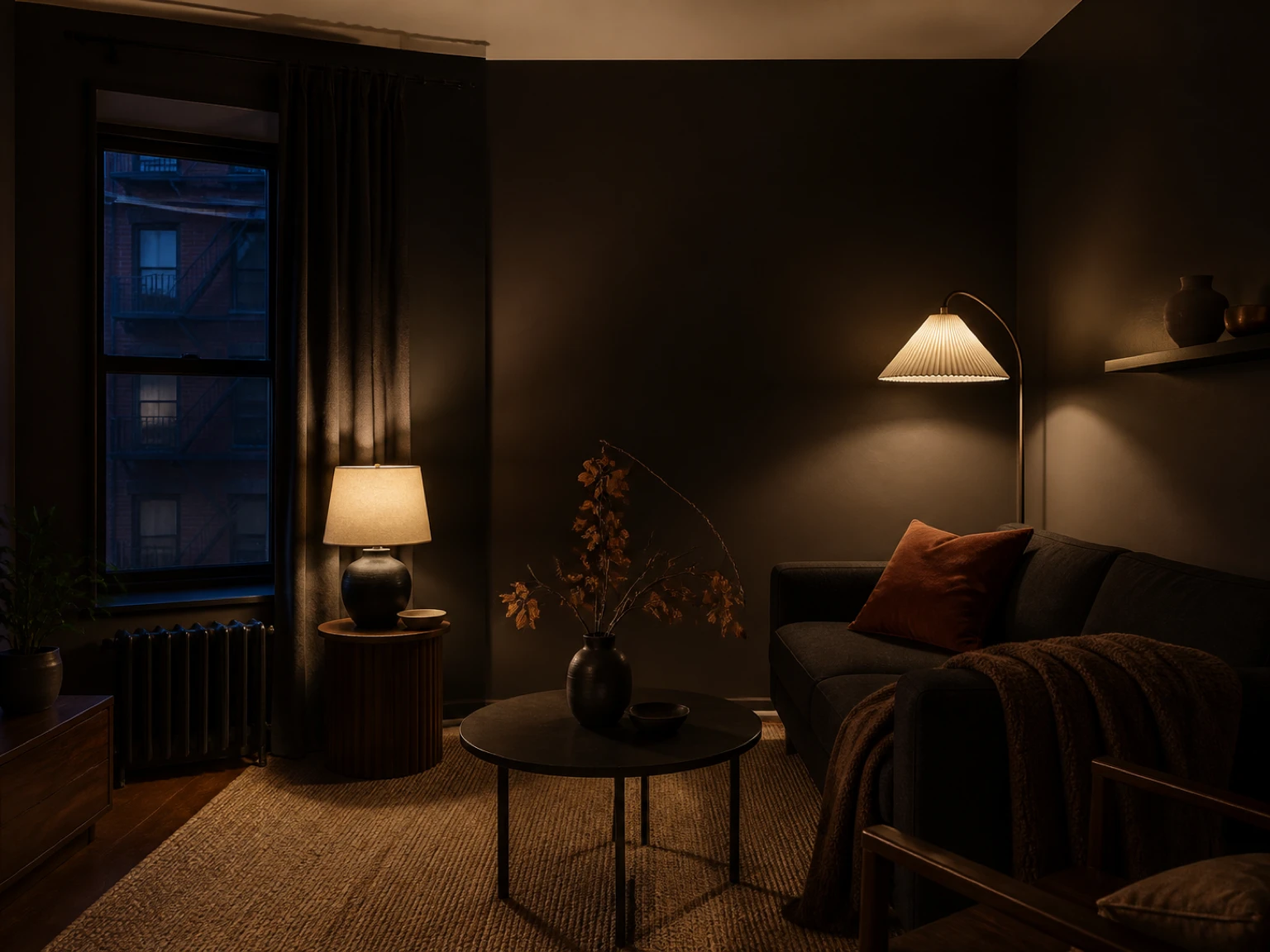
Set the evening light before adding decor
1. Warm the bulb you use most
Start with the lamp that stays on through the evening. A warm-white bulb helps wood, amber glass, rust fabric, and cream textiles read as one palette. Colour temperature describes this visible warmth, and the Hue White bulb is published at a colour temperature 2700 K. That warm white sits at the amber end of the range, which is why it flatters an autumn palette. Light output answers a separate question, so choose the colour first and judge brightness against the work done near that lamp.
2. Choose a dimming range that reaches low
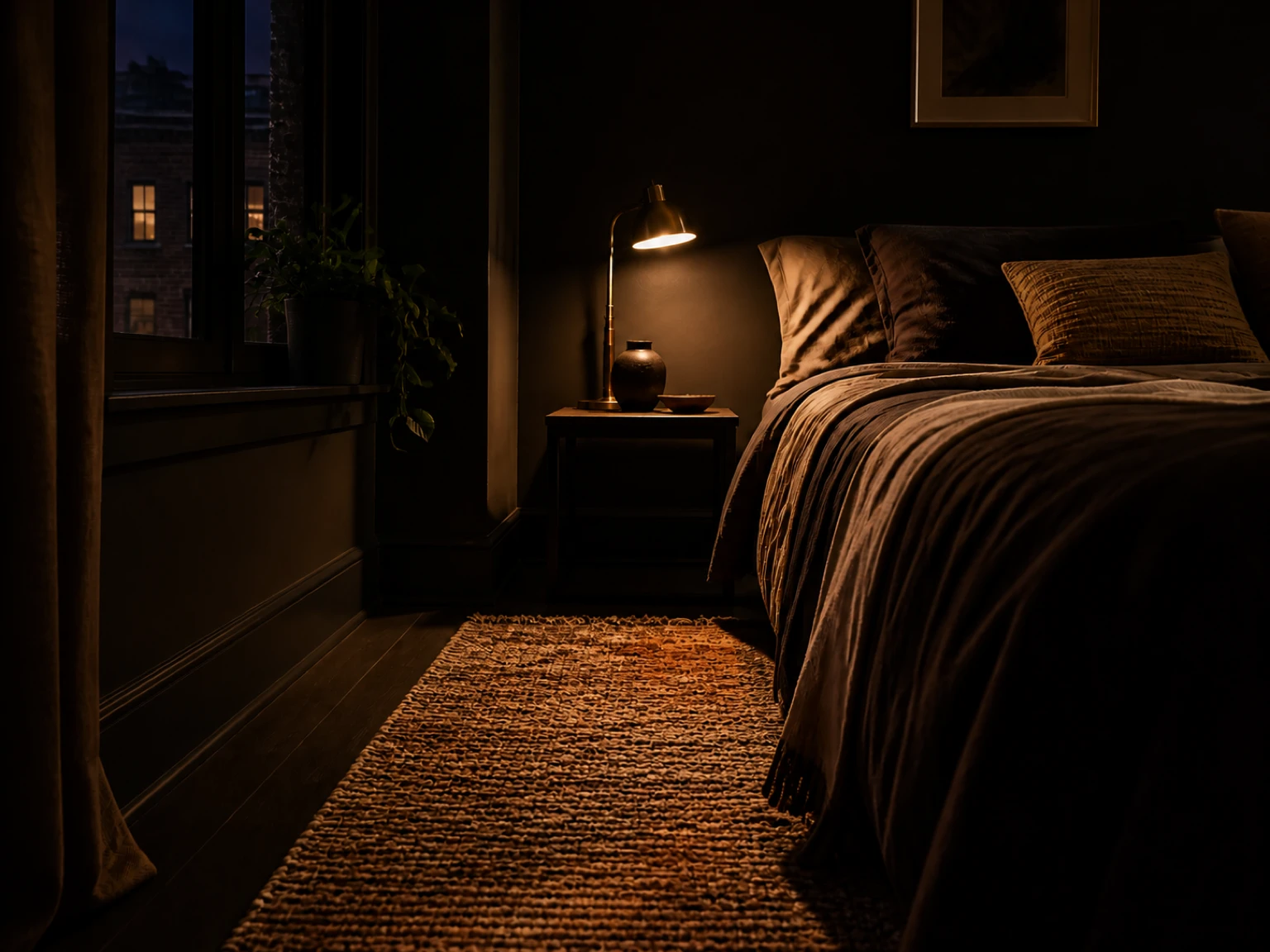
A useful fall lamp must become gentle after dinner. The same Hue White bulb is dimmable to 5% brightness. That lower brightness setting lets a table lamp stay present without washing out shadows, candles, or a window view. Check the lamp, switch, and bulb for dimming compatibility before purchase.
Place control within easy reach of the seat. A perfect setting has little value when adjustment means crossing a dark room or searching behind furniture. A simple routine works best: brighter while the room is active, then lower when the evening becomes slower.
Watch the room at sunset before moving any furniture. The first corner to disappear usually needs local light, while a bright patch near the ceiling often needs less. This small observation keeps new lamps out of walkways and sends the available light toward a chair, counter, or shelf that already has a purpose.
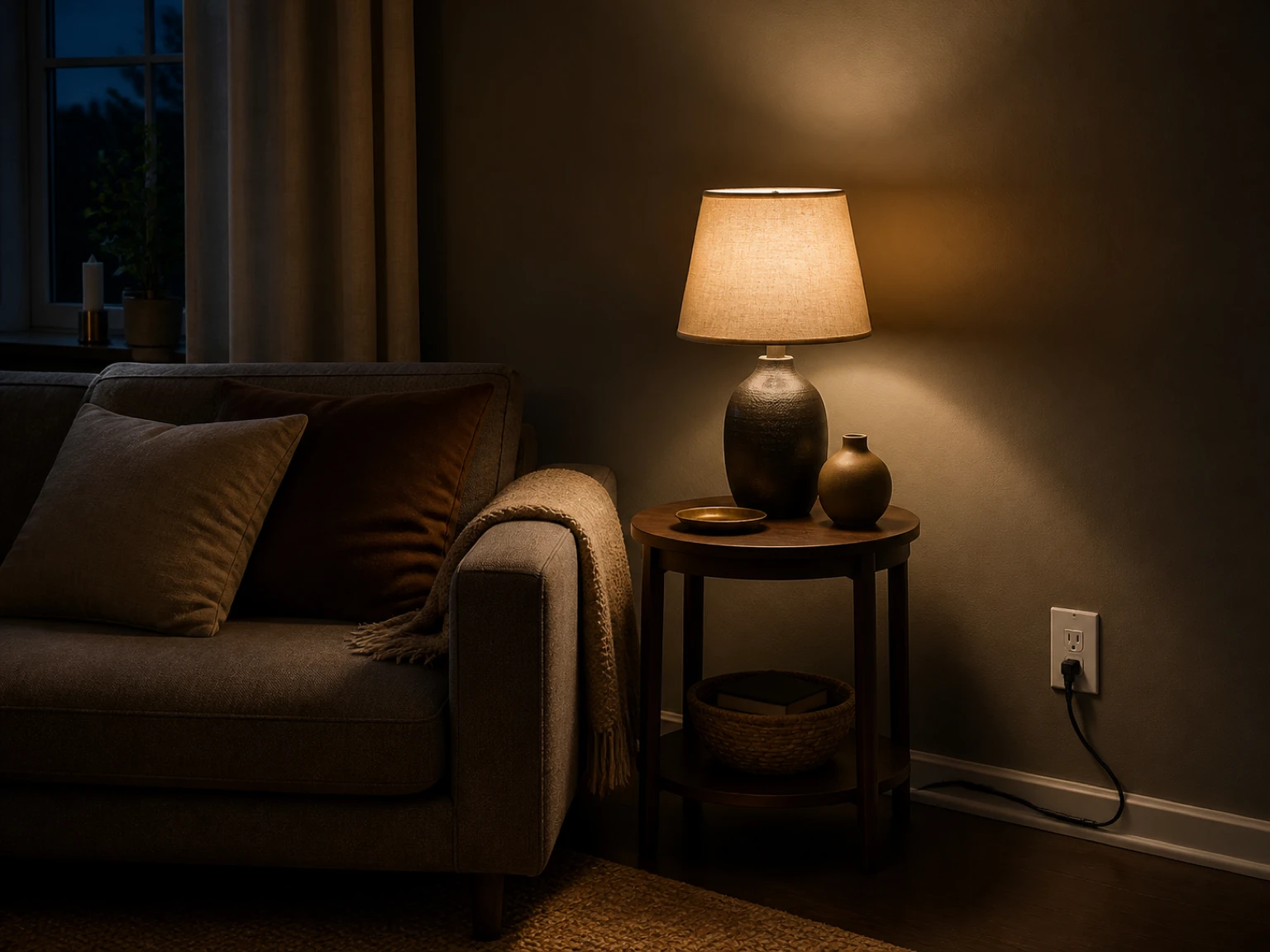
3. Match brightness to the room's work
Brightness still matters when a lamp supports reading, cooking, or tidying. The Hue White bulb reaches up to 1100 lumen. That published light output belongs in a brightness decision. A shade, fixture, and wall colour will also affect how bright the room feels, so judge the whole lamp from the seat or work surface it serves.
4. Use adjustable colour only where it helps
Some rooms need warm evening light and clearer task light from the same socket. An adjustable white bulb can cover both uses. The Hue White and Color Ambiance bulb is listed at 810 lumen. Colour control suits a desk beside a sofa or a kitchen lamp used for preparation and late meals. A room used only for relaxing can stay with a fixed warm white.
5. Bring light below eye level
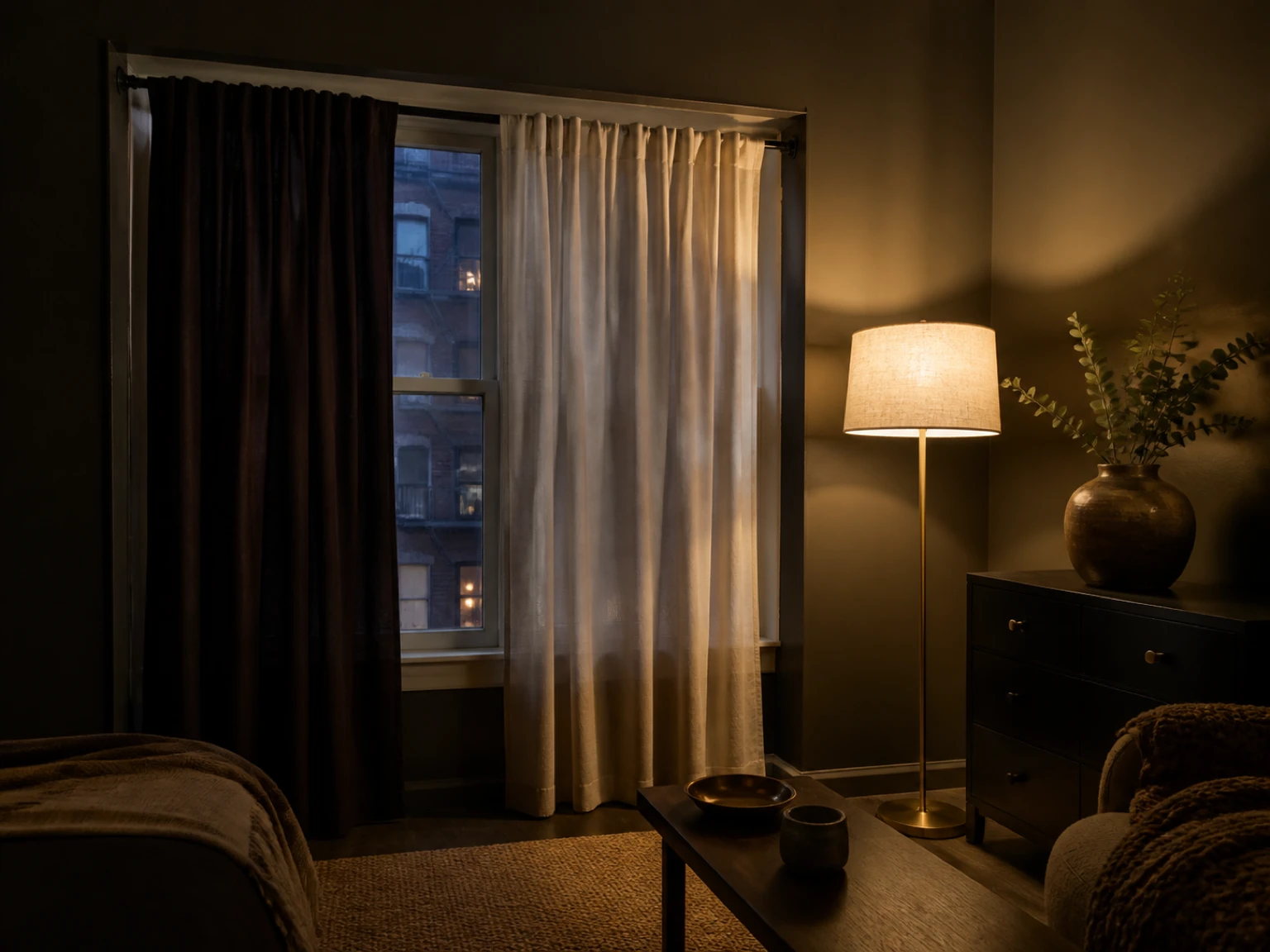
Ceiling light spreads one broad layer across every surface. Fall feels better when light gathers near the activities already in the room. Put a lamp beside the reading chair, on the kitchen counter's dry corner, or behind a leafy plant. The lower source makes the ceiling recede and gives a small room depth after dark.
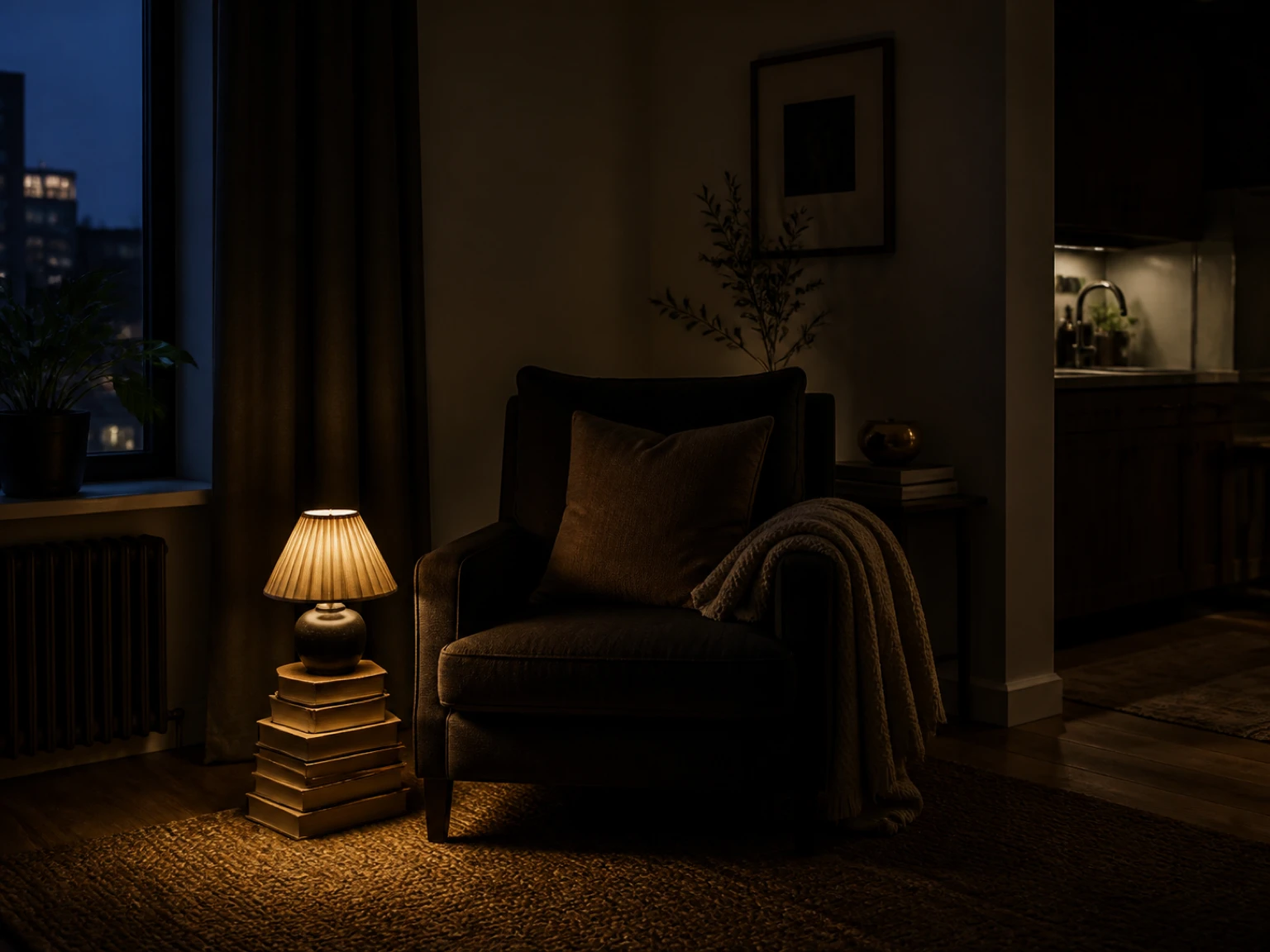
Let soft layers carry the season
6. Put autumn colour on removable covers
Pillow covers hold colour without creating another object to store. Choose shades already visible in the room: tobacco brown from a wood table, rust from a rug, or olive from a plant. The repeated colour looks settled because it has an anchor. Fold the regular covers inside the seasonal ones so both stay together.
7. Add one throw with visible texture
A throw earns its space through warmth and surface texture. Looser wool, brushed cotton, or a soft rib catches side light better than a smooth synthetic fleece. Drape it where somebody can use it, with a relaxed fold over the sofa arm or bed foot. The useful placement keeps the room from feeling staged.
Texture needs contrast to show. Pair a nubby throw with a plain sofa, or place a smoother cover beside a coarse woven basket. Similar surfaces merge under low light. A careful contrast gives the lamp something to reveal without adding another colour or pattern to the room.
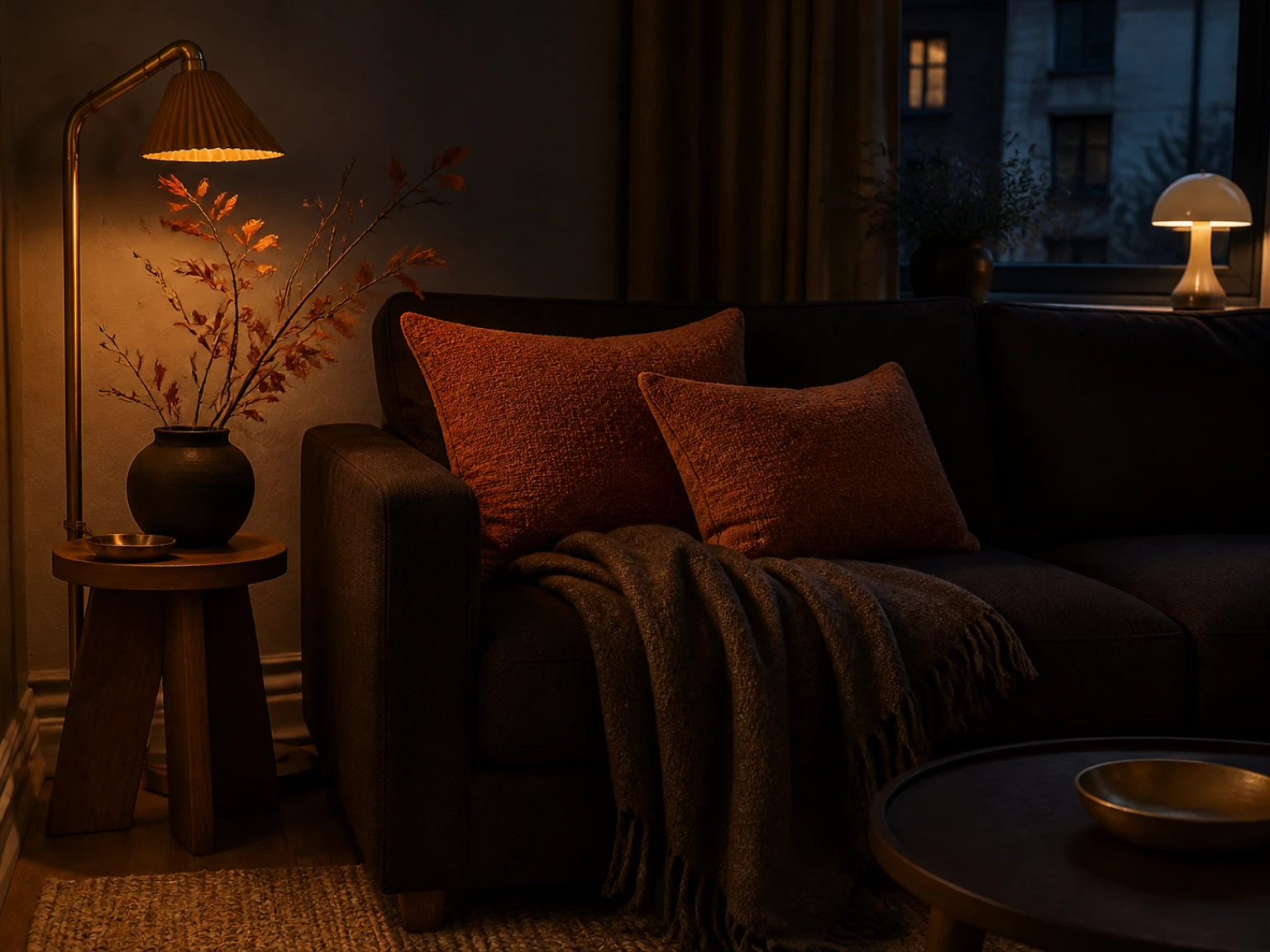
8. Deepen the window with fabric
Windows turn into dark rectangles earlier in autumn. Fabric at the sides softens that contrast and gives lamp light somewhere to land. Use removable curtain hardware where the lease permits it, and keep panels clear of heaters and vents. Existing curtains can also gain weight through a lined inner layer that leaves the visible fabric unchanged.
9. Warm the floor where feet stop
A small rug works hardest beside the bed, under a reading chair, or at the kitchen sink. These are pause points, so softness is felt instead of merely seen. Use a low profile where doors swing. In an open room, let the rug belong to one activity rather than float between several zones.
Make seasonal swaps that store easily
10. Use clipped branches as the main arrangement
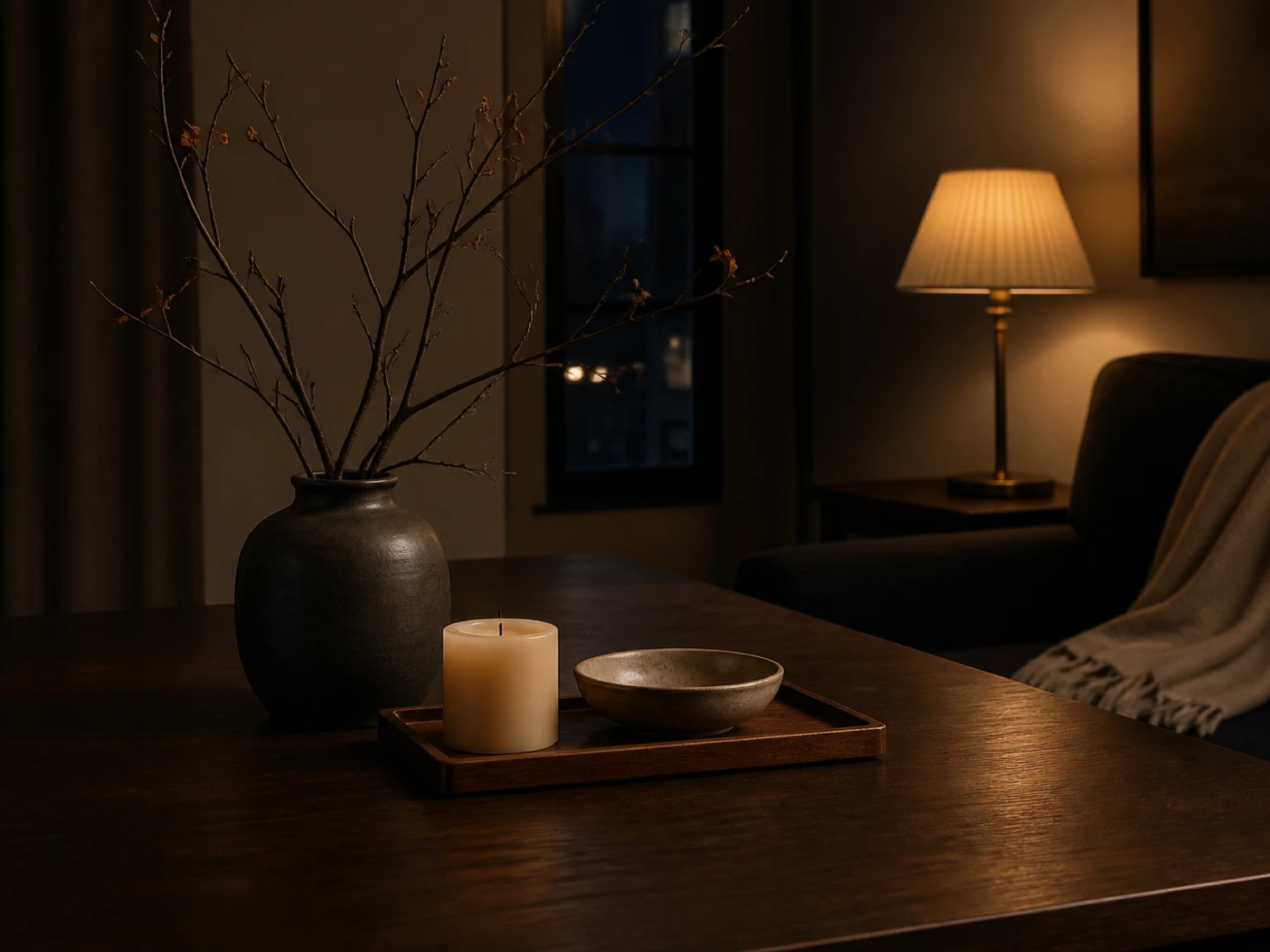
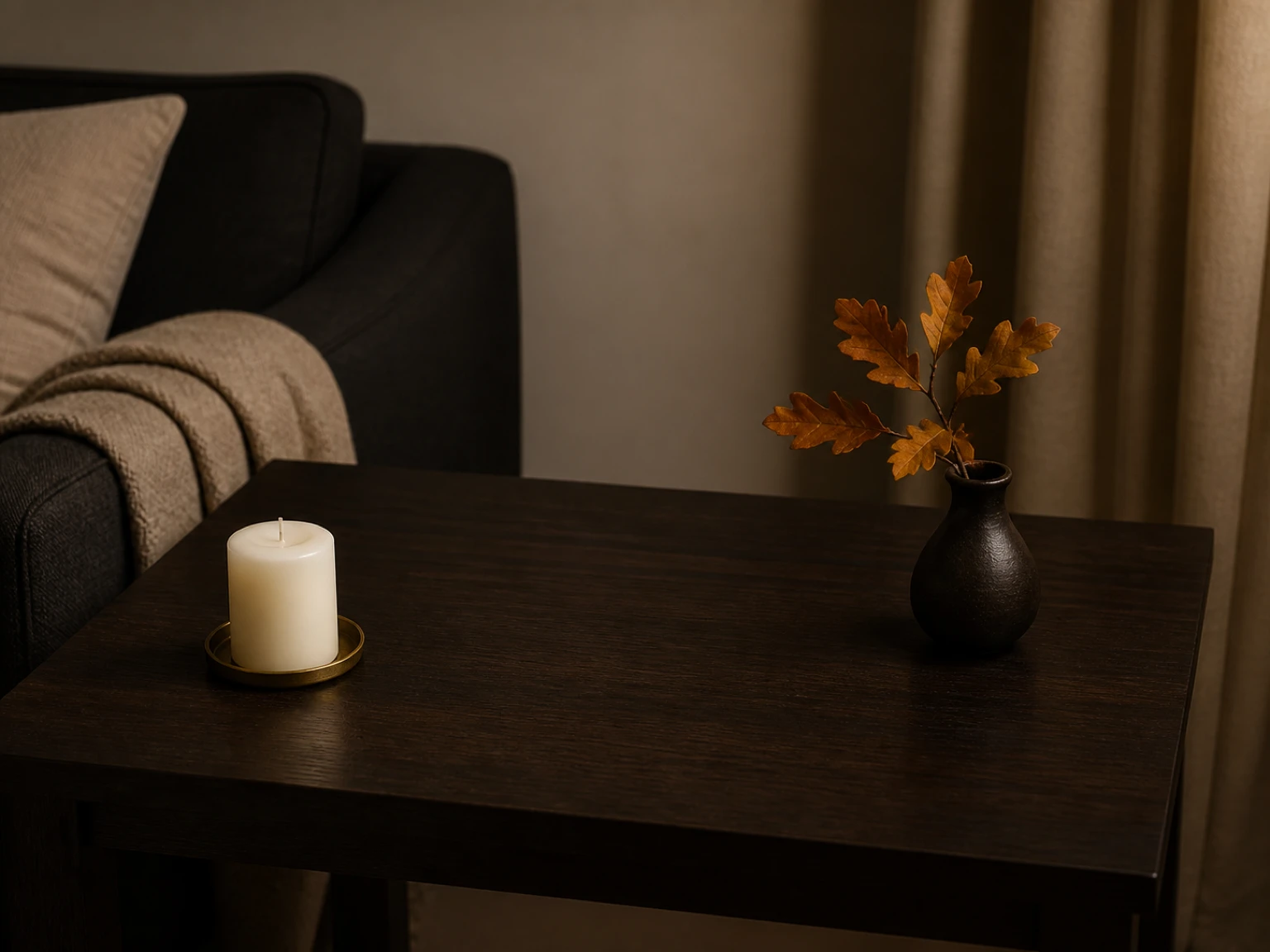
A branch has height, irregular shape, and open space between its leaves. That makes it useful in a small room, where a dense arrangement can become a visual block. Set it in a stable vase on a clear surface. Bare stems also work later in the season and store with almost no volume when dry.
11. Gather small objects on a warm tray
Seasonal objects look scattered when each occupies a separate patch of table. A wood, aged-metal, or dark woven tray gives them one boundary. Use it for the candle, matches, and the small bowl already present in the room. When the table is needed, the whole arrangement moves at once.
12. Swap the art inside an existing frame
The frame already owns a place on the wall or shelf, so the insert can carry the season. Try a landscape, a botanical study, or an abstract print in the room's darker accent colour. Store the usual print flat behind it. This swap adds no new hardware and asks for almost no storage.
13. Give the entry a softer landing
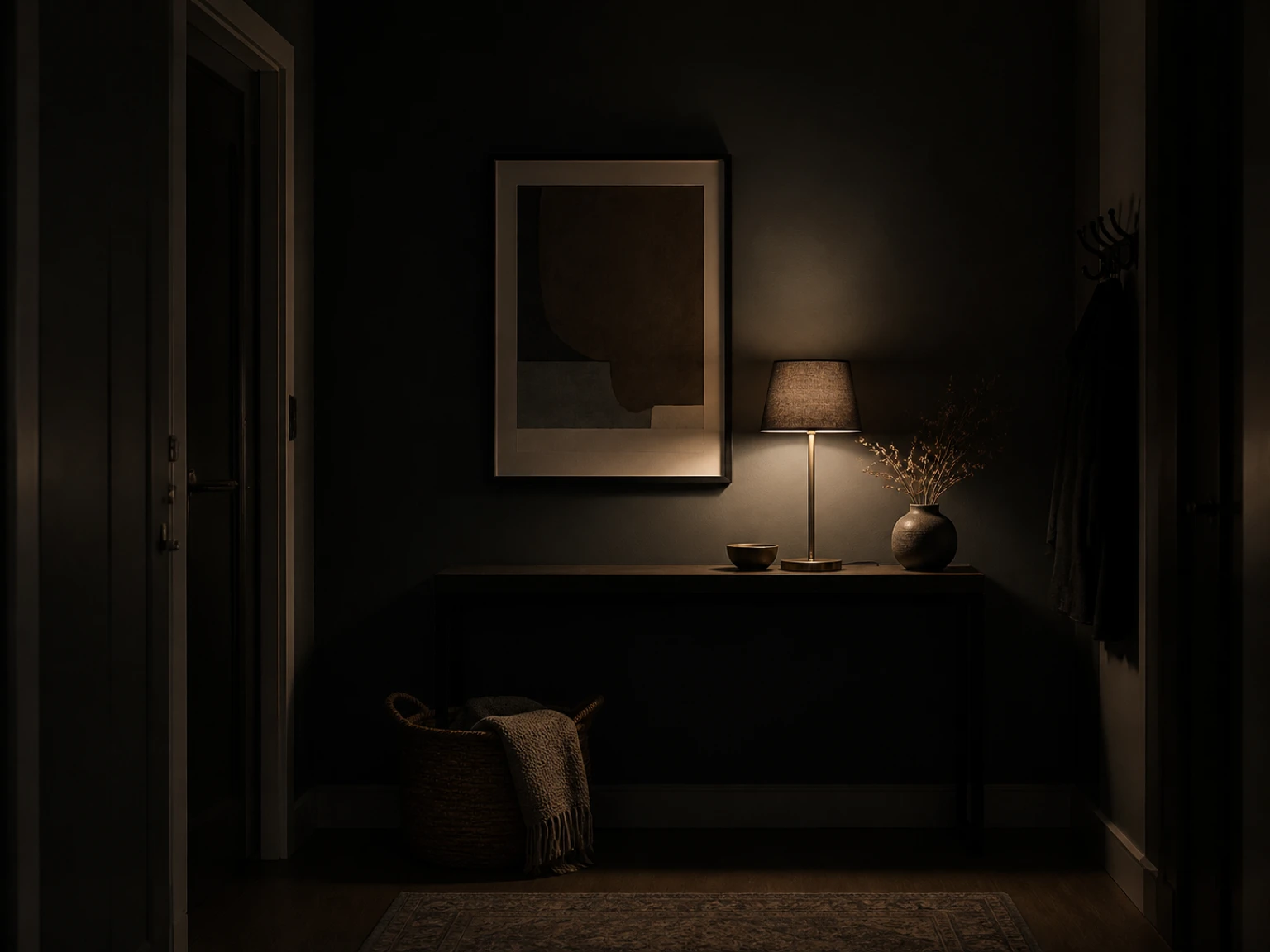
Autumn brings jackets, damp shoes, and bags into a narrow entry. Give that traffic a deliberate landing with the basket, bench, or hooks already available. A washable textile and a warm lamp make the area feel seasonal while still doing practical work. Keep the walking path open and the floor easy to clean.
Keep the small room calm
14. Leave dark surfaces partly open
Dark rooms need empty surface around seasonal pieces. Clear the side table before adding a candle, and give the branch space around its outline. The gaps let warm light separate each object from the background. They also protect the apartment's daily functions, because a table must still hold a drink, book, or set of keys.
15. Set a storage limit before buying
Choose the storage space first: a lidded basket, a drawer, or one shelf. Every fall item must return there when the season ends. This boundary favours covers, folded textiles, flat prints, and small natural pieces. It also makes each new purchase compete with something already owned, which keeps a compact home from collecting a second hidden household.
Use the same limit during setup. Stop when the chosen textiles and light have changed the room from the main seat. A small apartment shows additions quickly, especially after dark. Space around the final branch or candle keeps the result easy to clean and leaves room for ordinary life.
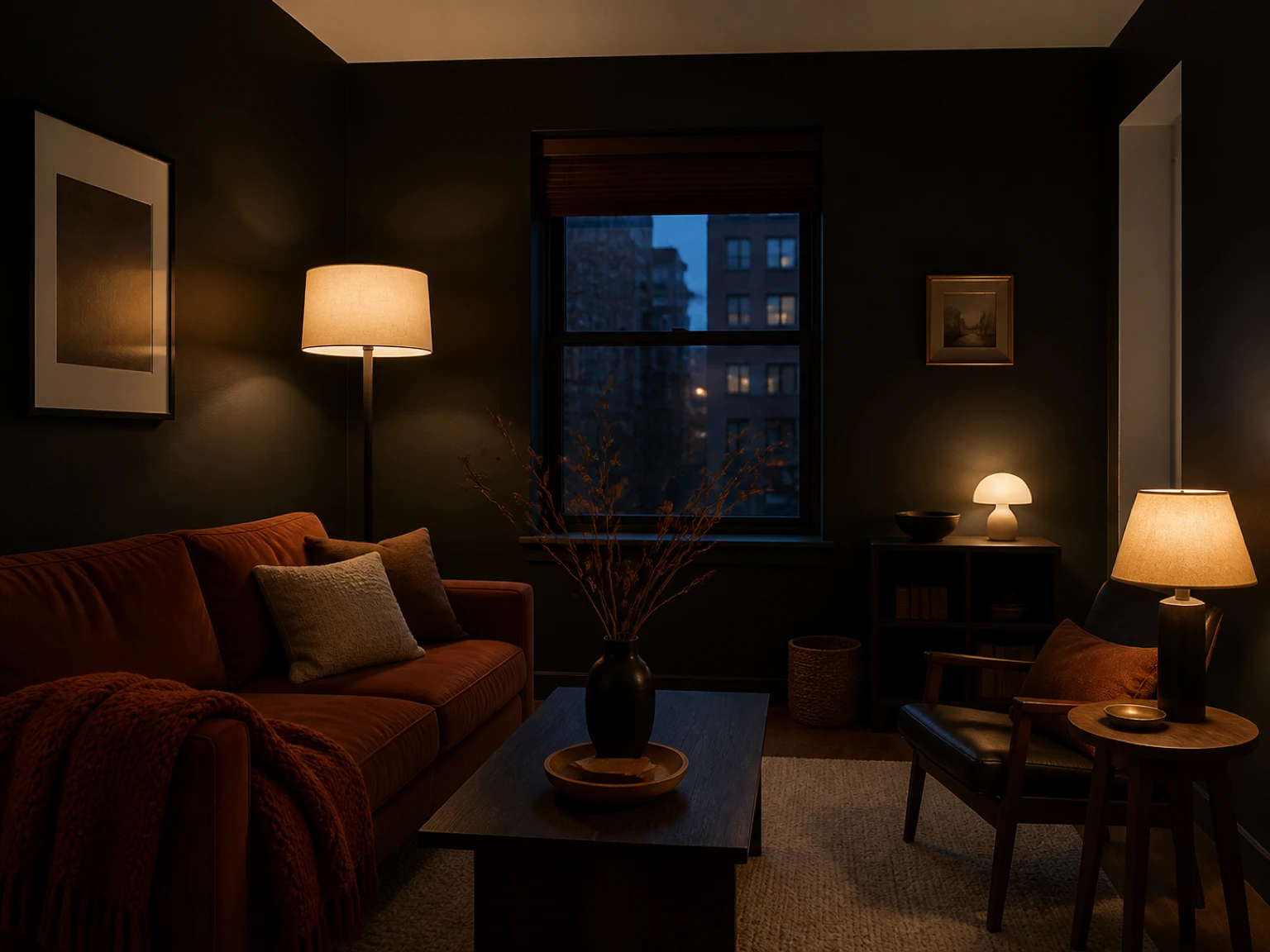
The sequence is simple. Tune the evening bulb, place light near the room's real activities, and let useful fabric carry most of the colour. Add branches, framed paper, or a small tray only after those layers feel settled. The apartment will read as autumnal at night and remain easy to live in during the day.
The finished-rental fall rule: warm the sockets first, lower the light toward the places people sit, and make every seasonal layer earn its storage space. Continue with the warm-lighting guide, the moody bedroom guide, the no-damage curtain guide, or the renter-friendly wall guide.