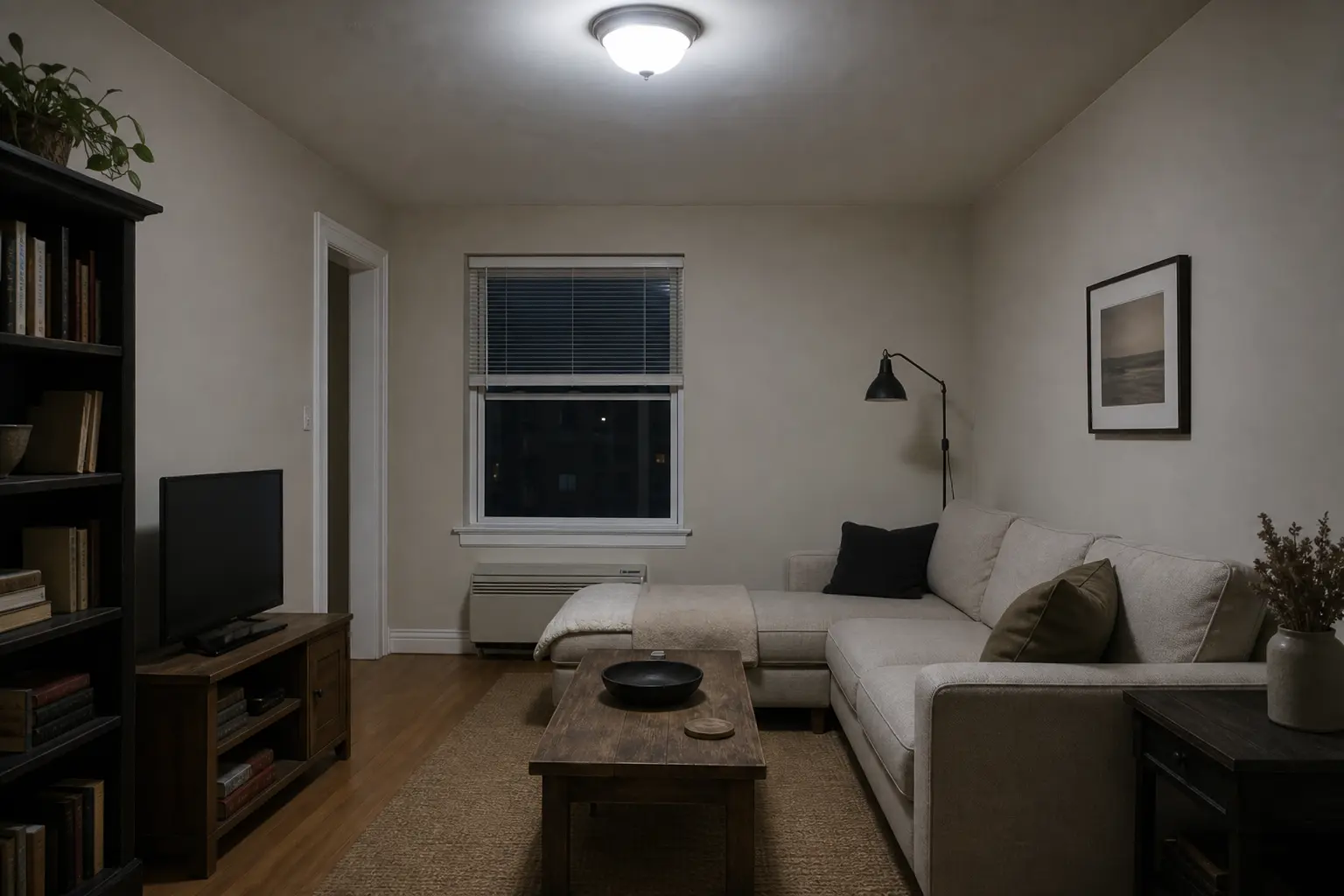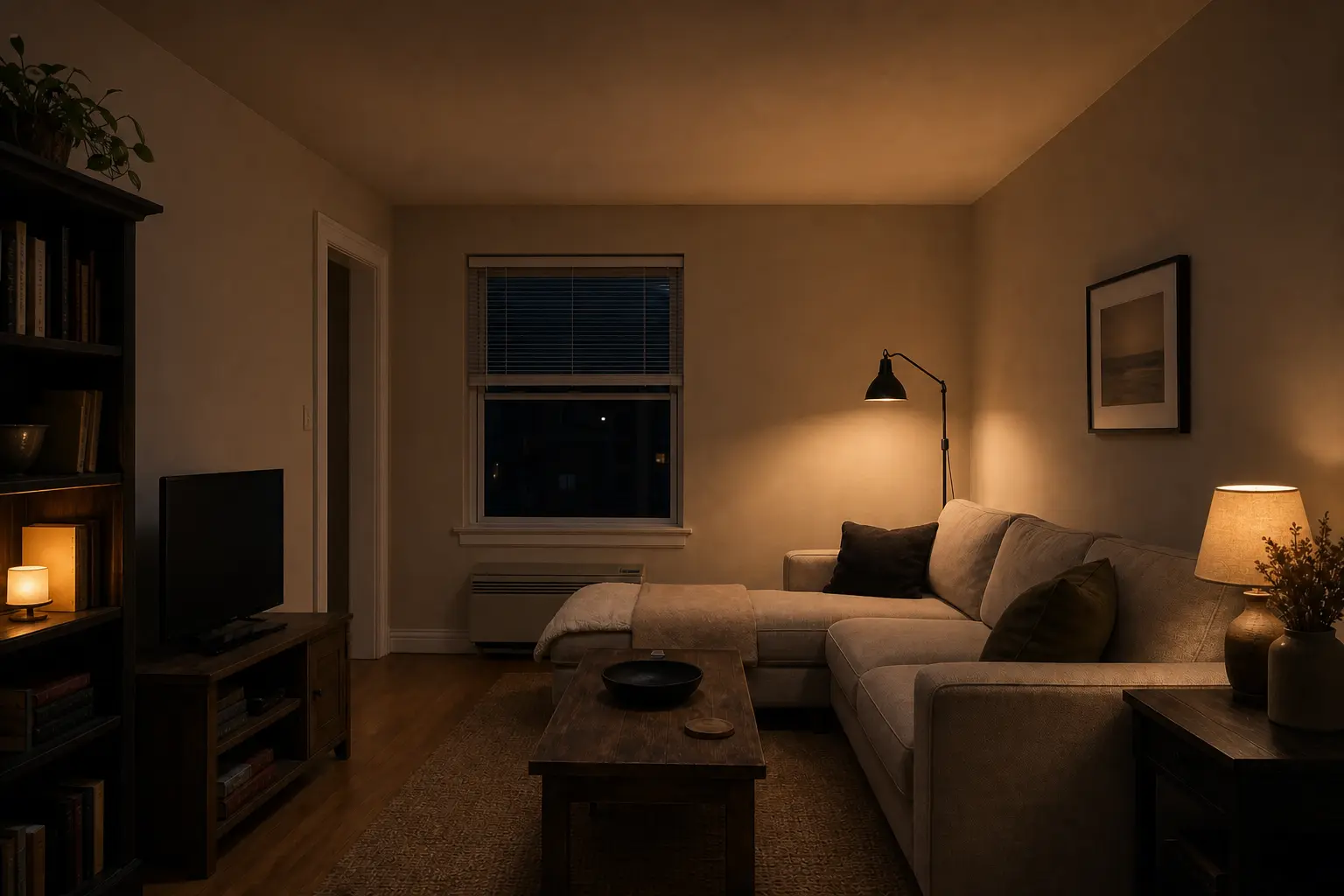
A small room can be furnished well and still feel uncomfortable because one bright ceiling fixture flattens every surface. It lights the floor, the sofa, and your face at the same intensity, leaving nowhere for the eye to rest. The fastest fix is not a darker lampshade or a trendy bulb by itself. It is a simple lighting hierarchy: ambient light for the room, task light where you work, and one low accent that gives the room depth.
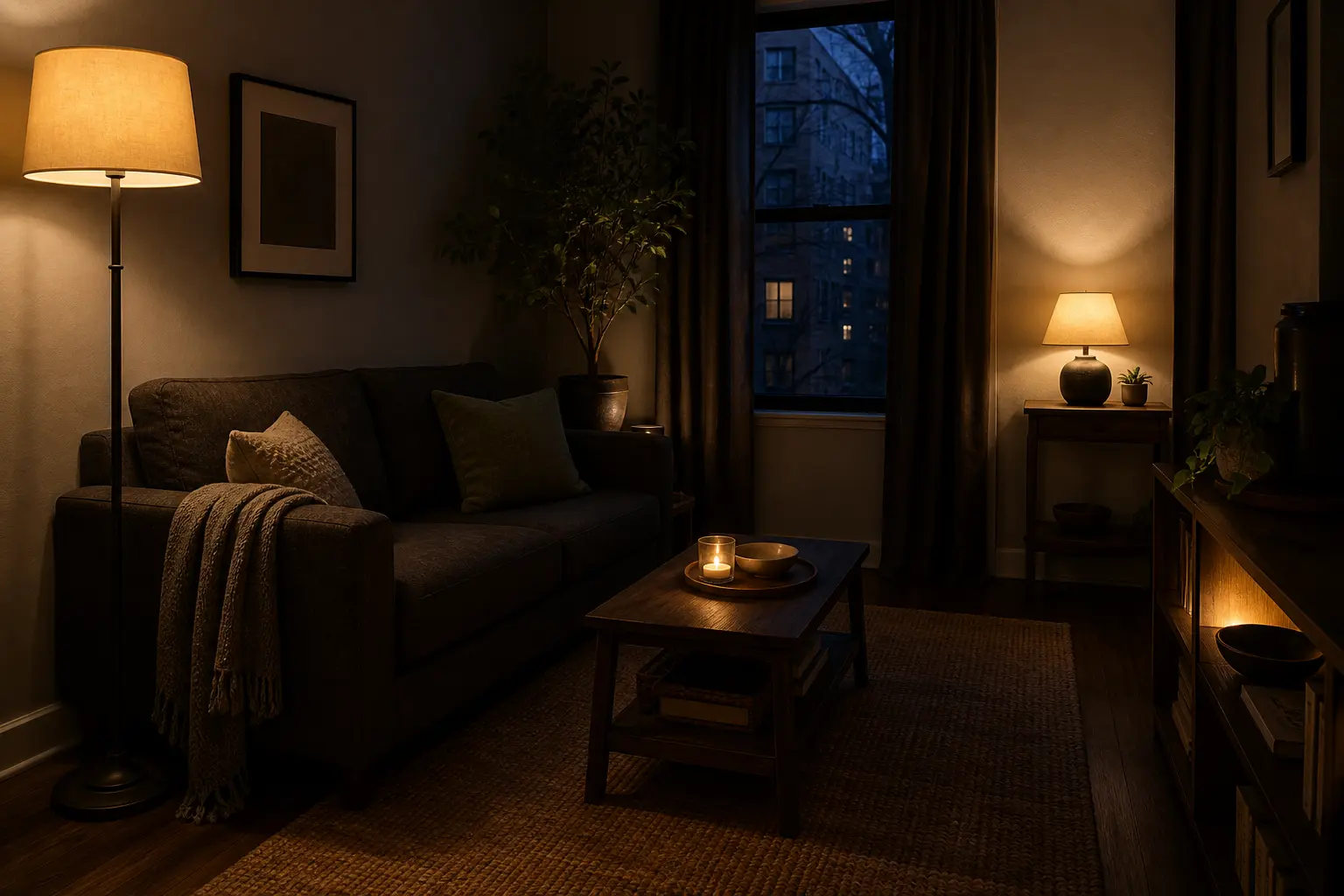
Aim for three light sources at different heights. Bulbs around 2200K to 3000K feel warm; 2700K is a reliable start. Keep task light useful and use dimmers or lower-lumen bulbs for mood. Match every bulb’s base, enclosure rating, and wattage to the fixture instructions.
Fix the color and control first
1. Replace mismatched bulbs with one warm family
At night, note every visible bulb. If one is icy and another orange, the room feels accidental. Choose one color temperature for ambient fixtures, usually 2700K, and reserve 3000K for a desk or food-prep task. Compare lumens for brightness. Frosted bulbs soften exposed glare.
2. Use lower-lumen bulbs in exposed sockets
A clear bulb can be painful at eye level even when warm. Use a lower-lumen frosted globe or a shade that hides the bright point. Never exceed the fixture’s maximum wattage, and use an enclosed-rated bulb when the shade traps heat.
3. Add plug-in dimmers where they are compatible
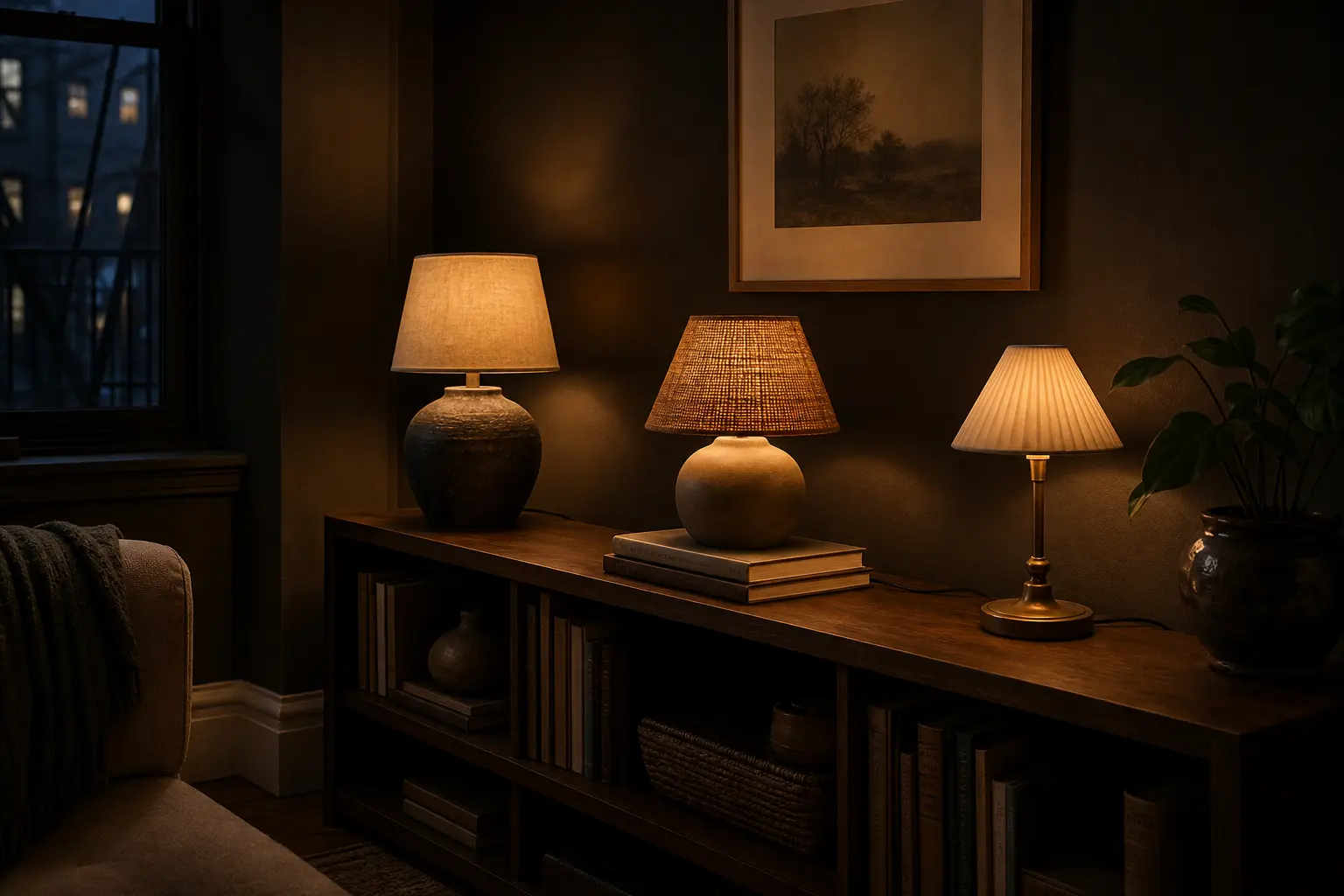
A cord dimmer can turn one inexpensive lamp into work light at 6 p.m. and background light at 10 p.m. Confirm that both the lamp and LED bulb are dimmable and that the dimmer supports the bulb type and load. Buzzing, flicker, erratic shutoff, or a hot control means the combination is wrong. For non-dimmable fixtures, a smart plug can provide schedules but cannot safely create dimming on its own.
Add light where the room actually needs it
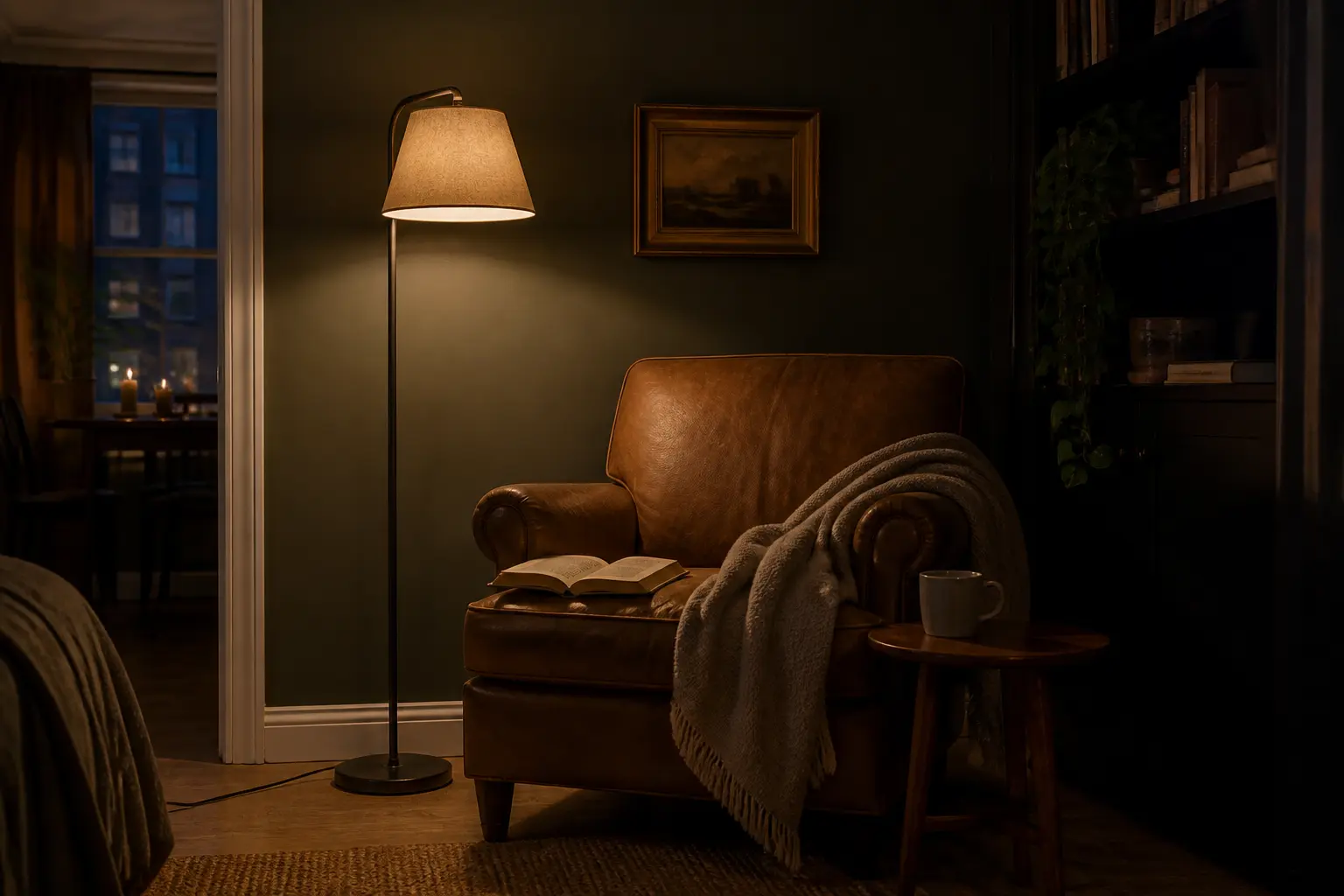
4. Put a shaded floor lamp beside the main seat
A slim floor lamp can replace overhead light for conversation and provide reading light without consuming a table. Choose a stable base that fits fully behind or beside the chair, not in the walking line. An opaque shade directs light down; a paper or fabric shade spreads it. Measure shade diameter as carefully as base footprint in a tight room.
5. Use a small table lamp on the far side of the room
The far corner often feels dead. A compact lamp on a bookshelf, cabinet, or deep windowsill pulls the eye through the room. Its job is not to be bright; 200 to 450 lumens may be enough. Keep fabric and curtains clear.
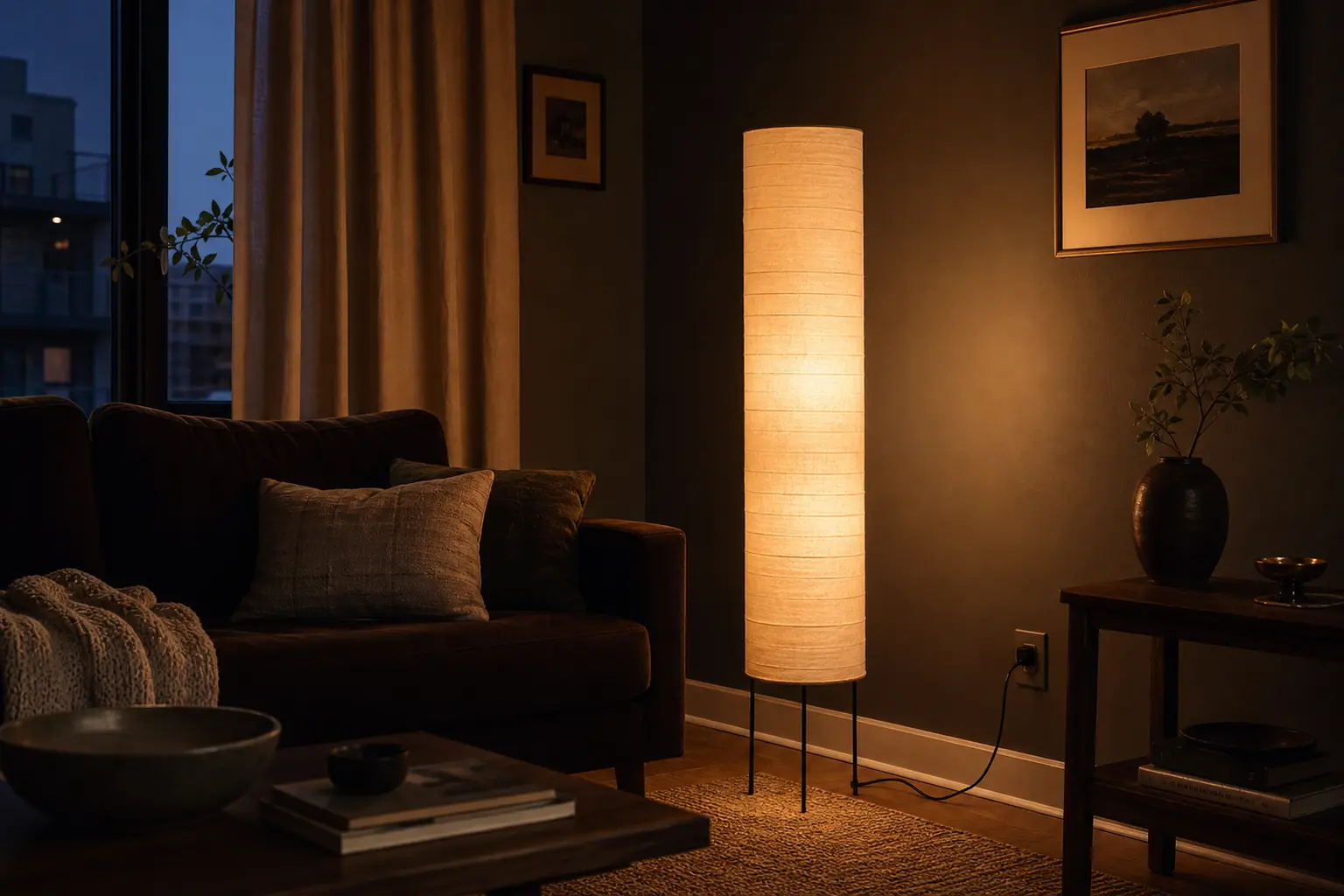
6. Choose a paper lantern floor lamp for diffuse glow
Paper shades give an inexpensive fixture a large, soft presence. Look for a stable stand, listed electrical assembly, and bulb clearance. Use the maker-recommended LED and replace torn or browned paper. A narrow paper lamp can fit where a broad shade cannot.
7. Tuck a mini lamp onto the kitchen counter
A small shaded lamp can make a rental kitchen feel less clinical after dinner. Place it in a dry zone away from the sink, cooktop, steam, and food-prep cutting area. The cord should reach an outlet without crossing water or a walkway. Treat it as evening ambient light, not a substitute for safe task lighting.
8. Light the lowest shelf
A tiny plug-in or rechargeable lamp on a low shelf creates a glow below eye level, making a cramped room feel layered. Hide the fixture behind a ceramic object rather than exposing a bare LED strip. Rechargeable options work for short evening use; plug-in models are better if the light needs to operate for hours every day.
Borrow the look of built-in lighting
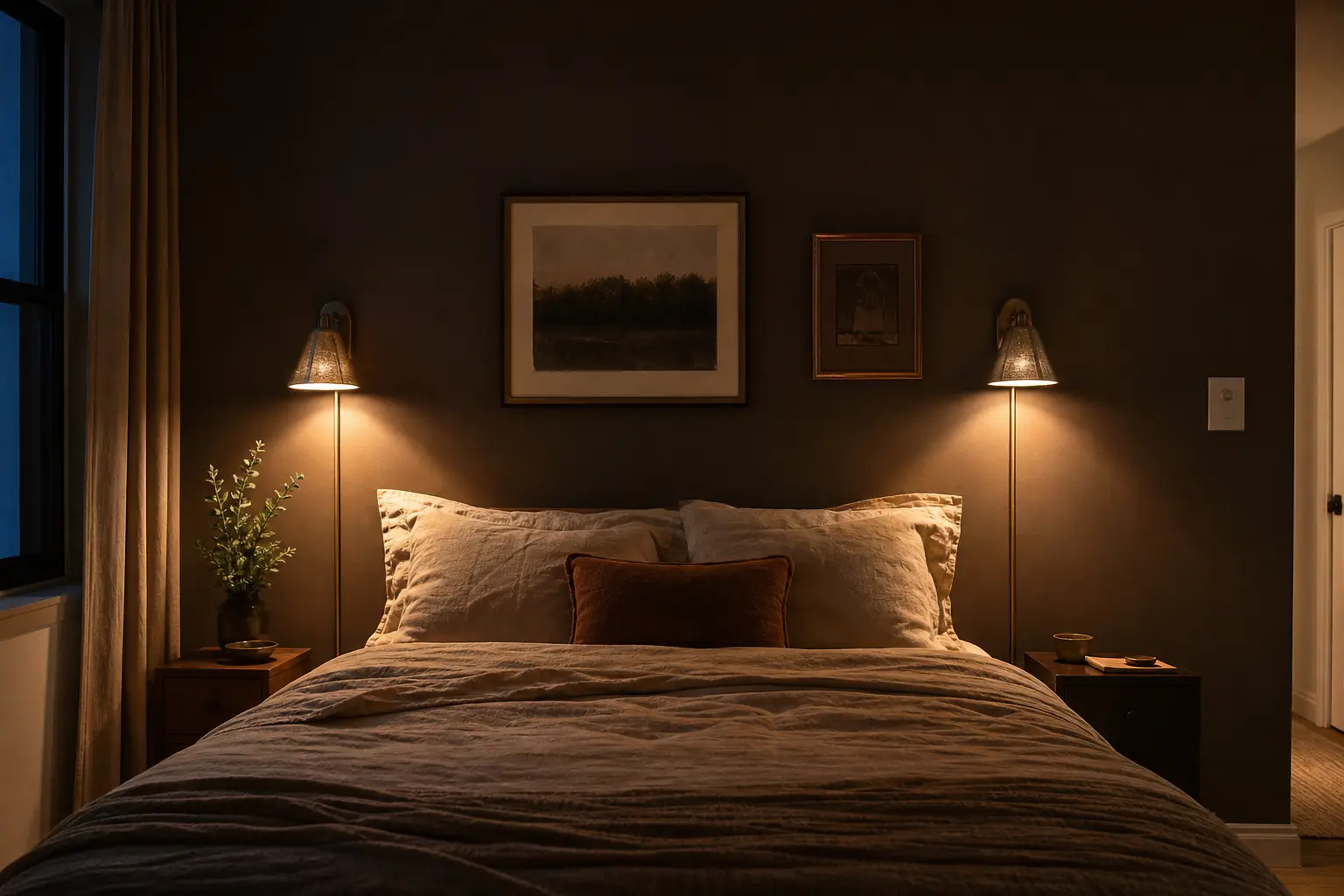
9. Mount plug-in sconces beside the bed
Plug-in sconces free a small nightstand and make the bed wall feel complete. If drilling is allowed, use the supplied hardware and restore holes at move-out. If it is not, choose a fixture specifically designed for an approved removable mount rather than attaching a heavy metal sconce to generic strips. Swing arms need especially secure mounting because pulling multiplies force.
10. Use one plug-in sconce above a reading chair
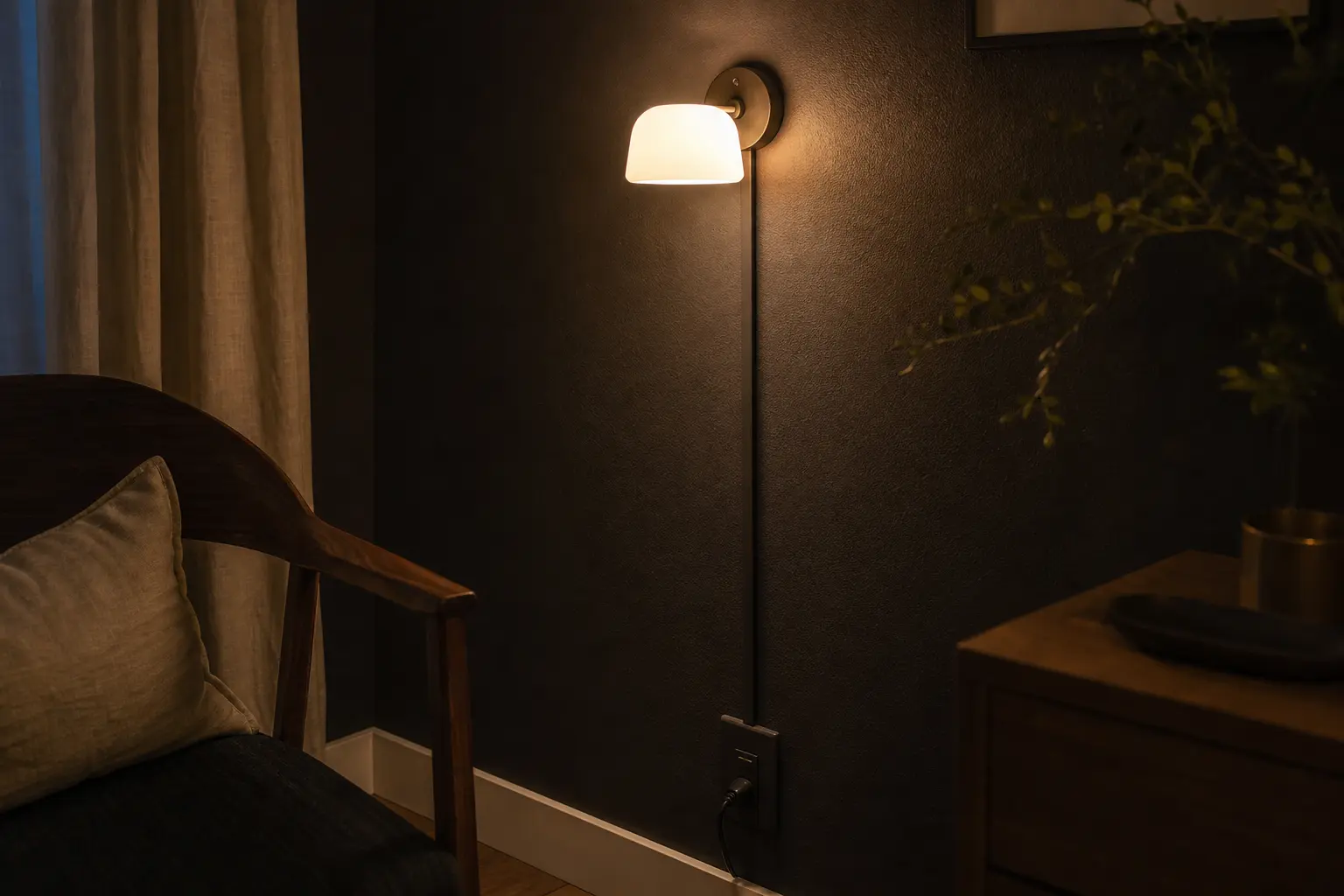
One wall light can define a corner more clearly than another floor lamp. Choose a shade that directs light toward the book, and place the switch where you can reach it while seated. Plan the entire cord route before mounting. If the cord cannot reach safely without an unsuitable extension, choose a different location or fixture.
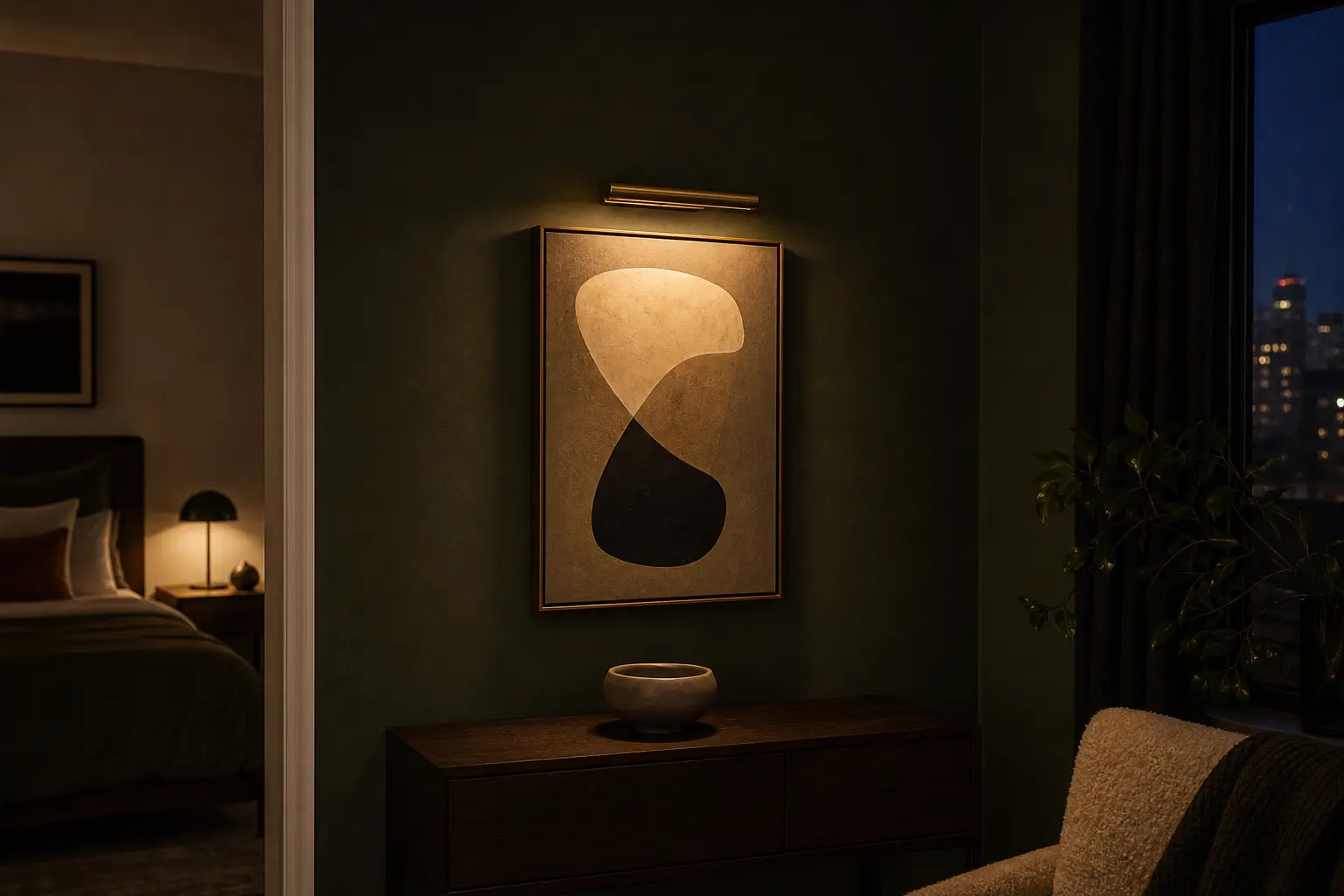
11. Add a rechargeable picture light above art
A picture light draws attention upward and makes inexpensive art feel deliberate. Rechargeable models are useful where outlets are scarce, but battery life claims vary with brightness. Prefer a removable battery or accessible charging port, a timer, and a low setting you will actually use. Mount only within the product’s stated weight and surface limits.
12. Use rechargeable puck lights inside a dark cabinet
Puck lights are better as brief task or accent lights than primary room lighting. Put them inside a glass-front cabinet, under a deep shelf, or in a wardrobe where they run for minutes, not all evening. A magnetic charging base makes maintenance easier. In kitchens and bathrooms, use only products approved for the location and keep them away from heat and spray.
Make the glow feel intentional
13. Hide cords in paintable raceways
A visible black cord can undo the built-in effect. Run it vertically first, then along a baseboard using a correctly sized cord cover. Never conceal plugs, power strips, damaged cables, or connections that need ventilation and access. Adhesive raceways still require a paint test; the safer option on fragile walls may be a neatly tensioned fabric-covered cord in a color that belongs in the palette.
14. Bounce light off a wall or ceiling
Point an uplight or adjustable lamp toward a pale wall, curtain, or ceiling to turn that surface into a large reflector. This reduces sharp shadows and can make a narrow room feel wider. Keep the fixture far enough away to avoid a harsh hotspot, and do not aim a hot bulb close to fabric. Even in a dark room, one lighter plane can carry the reflected glow.
15. Put the room on one evening routine
Connect compatible lamps to timers or smart plugs so the warm layer turns on before the room gets gloomy. Group only loads within the control’s rating, keep manual switches in the correct position, and avoid smart controls for appliances they are not designed to manage. A reliable routine is more valuable than an app with endless color effects.
A simple three-light plan
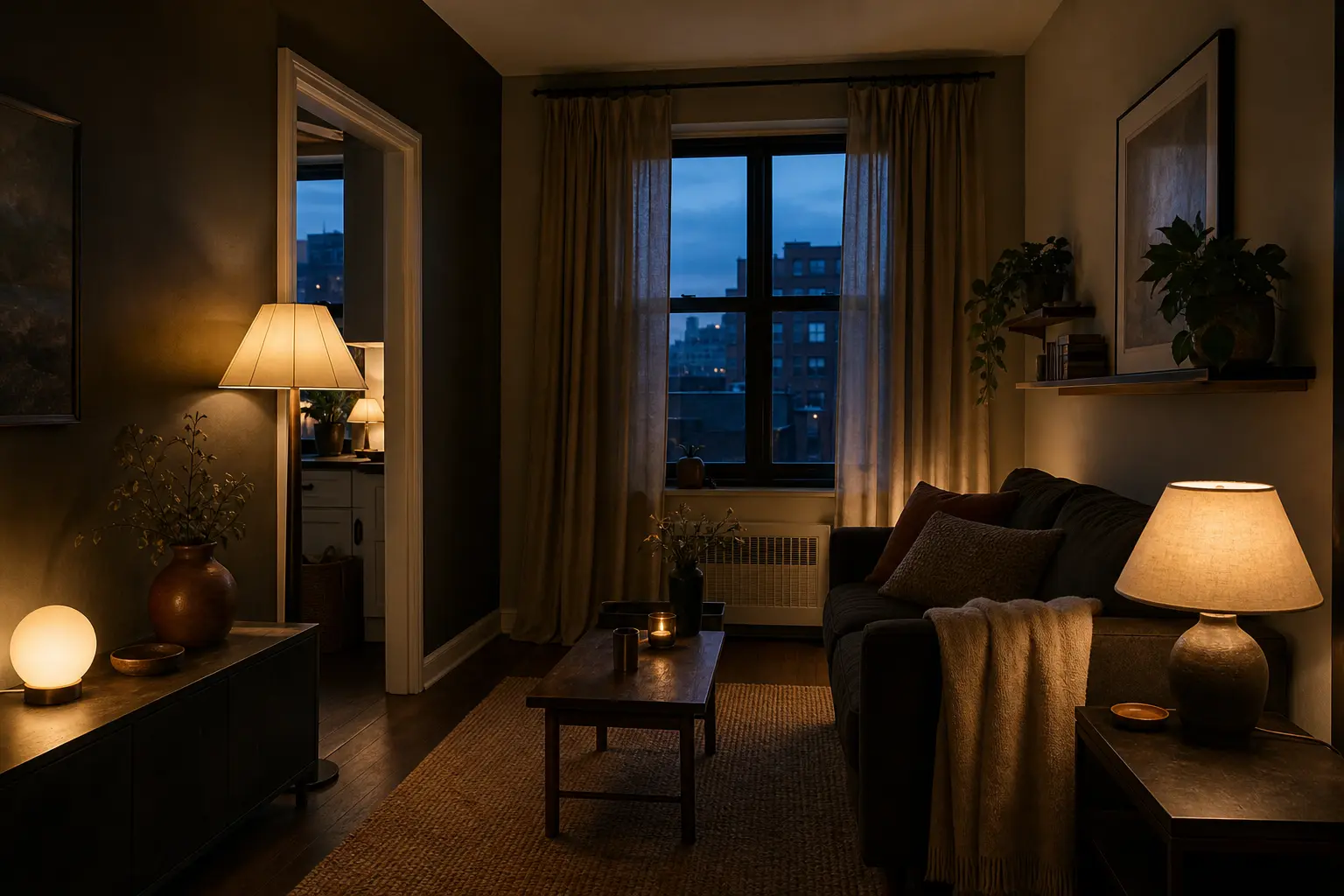
For a small living room, start with a shaded floor lamp at the sofa, a compact lamp across the room, and a low shelf or picture light. For a bedroom, use two bedside sources and one diffuse lamp near the dresser. Then turn off the ceiling light and live with the arrangement for a few nights before buying more. If reading feels difficult, improve the task source; if a corner disappears, add low ambient light there.
The finished-rental rule: buy control and placement before novelty. Three well-positioned 2700K sources usually beat six decorative gadgets. If wall mounting or window treatments are the next constraint, read the no-damage curtain and lighting ideas. For surface-based changes, see the peel-and-stick guide, browse small-space ideas, or visit all articles.