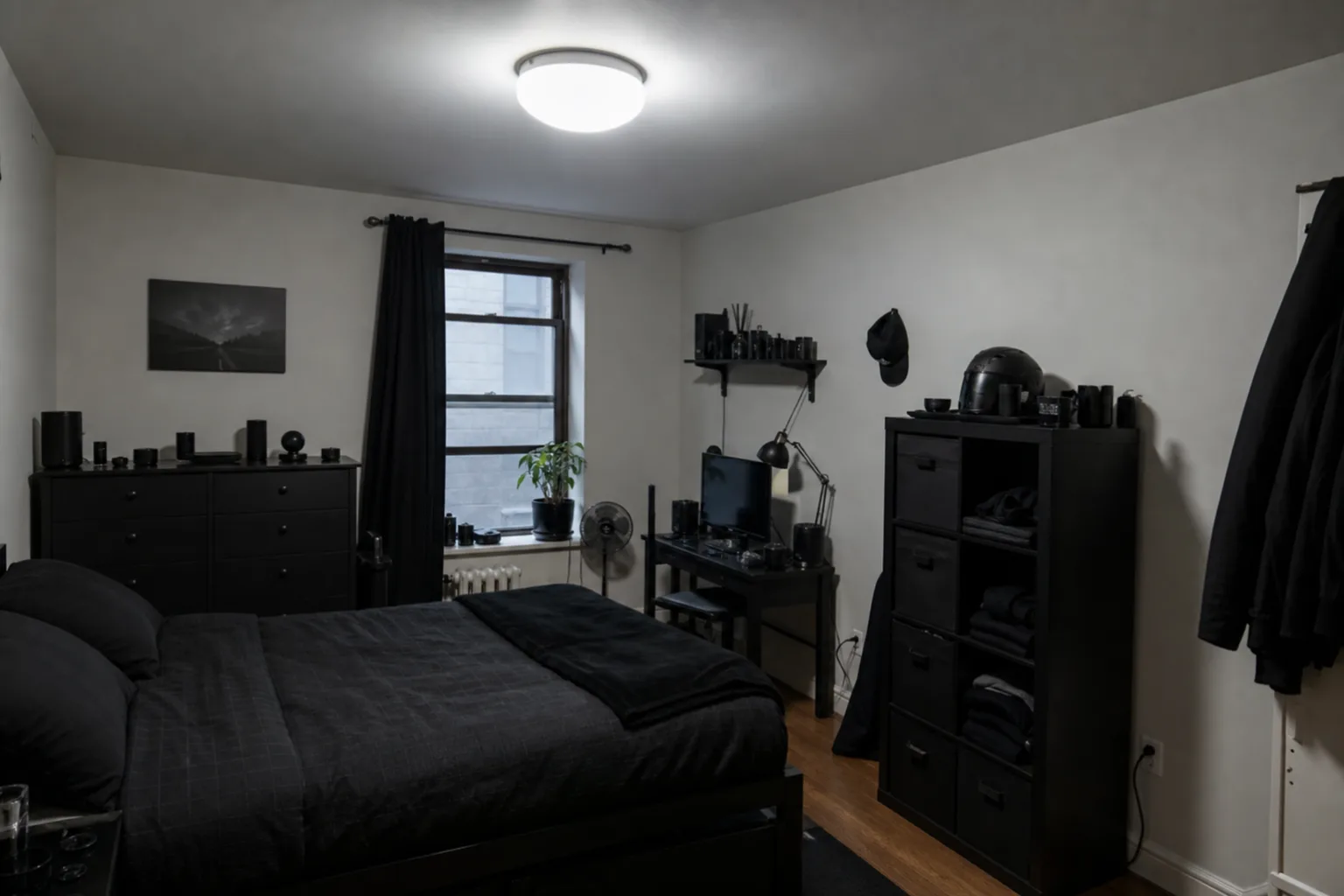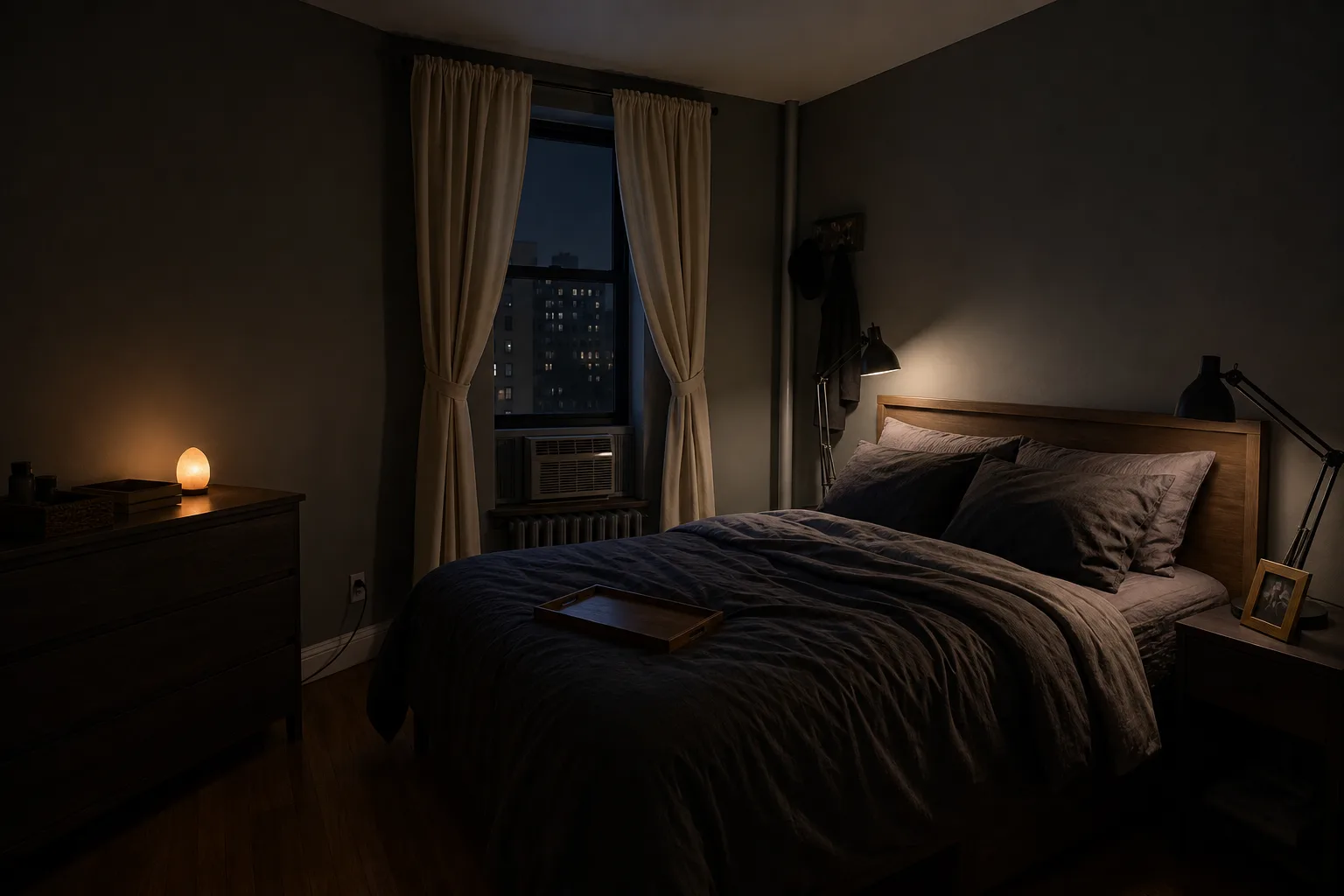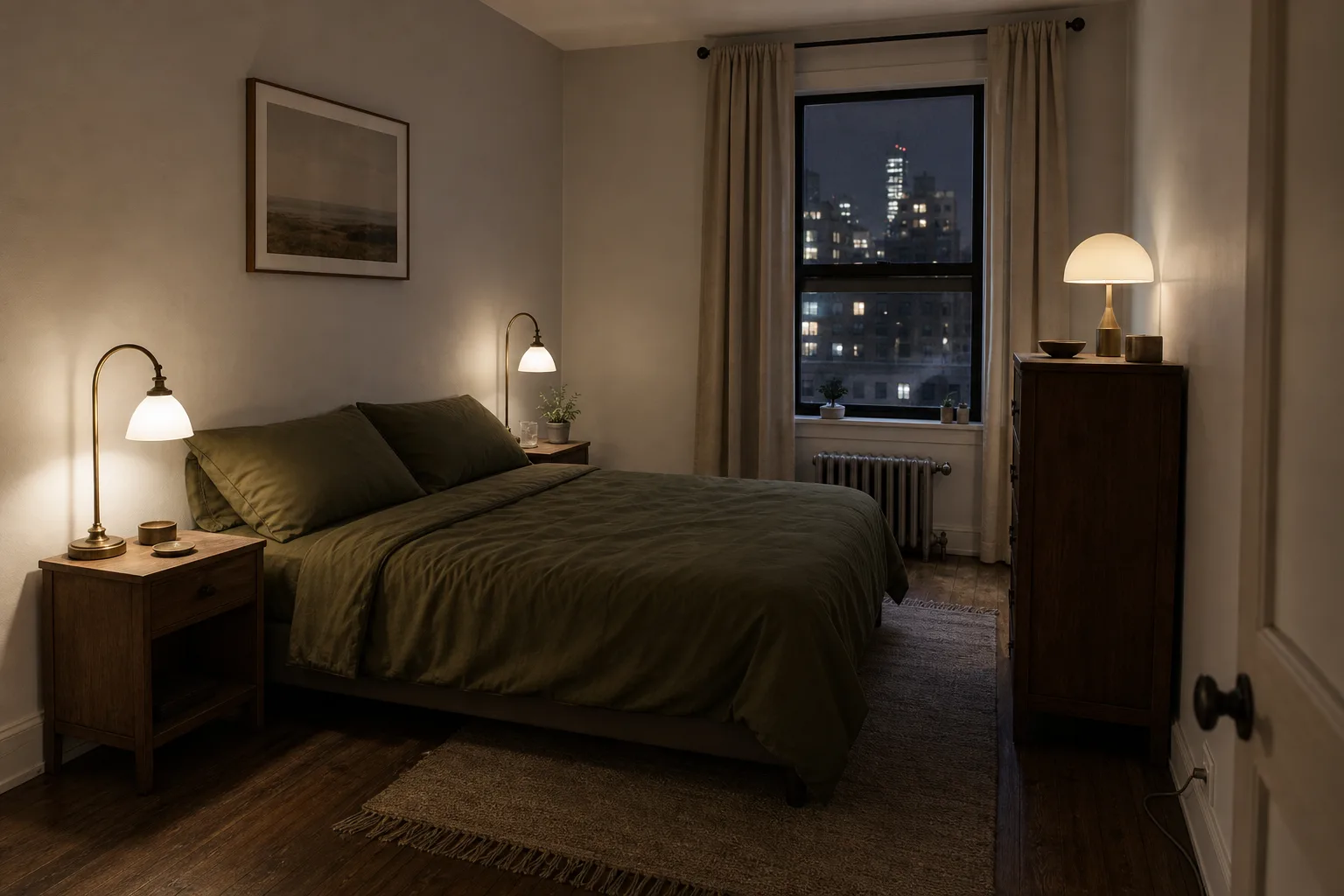
A moody bedroom can go wrong in two directions. Dark furniture, bedding, walls, and curtains can merge into a heavy block; trying to compensate with many pale accessories can create restless contrast. In a small rental, the room also has to hold clothes, charging cables, laundry, and often a desk. Calm comes from controlling what the eye has to process, not simply lowering the light.
Choose one dark family—espresso, charcoal, deep olive, or brown-plum—then support it with warm ivory, muted taupe, worn wood, and one aged-metal accent. Preserve safe circulation and useful reading light. If the lease rules out paint, bring the dark field through bedding, curtains, a removable panel tested on the wall, or a freestanding headboard.
Build one dark field, not a dark pile
1. Put the deepest color behind or on the bed
The bed is already the room’s largest shape, so let it carry the strongest color. Use a deep duvet, a slipcovered headboard, or one tested removable wall treatment behind it. Keeping adjacent walls closer to their original tone reduces cost and removal risk. If you use adhesive, check the product’s surface rules and test removal where damage will not be obvious.
2. Keep the ceiling and one vertical plane lighter
A lighter ceiling, curtain, or side wall gives warm lamps something to reflect from. Pure white can feel sharp beside charcoal; warm ivory, oatmeal, or the existing rental cream usually transitions better. The goal is not to make the room bright. It is to keep corners, doors, and the path around the bed readable.
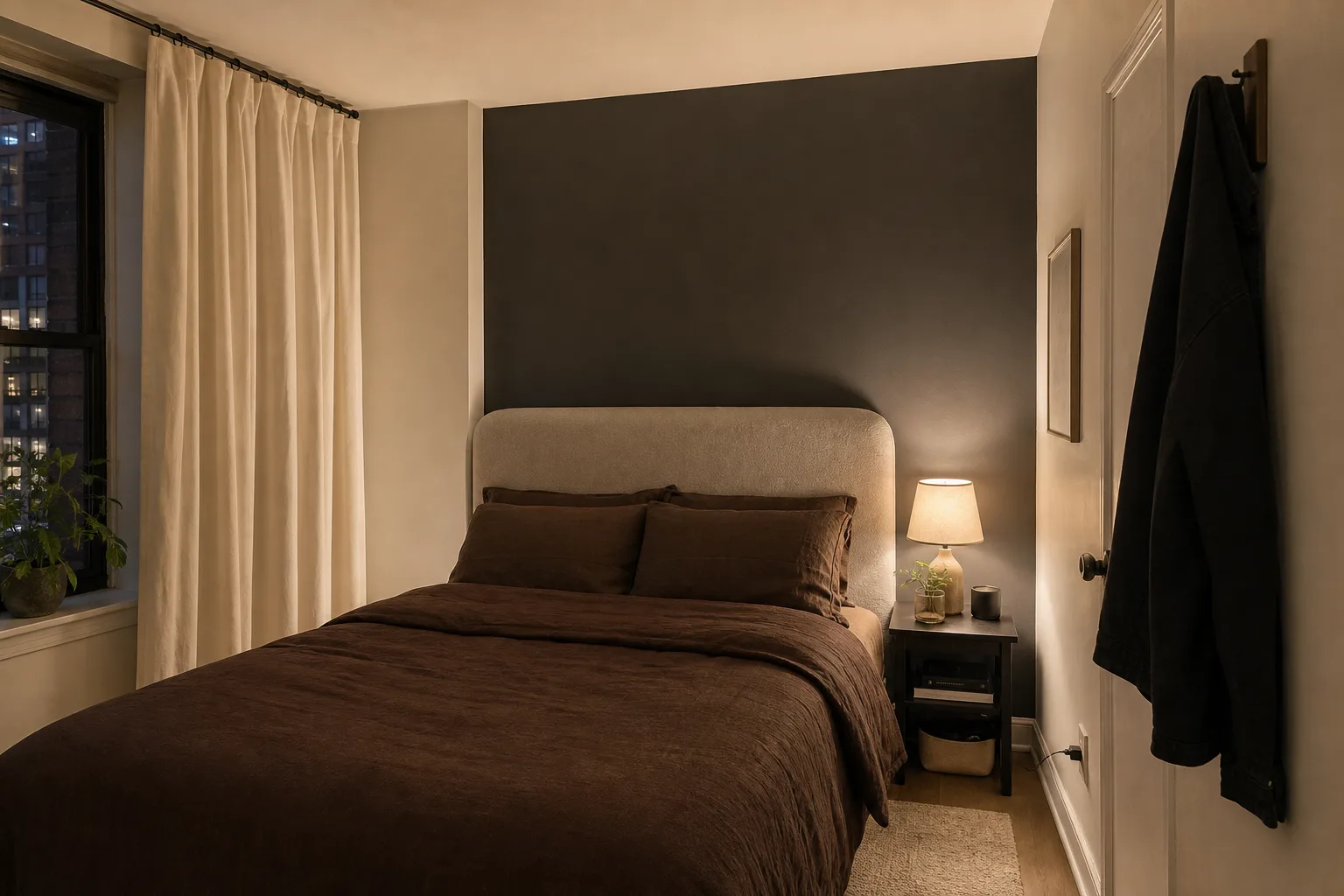
3. Repeat the dark color three times at different scales
Use the main color on the duvet, repeat it in a narrow frame or shade, and echo it once in a small object. Repetition makes the choice look settled. More than three or four unrelated dark tones can make a small room feel muddy, especially under warm bulbs. Compare swatches at night before buying.
Use light to reveal depth
4. Place bedside light below eye level
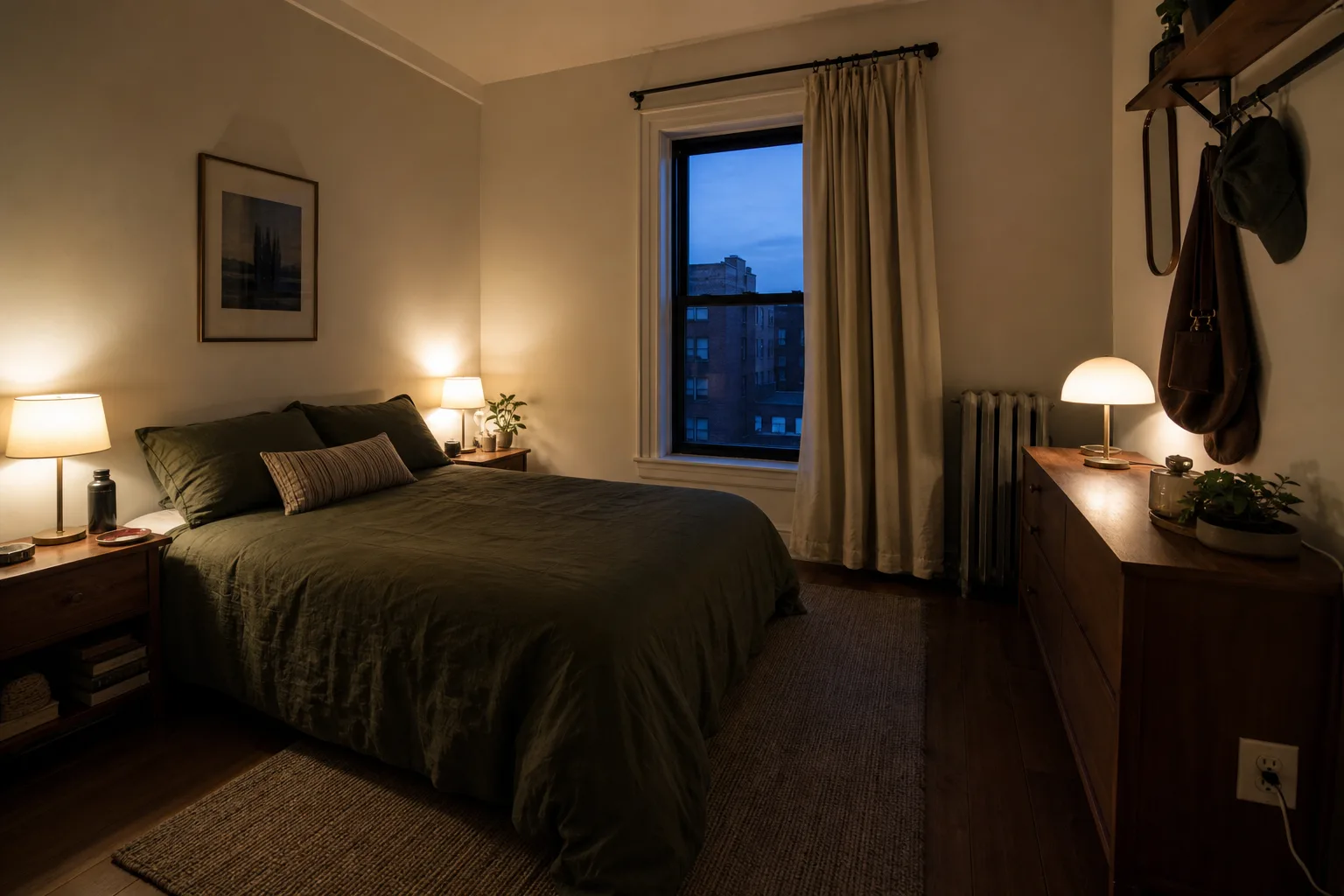
A shade with its lower edge near shoulder height gives useful reading light and prevents a bare bulb from dominating the room. Two lamps do not need to match exactly, but their light color should. Around 2700K is a dependable start. Keep shades clear of pillows and curtains, follow the fixture’s bulb limits, and route cords behind furniture or along a wall.
5. Light one low corner
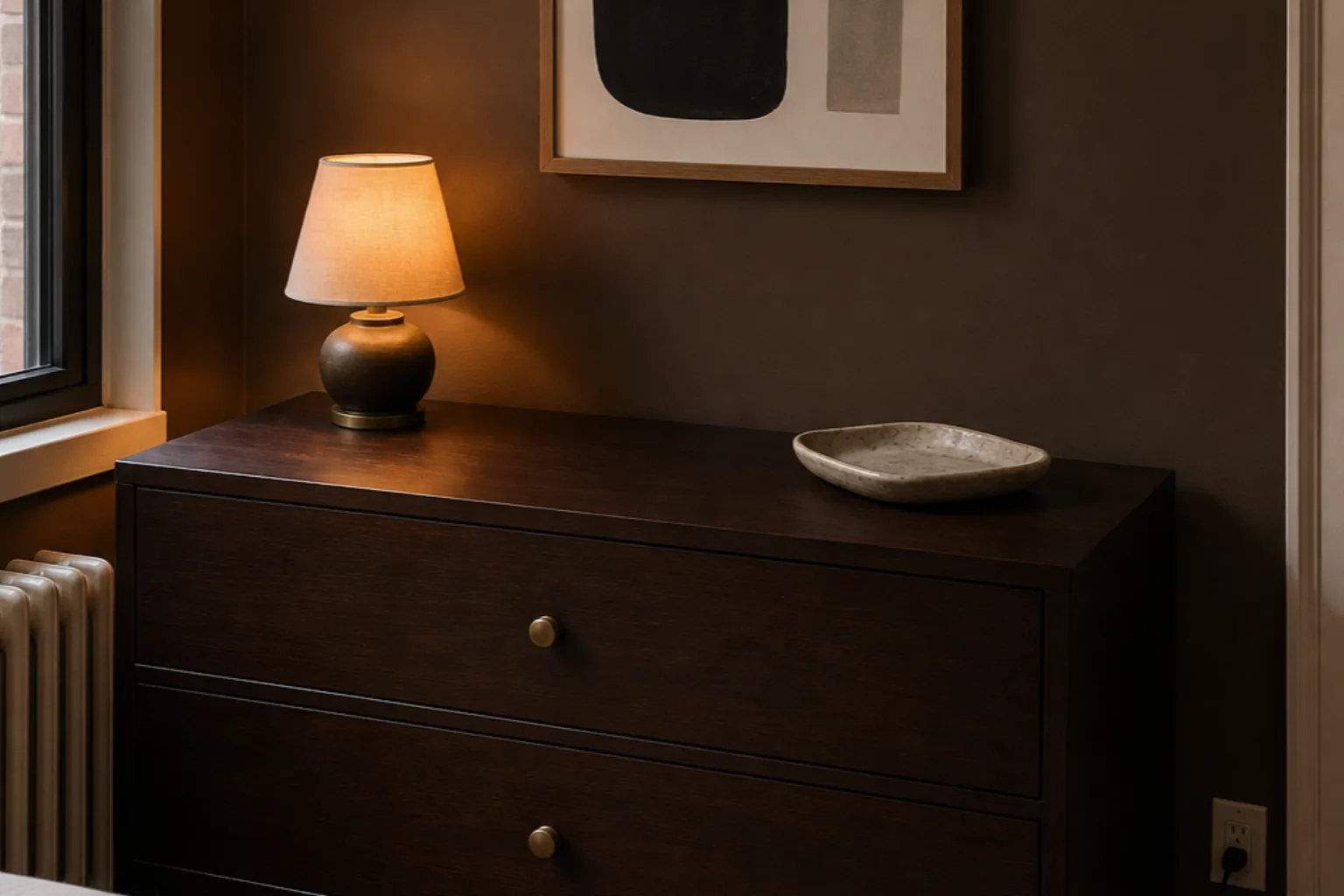
A small lamp on a dresser or low shelf keeps the far side from disappearing. It may need only 200 to 450 lumens because its role is depth, not reading. A rechargeable lamp avoids a bad cord route but creates a charging routine; a plug-in lamp is more dependable when an outlet is safely available.
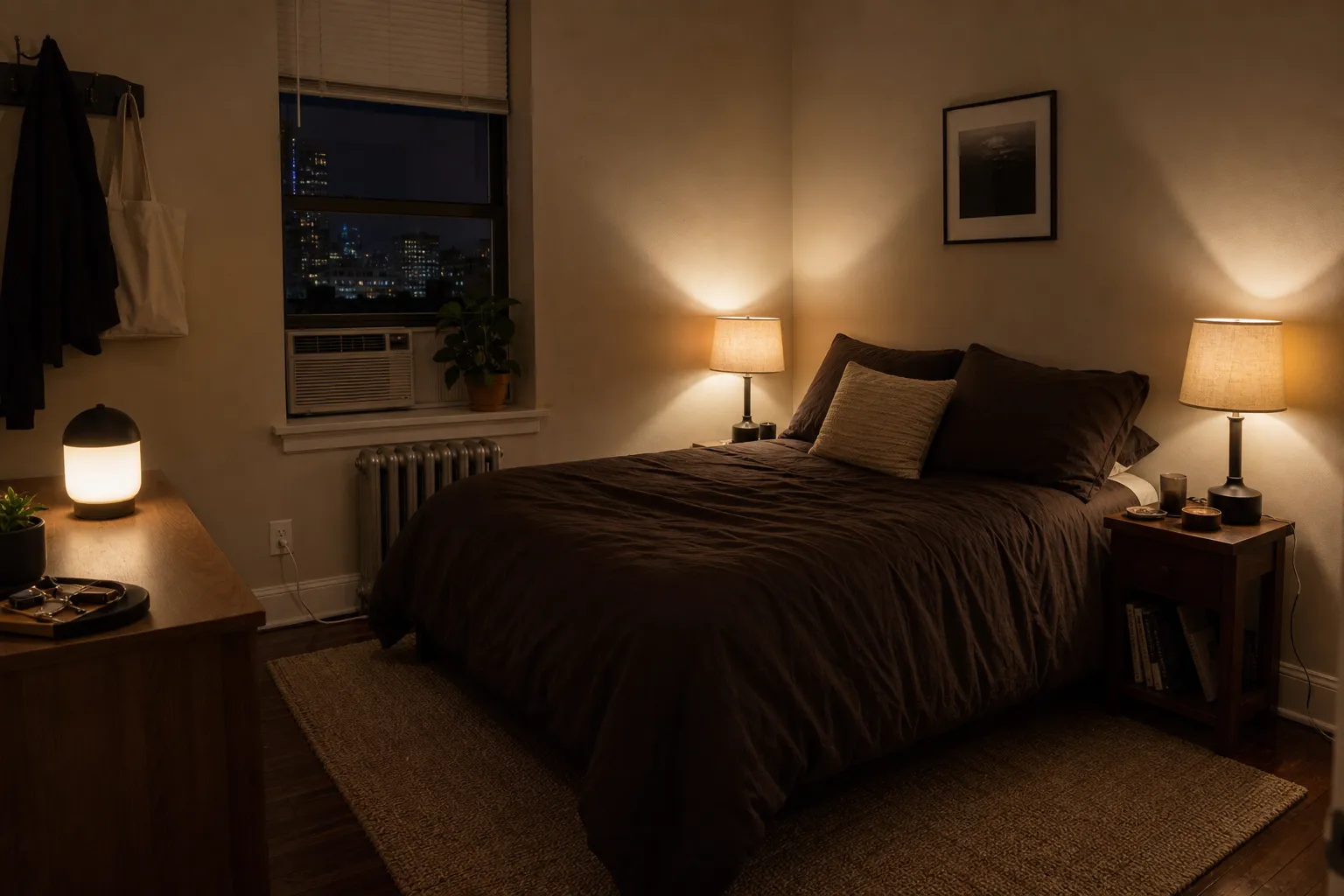
6. Let the window keep a little cool contrast
At blue hour, a muted cool window makes warm lamp light feel richer. Use curtains for privacy and light control, not to erase the window completely. If no-drill mounting is required, keep panels lightweight and match the rod system to the full span and load. Blackout lining can be heavy, so verify the mount rather than assuming any tension rod will hold it.
Make texture do the decorative work
7. Layer two bed textures, not seven pillows
Try a matte cotton or linen-look duvet and one folded wool or quilted layer at the foot. Their different surfaces catch low light without adding more colors. Two sleeping pillows and one useful lumbar pillow are usually enough on a small bed. Check washing instructions before buying; a calm bed should not require a closet full of pieces every night.
8. Put a low-pile rug where feet land
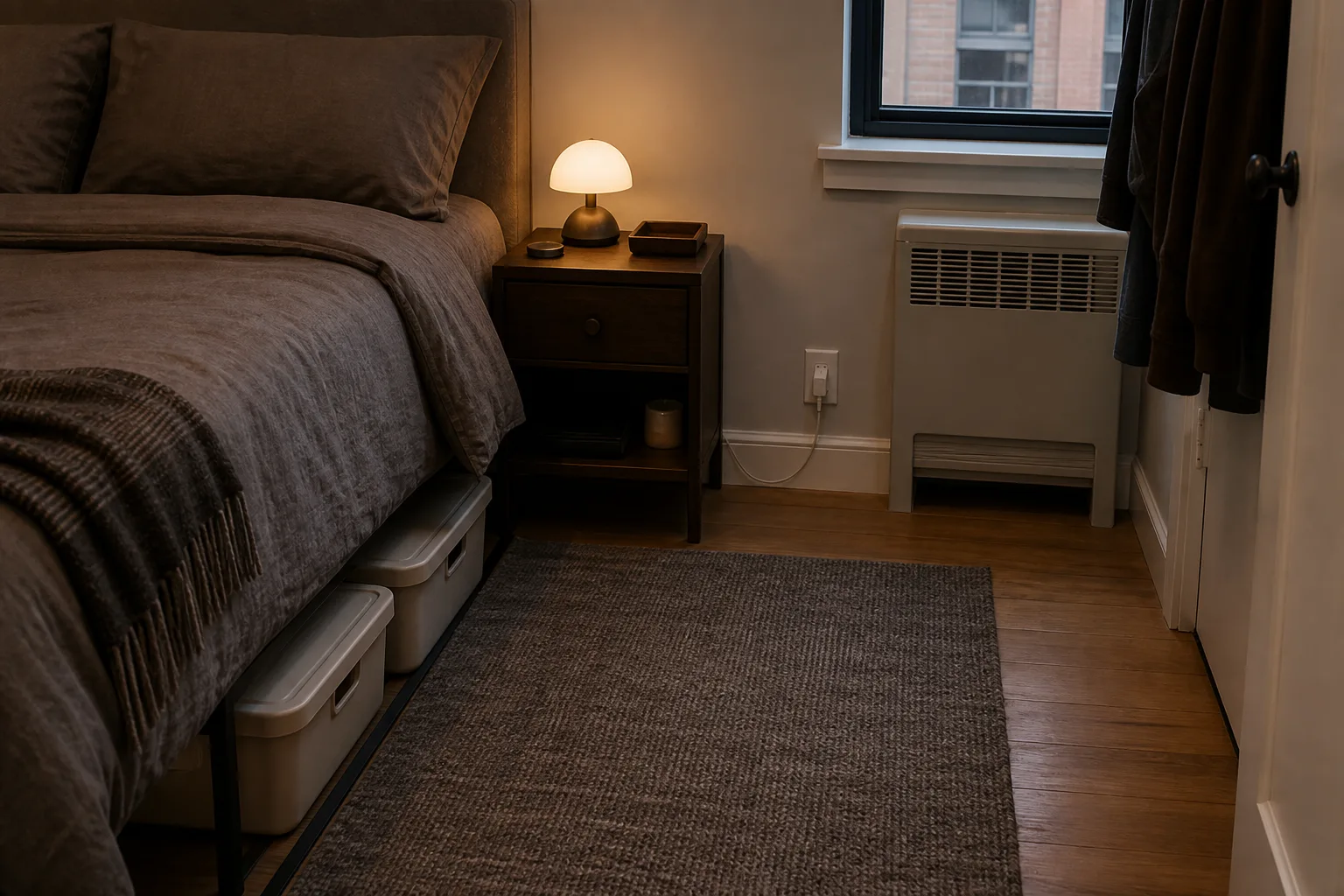
A full-room rug can be expensive and awkward under a bed. A runner beside the bed or a smaller rug extending from the lower two-thirds may provide the comfort you need. Keep edges flat, use an appropriate nonslip layer, and do not narrow the path below a safe width. Measure doors, closet access, and under-bed drawers first.
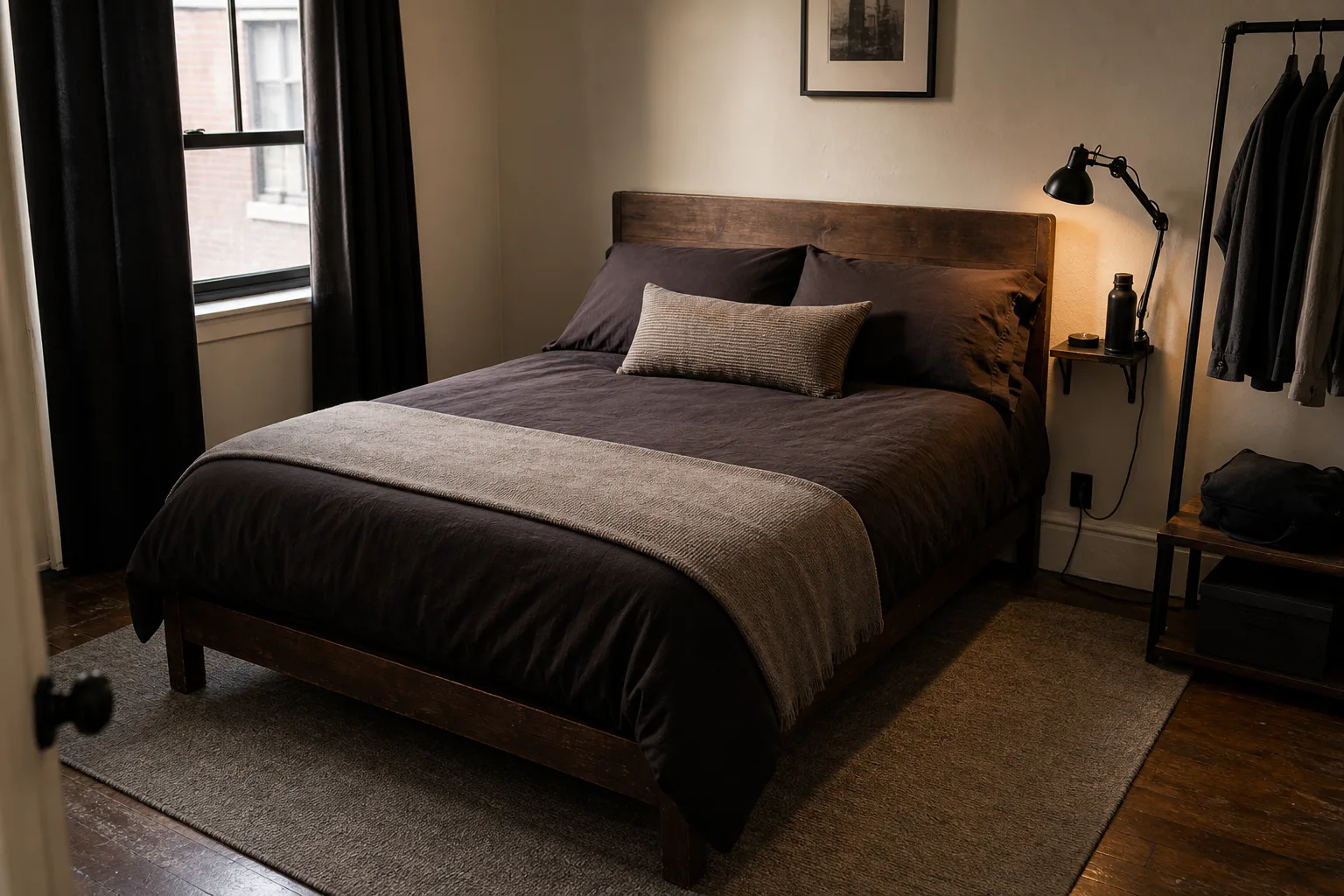
9. Choose wood with visible age
One worn wood nightstand or stool keeps a dark room from feeling synthetic. Secondhand pieces around $25–$100 can be excellent, but inspect joints, odor, pests, splinters, and wobble. The piece must support its intended load and fit beside the bed without pinching the path. Do not buy a pair if the room functions better with one table and one narrow shelf.
10. Use aged metal as punctuation
Repeat one metal in a lamp neck, frame, or small tray. Brushed aged brass and dark bronze catch warm light without becoming a theme. Avoid mixing shiny gold, chrome, black, and copper in equal amounts. You do not have to replace landlord hardware; a few personal pieces can supply the repeat without creating a move-out project.
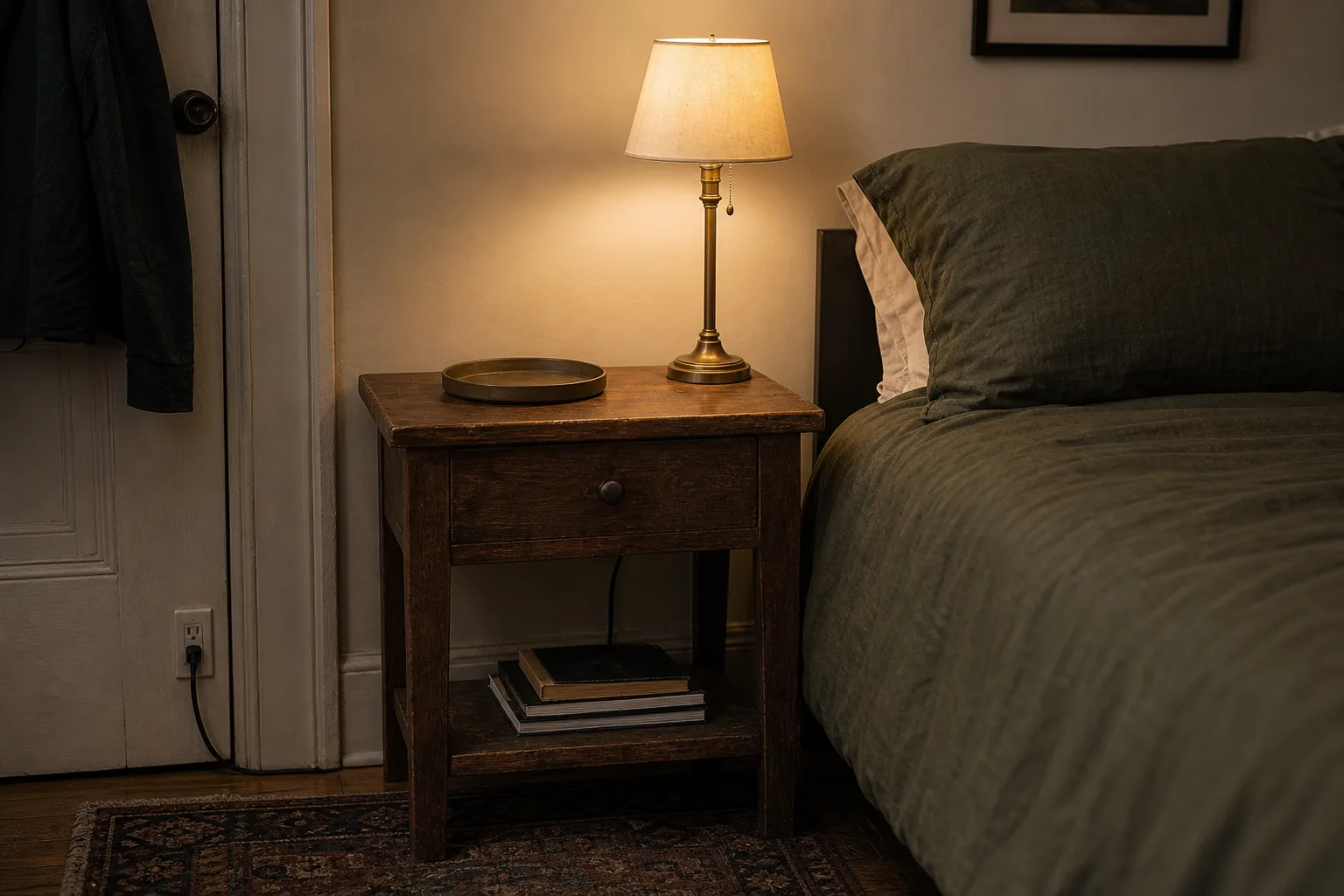
Hide the signals that keep the room awake
11. Give charging cables one route
Choose the outlet and nightstand location before buying a cable organizer. Run cords along the back edge of furniture or baseboard with suitable removable clips, leaving plugs accessible and ventilation clear. Do not route cords under rugs, through pinched gaps, or across the path. A small lidded box may hide non-electrical clutter, but power adapters need the airflow their manufacturer requires.
12. Use closed storage below eye level
A lidded under-bed bin, low dresser, or opaque basket quiets clothing and laundry better than another open rack. Measure the bed clearance and drawer pull-out zone, including handles. Do not block a heater, vent, or required egress. Closed storage helps only when each container has one category; mixed bins quickly become hidden clutter.
13. Leave one surface nearly empty
A dresser top with a lamp, one tray, and open space can make the whole room feel calmer. This is not wasted space; it is a visual pause and a practical place to fold clothing or set down a glass briefly. If every surface is full, edit before buying more decor. Move personal objects into one intentional group instead of distributing them evenly around the room.
A calm moody-bedroom formula
Begin with the bed as one deep matte field. Add a lighter curtain or wall plane, two useful bedside lights, and one low glow. Bring in texture through bedding and a rug, repeat wood and one metal, then close away cables and clothes. Live with the room for several evenings before adding art or another dark color. If it feels heavy, increase reflected light and open space before replacing the palette.
The finished-rental rule: darkness should simplify the room, not hide unresolved clutter or unsafe circulation. Build the light layer with the warm lighting guide, compare renter-safe window options in the no-damage curtain guide, or browse more small-space ideas.