
Floor lamps and smart lamps often lead with maximum output. The larger figure looks like the safer purchase because it promises headroom. In a compact rented room, that headroom can matter less than the lamp's behaviour after the slider moves toward its lowest setting during long evenings when soft background light is the main need.
Small rooms place the lamp close to the sofa, bed, desk, or wall. Light reaches the eye from a short distance and reflects from nearby surfaces. A powerful source can therefore feel harsh long before its full output becomes useful.
The useful goal is gentle coverage. Warm light should settle around the activities in the room, with darker space left between those pools. This arrangement gives furniture depth and lets each lamp do a clear job without flooding every surface.
Choose the lower dimming limit and warmer colour first. Treat maximum output as a secondary specification. That order gives a small room more control at night while preserving enough range for cleaning, work, or a dull afternoon.
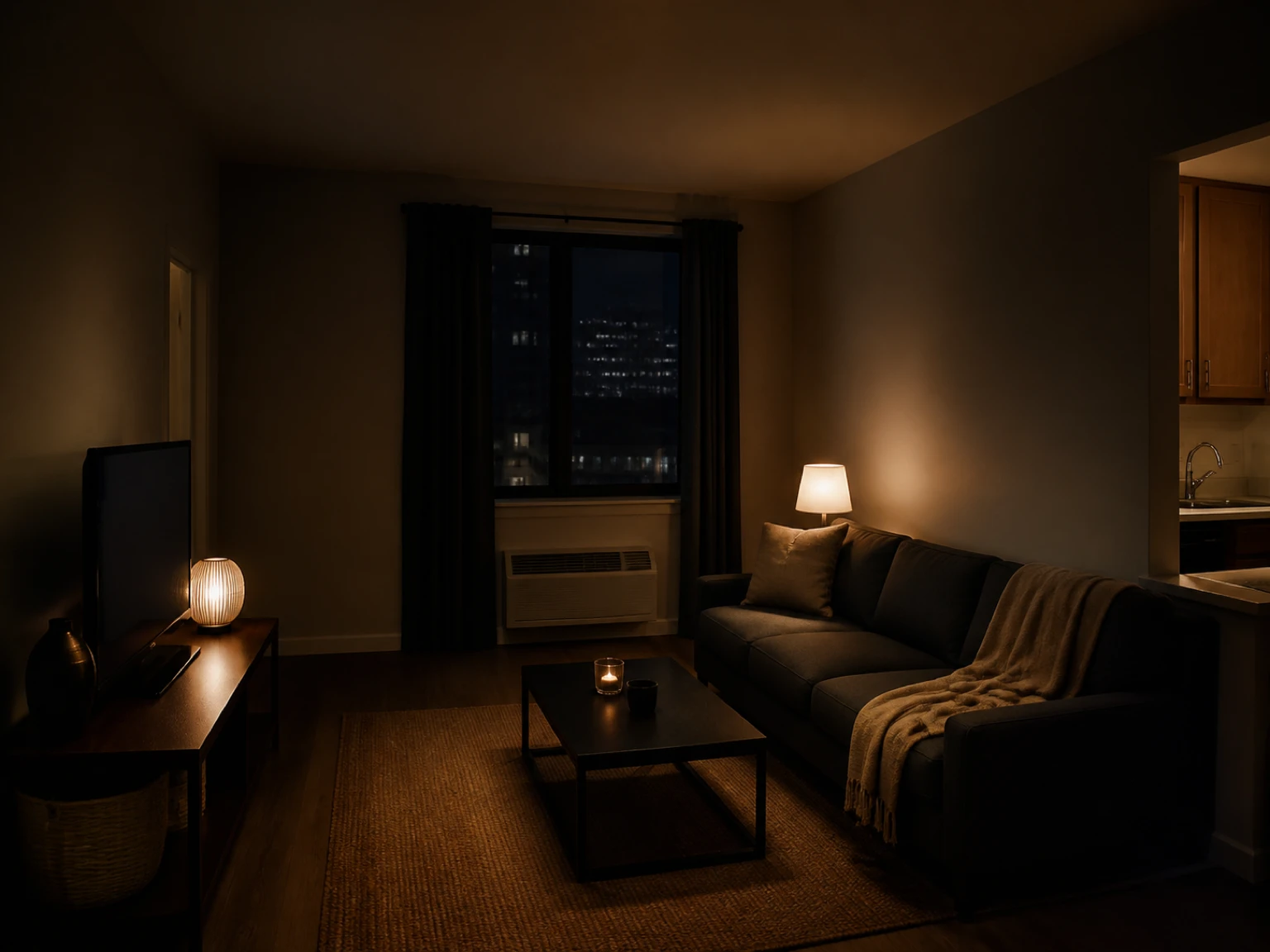
Maximum output answers a narrow question
Read the large lumen figure as available headroom
The Govee collection lists 1400 lumens of brightness for a floor lamp. Another listing states 1725 lumens of brightness. A wider-wall lamp has 2100 lumens of brightness. These figures make the upper end easy to compare across the collection.
The progression shows how much light each product can produce near full output. It helps when a large open room needs broad illumination, or when the lamp must wash a wide wall. Higher output has a valid use.
Yet the upper figure leaves several small-room questions unanswered. It says little about the gentlest stable setting. It cannot show whether the lowest scene feels soft beside a bed, or whether the source remains obvious in a reflective corner.
Distribution changes the result too. A shaded lamp can gather light near a chair. An upward floor lamp can spread it across the ceiling, while a bare source can create glare even when the room still contains dark corners. The same maximum figure can support very different rooms because distance, wall finish, shade material, and source direction change the light that reaches the eye.
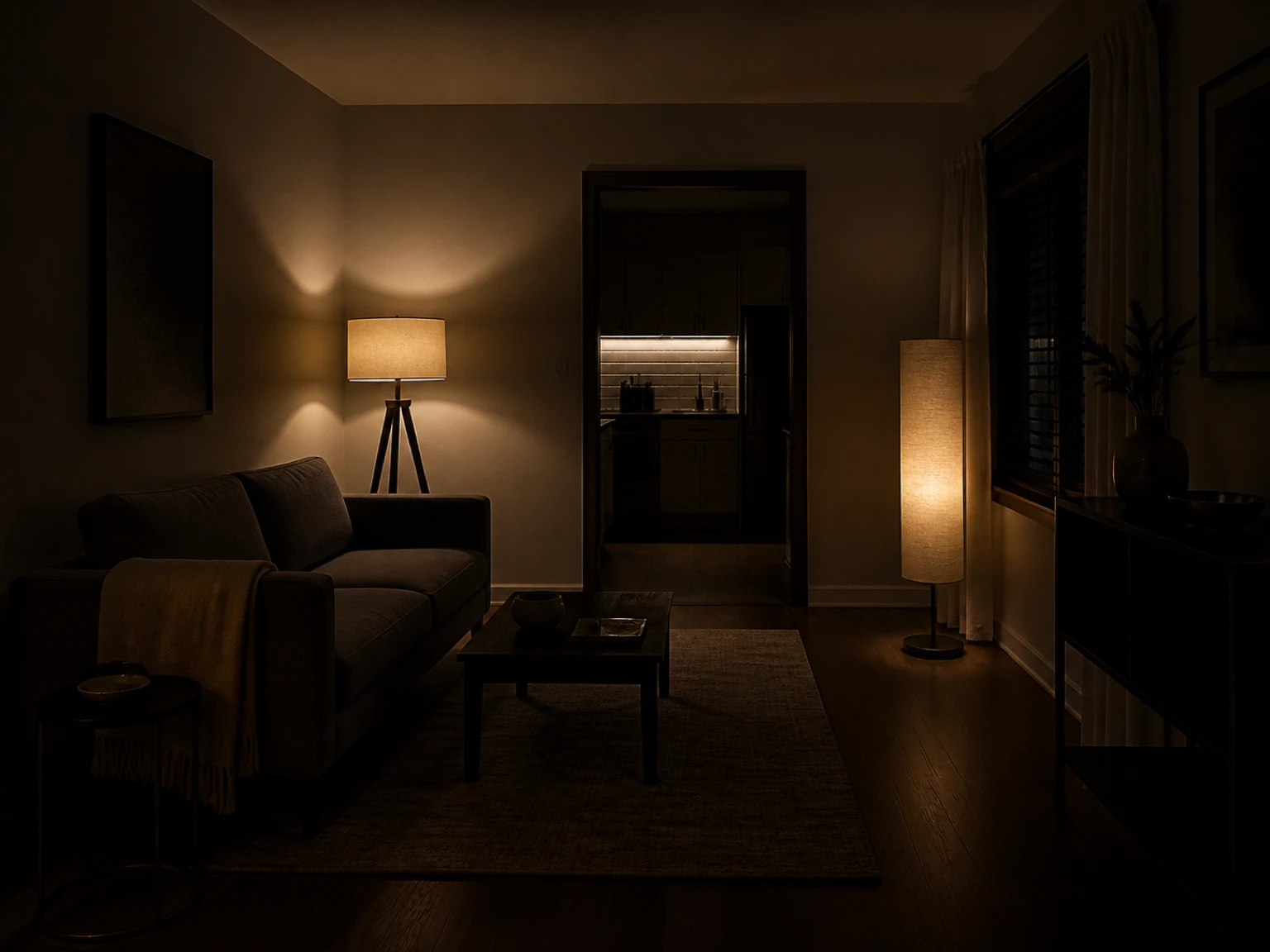
A large open room can use the extra range
A high-output floor lamp can be a good fit in an open living area. More distance gives the light room to spread, and broad wall illumination may be the intended effect. The product can be well made and still exceed the comfortable range of a compact bedroom.
Fit decides the comparison. A renter who expects the lamp to cover a dining area and a seating area may value the stronger upper end. A renter placing the source beside a small sofa may spend most evenings near the bottom of the control.
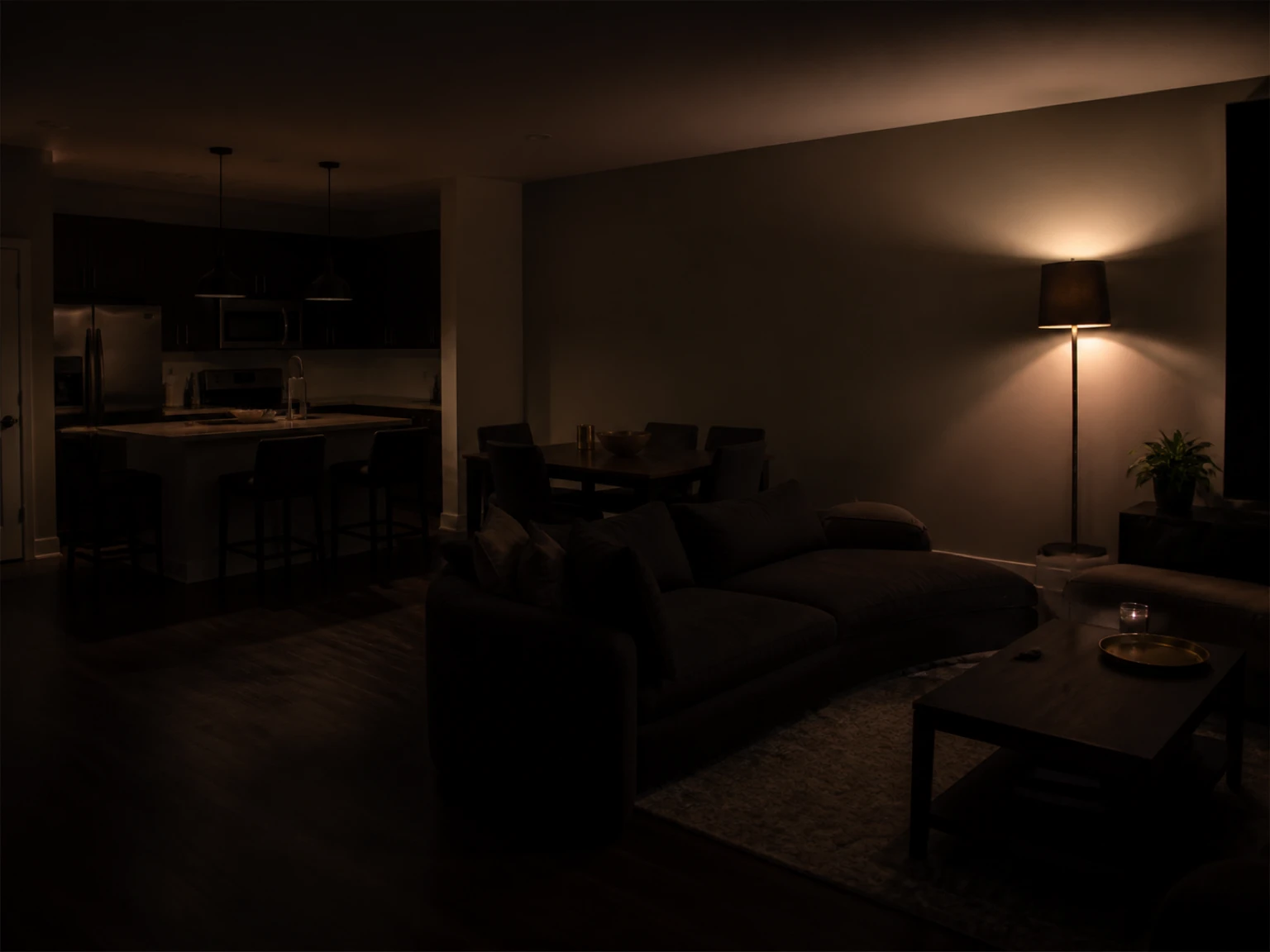
The lower end controls the evening
Compare the dimming floor with the output ceiling
Philips Hue states up to 1100 lumen for its bulb. The same product is dimmable to 5% brightness. The first claim describes available light output, while the second gives a clearer view of how far the control can move toward a low setting.
The dimming claim remains a control specification. It leaves the exact minimum lumen output unstated, and the fixture around the bulb will affect what reaches the room. Even so, a published lower setting is more useful than an upper figure alone when the lamp will sit nearby and support hours of low evening light beside furniture with reflective or pale surfaces.
Look for smooth control near the bottom. A lamp that jumps from dark to conspicuous gives little room for bedtime use. A gentle lower range lets the renter keep a corner visible without flattening the rest of the room.
Controls also affect daily use. A reachable switch, simple remote, or dependable scene can make the low setting easy to repeat. Complicated control can leave a capable lamp parked at an uncomfortable default because adjustment feels like work.
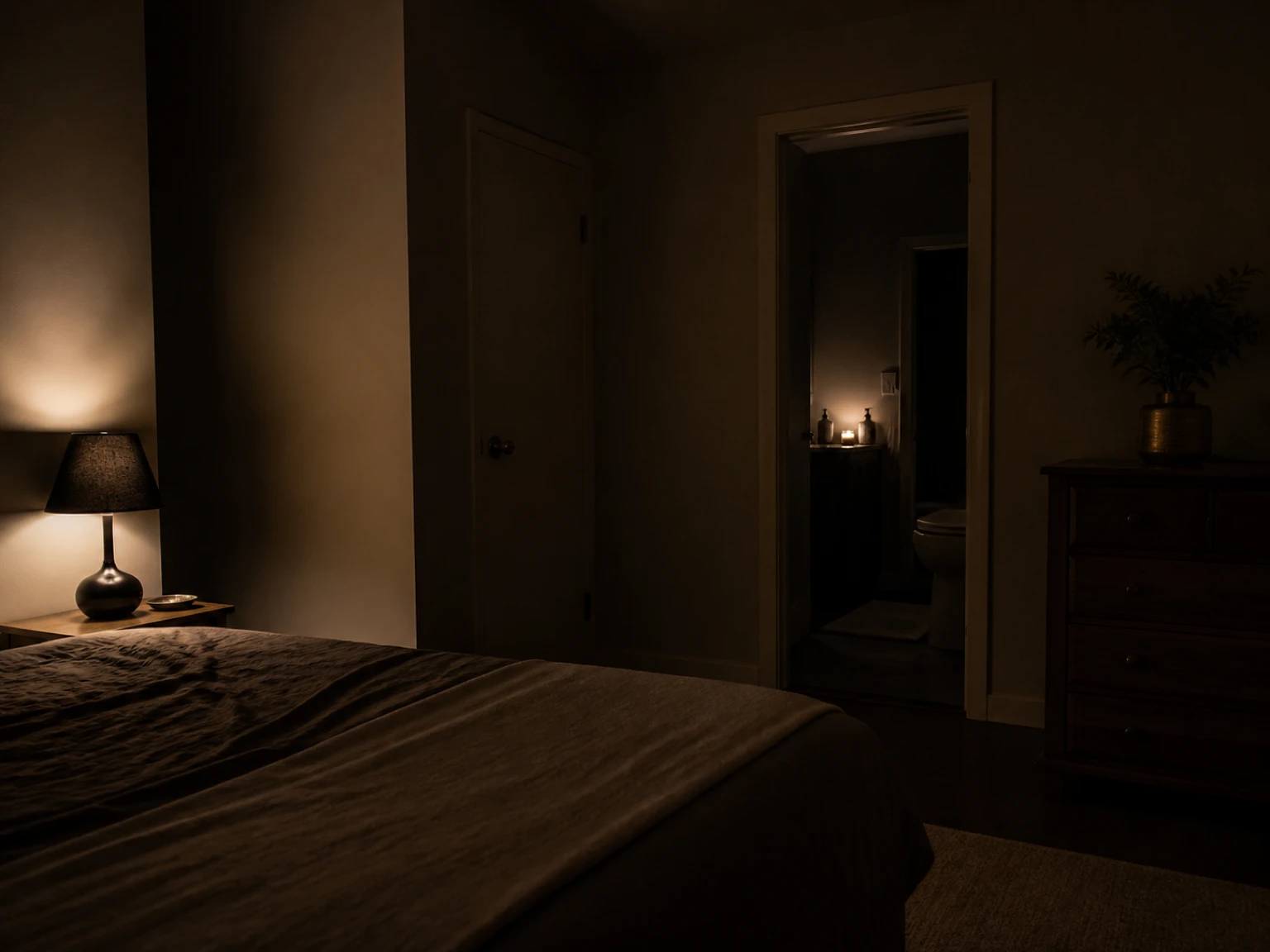
Warm colour changes how the room settles
Keep colour temperature separate from light output
Philips Hue gives 2700 K as the bulb's colour temperature. That specification describes a warm white appearance. It helps a shopper judge whether the lamp belongs with timber, dark paint, cream fabric, and other materials that benefit from a softer cast.
Warm colour still needs good placement. A warm source aimed straight into the eye can remain uncomfortable. Put the shade or glowing surface below the normal sight line, behind a chair, or against a wall where the light can spread.
Colour consistency helps separate lamps feel intentional. Nearby sources should sit in the same warm family unless a task area has a clear reason to look different. The room then reads as a connected scene, even though each pool stays local and the lamps occupy different heights, corners, wall positions, and viewing angles around the furniture.
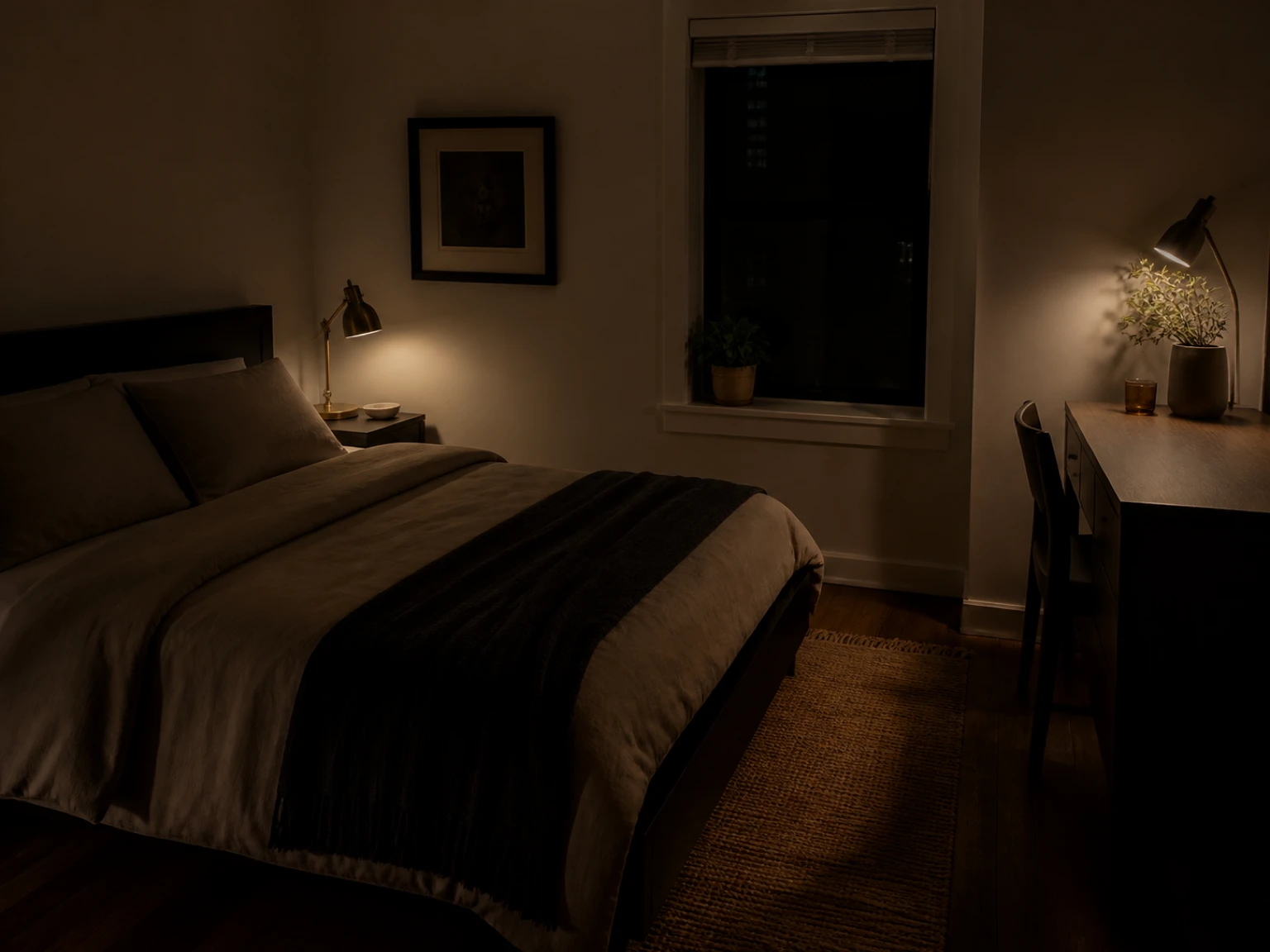
Build several small pools
Give each lamp a limited job
Start with the activity that needs clear light. A reading chair may need a shaded lamp beside it. The far wall may need a soft wash, while a shelf can stay darker and gain depth from the contrast.
This plan avoids asking a central source to solve every corner. Each lamp covers a smaller area, so its useful setting can stay lower. The room gains clear zones without the flat look that follows when every surface receives equal light.
Leave some shadow. A dark edge around a bookcase or curtain gives the brighter area a boundary. That contrast can make the room feel composed while keeping the available light focused on reading, conversation, or a work surface.
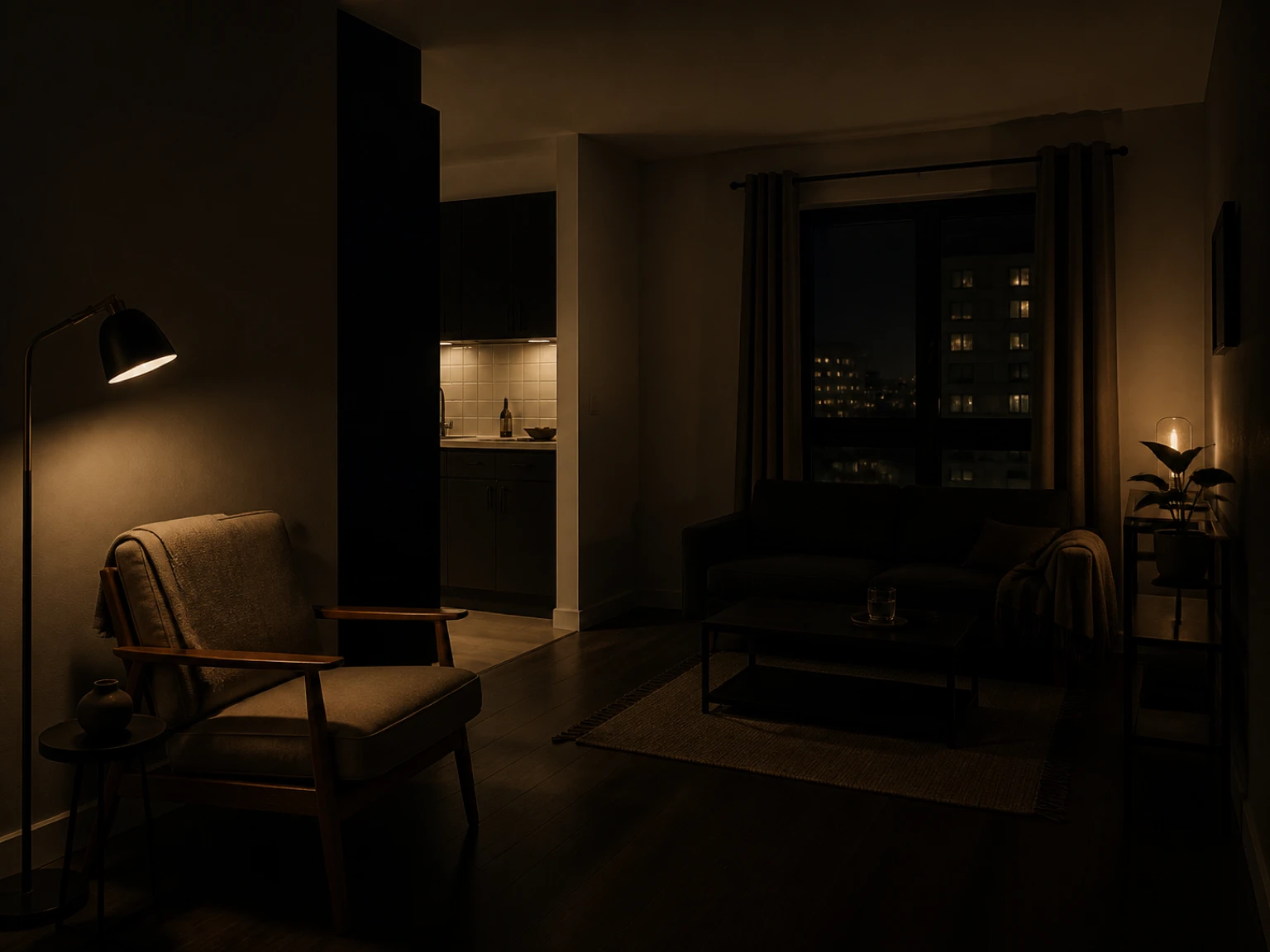
Use walls and shades to soften the source
A wall can turn direct light into a broad glow. Aim an adjustable lamp toward a matte surface and check the result from the normal seat. Glossy finishes and mirrors need more care because they can place a bright reflection inside the field of view.
A shade sets another boundary. Opaque material sends light through its openings, while translucent material lets the whole form glow. Choose the effect that supports the lamp's job and hides the source from common viewing angles.
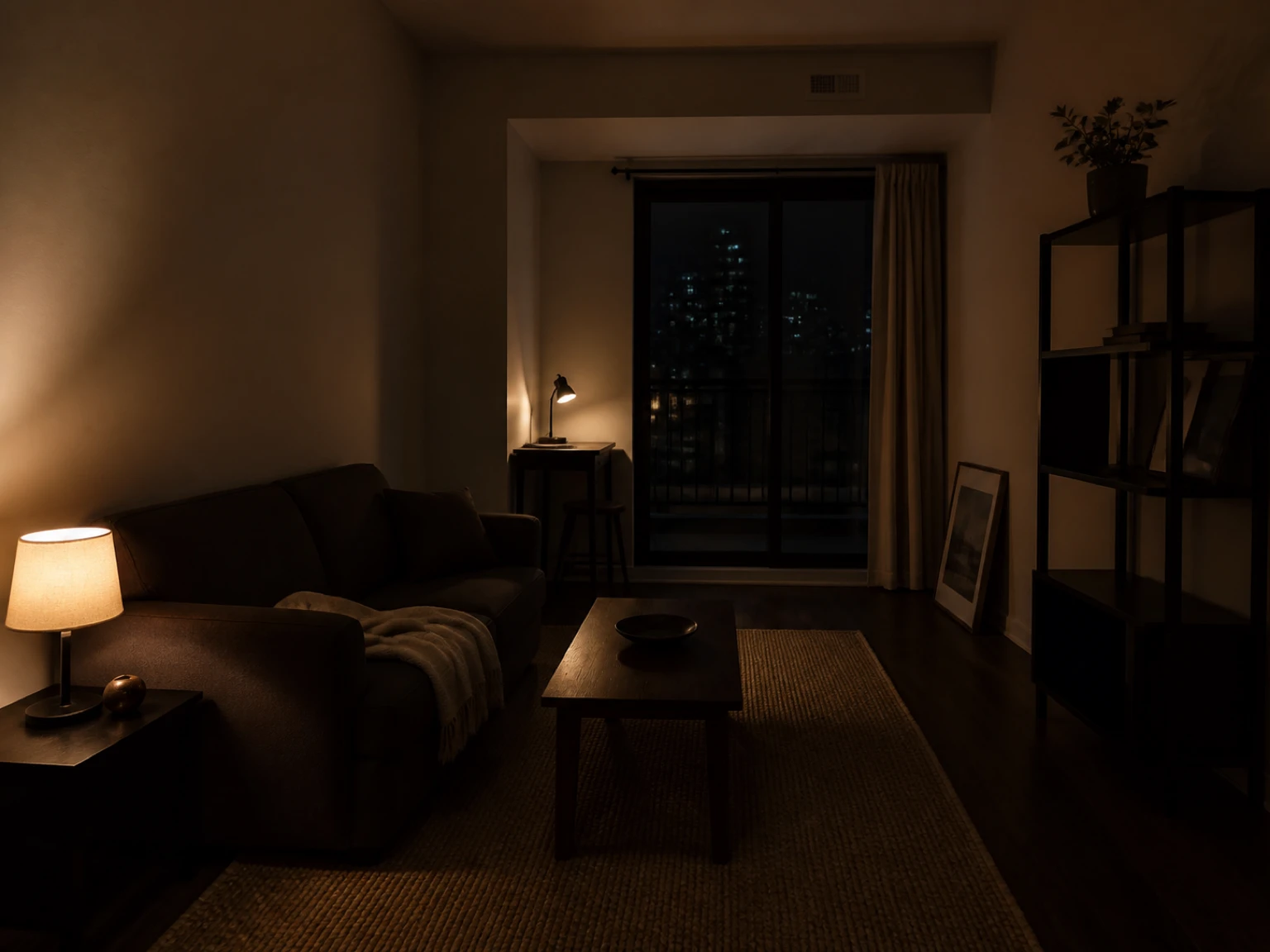
Compare lamps in the order the room will use them
Read the specification page from the bottom of the range upward. Find the lowest published setting and the available warm colour. Then inspect the shade, diffuser, or wall direction that controls where the light goes from the intended floor position when the renter sits, reads, talks, or watches a screen nearby. Maximum output can come later.
Product photographs can help with form, yet bright promotional scenes rarely show the lowest setting beside dark furniture. Look for a clear return policy when the published material leaves the bottom end vague. The room itself will reveal glare and weak control quickly.
Keep the comparison fair. A lamp with strong maximum output may bring useful flexibility to a future home or an open plan. A compact room still needs comfort now, so unused headroom should carry less weight than a dependable low setting.
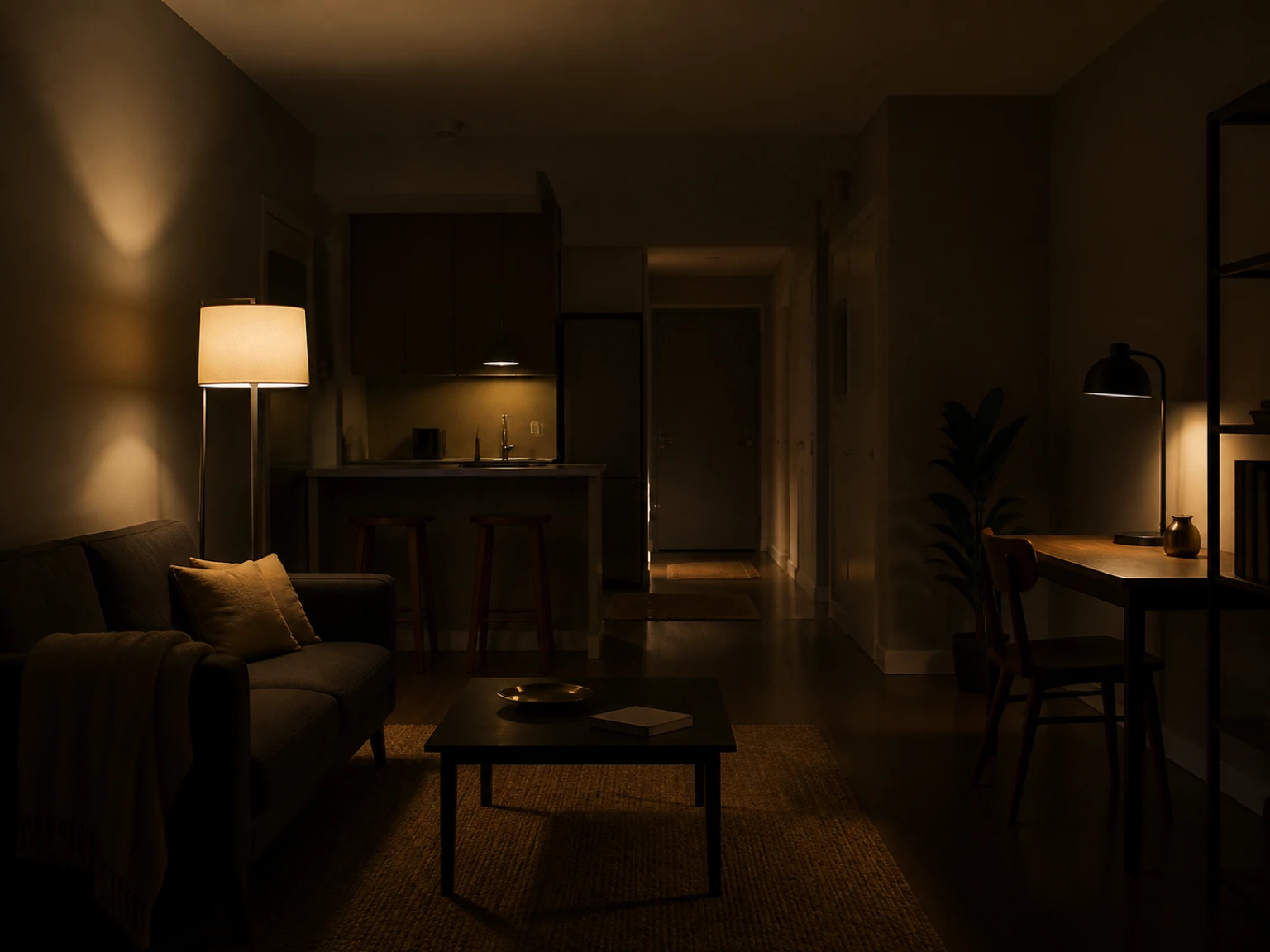
Check the lowest useful setting in the room
Place the lamp where it will stay and wait until the room is dark. Sit at the usual viewing height. Move the control down slowly and stop where the target area remains useful without making the source dominant.
Check nearby walls and screens for reflections. Turn the lamp slightly or move it behind furniture when the source appears in glass. A small position change can improve comfort without demanding another product.
Now switch on the other lamps that belong in the evening scene. Each source should keep a clear purpose. If the room becomes flat, lower the broadest lamp and let the local pools carry the useful areas.
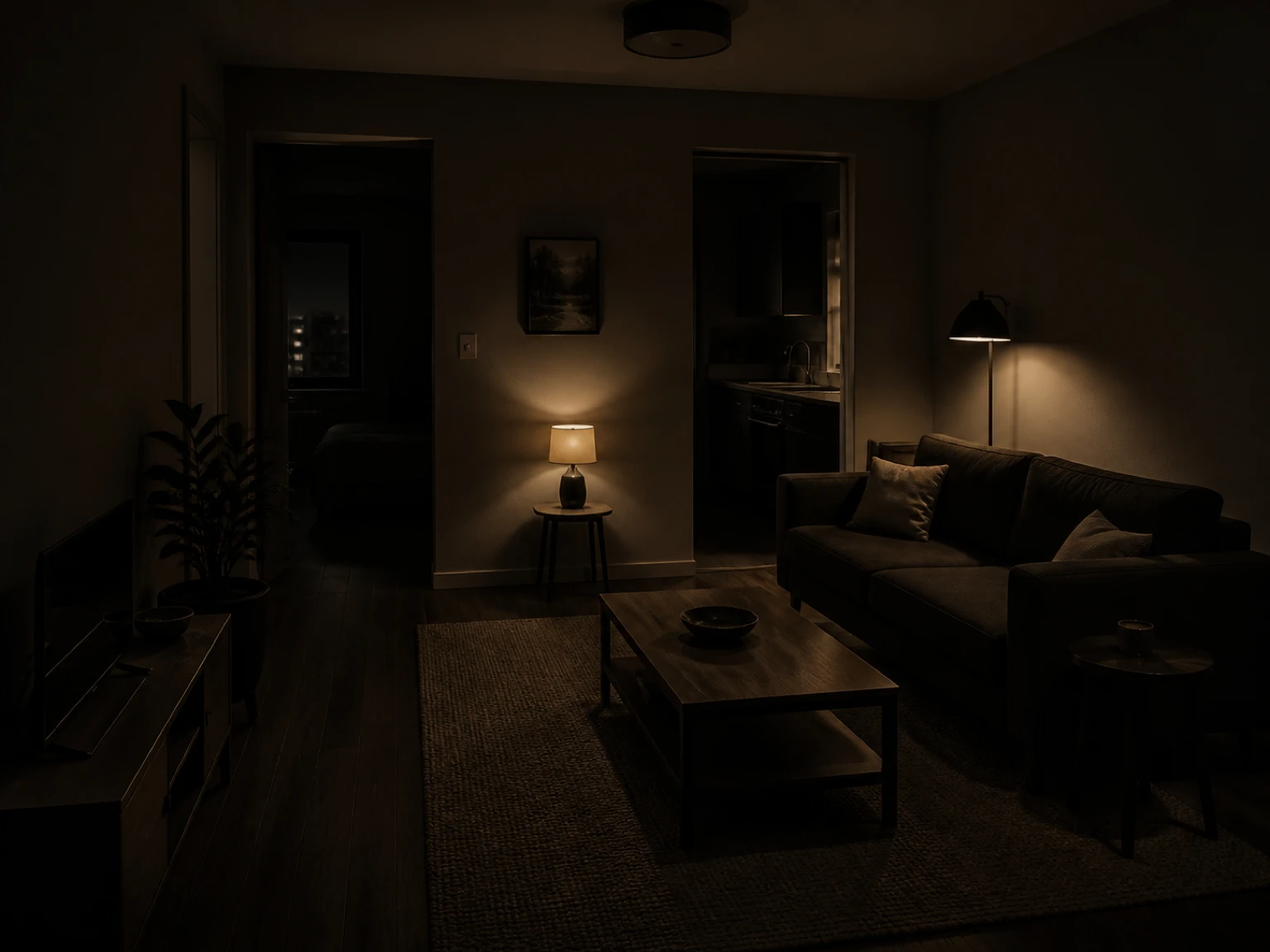
Choose comfort before headroom
A lumen figure remains useful. It shows the available upper output and helps identify lamps built for broad illumination. Its limit appears when a small-room shopper treats that ceiling as a complete description of the product.
The lower range affects more evenings. Warm colour helps the room settle, and careful direction keeps the source out of view. Several local pools can then cover the places that need light while preserving shadow elsewhere.
Buy for how low the lamp goes and how warm the light appears. Use maximum output as supporting information. That decision gives a compact rented room the control it needs, without treating a capable high-output lamp as a poor product.
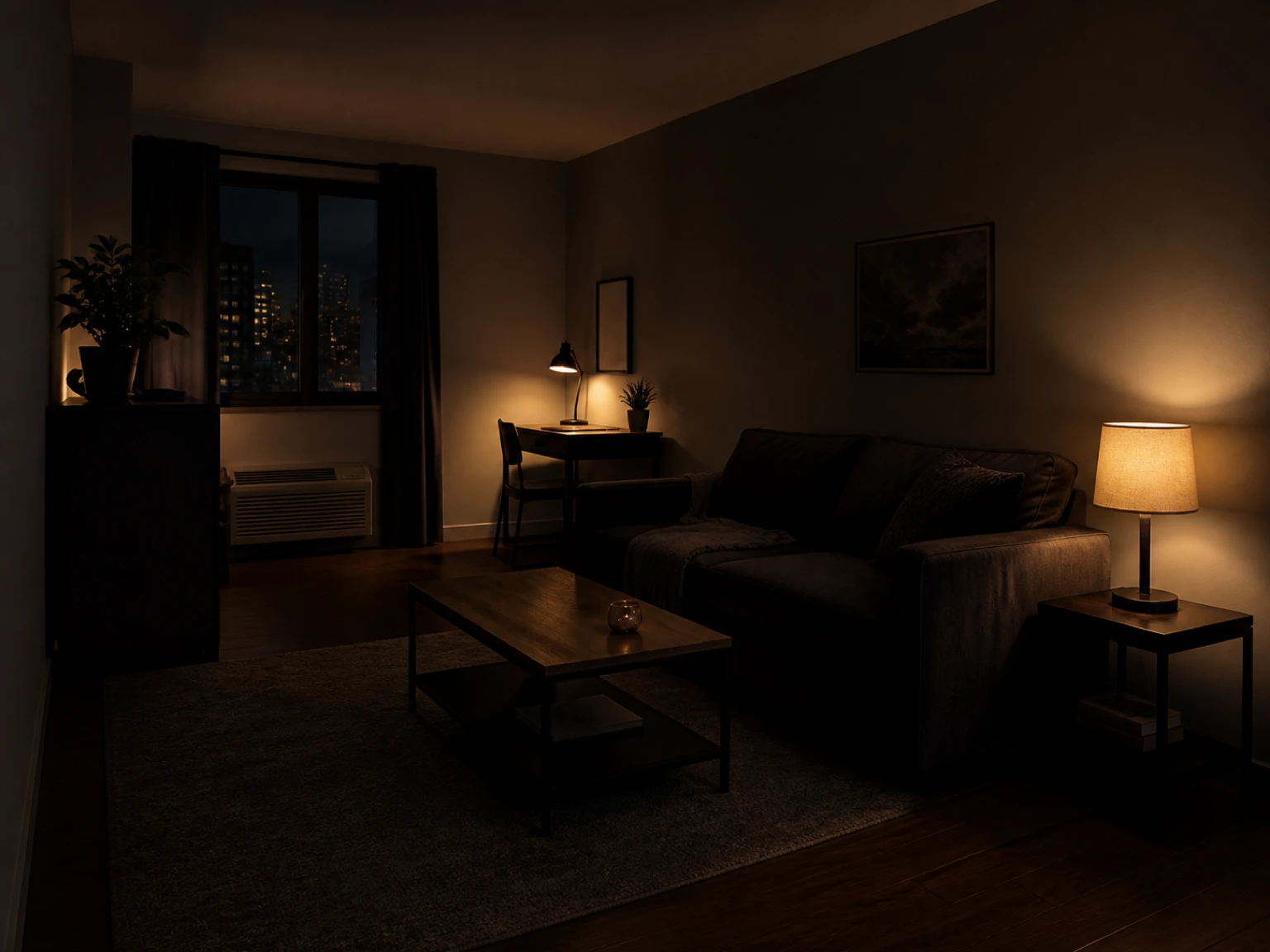
Before choosing the lamp: read the lowest dimming claim, confirm the warm colour, and study how the shade directs light. Plan several local pools with the warm-lighting guide. For a softer bedroom, see the moody bedroom guide. The no-damage lighting guide can help keep the room reversible.