
The bold capacity figure on an adhesive strip pack looks like a complete answer. A renter sees it, compares it with a frame or small shelf, and expects the choice to be settled. That shortcut leaves out the conditions that give the figure meaning.
A published rating belongs to a specific product. It also assumes a suitable surface and a certain kind of load. Change any part of that match and the large figure on the pack may answer a different question from the one your wall presents.
The useful habit is simple. Find the exact product first and check the surface named by its maker. Then compare the object's weight and loading behaviour with the complete hold statement. Read every qualifier that follows the figure.
This guide uses one manufacturer's range because its published claims show the problem clearly. The manufacturer gives its ratings in kilograms and grams. Those metric figures stay in their published form here. The method still applies to whatever brand is in your drawer.

Read the rating as a complete statement
Product size changes the published hold
A family name can cover several products. In the cited Powerstrips range, the small version holds up to 1.8 kg. The medium version holds up to 5.4 kg. The large version holds up to 7.2 kg. Each figure belongs to its named version.
The range name alone therefore cannot license the highest capacity across every pack. A strip left in a drawer may look familiar while its exact version remains unclear. Match it from dependable product details before hanging an object that could damage the wall or break in a fall.
Packaging often puts the capacity where the eye lands first. The product name, intended use, and surface language may receive less attention. Slow the comparison down enough to connect those details. The hold figure becomes useful only after that connection is clear.

A different product answers a different question
The same manufacturer describes another product as rated to hold up to 2 kg on smooth surfaces. Its qualifier sits beside the capacity: smooth surfaces. That wording makes the wall part of the claim. Carrying the figure onto a rough or weak finish would discard a condition the maker chose to publish.
The poster strip has another role and another scale. The poster strip holds up to 200g, according to the published claim. A renter should read that as a claim about that product, rather than a general statement about every removable adhesive strip from the maker.
These published capacities can sit together without conflict. The products differ, and one claim also names its surface. Comparing only the figures erases the reason each product exists. Compare complete claims instead.

Treat the surface as part of the product
Smooth contact gives the strip its working base
Adhesive needs broad contact with a sound face. A smooth, firm wall lets the strip meet the finish across its pad. Heavy texture leaves gaps. Dust creates a weak layer, while loose paint can separate from the wall even when the bond to the paint remains strong.
A capacity statement cannot describe every rental wall. Paint may be chalky, glossy, recently repaired, or poorly joined to an older coat. Wallpaper introduces another finish. Tile, sealed timber, and coated furniture each present their own surface. The product instructions decide which of these belong within the claim.
Inspect the intended spot under direct light. Look for dust, flaking edges, raised texture, seams, and old repairs. If the finish moves under gentle pressure, the wall face becomes the weak link. A stronger strip cannot repair a weak coating.

Choose the spot before choosing the strip
Many hanging decisions begin with the object. Reverse that order when the room offers mixed surfaces. Find a suitable location first. A smooth section of wall may support the intended removable method, while nearby brick, rough plaster, or a damaged paint patch may call for another plan.
The better location may also protect the object. Keep it away from a door edge, a chair back, or a curtain that brushes past. A quiet wall places fewer changing forces on the bond and lowers the chance of an accidental pull.

Match the rating to the way the object loads the strip
Weight tells only part of the load story
A flat frame places its load close to the wall. A deep object moves the load farther forward and can pull at the upper edge. A cable, bag, or frequently handled item adds movement. The object's weight may stay constant while the force reaching the adhesive changes.
Think about how the object behaves after hanging. A rigid item that rests flat brings a steady load. A hinged piece moves. A container changes as contents come and go. Something beside a bed or entry can be caught by clothing, bedding, or a carried bag.
Use the manufacturer's intended object type when it is stated. That description can reveal more than the capacity alone. A poster strip and a hanging product may share removable adhesive technology, yet their jobs place different demands on the bond.

Use a repeatable buying check
Confirm the product before comparing capacity
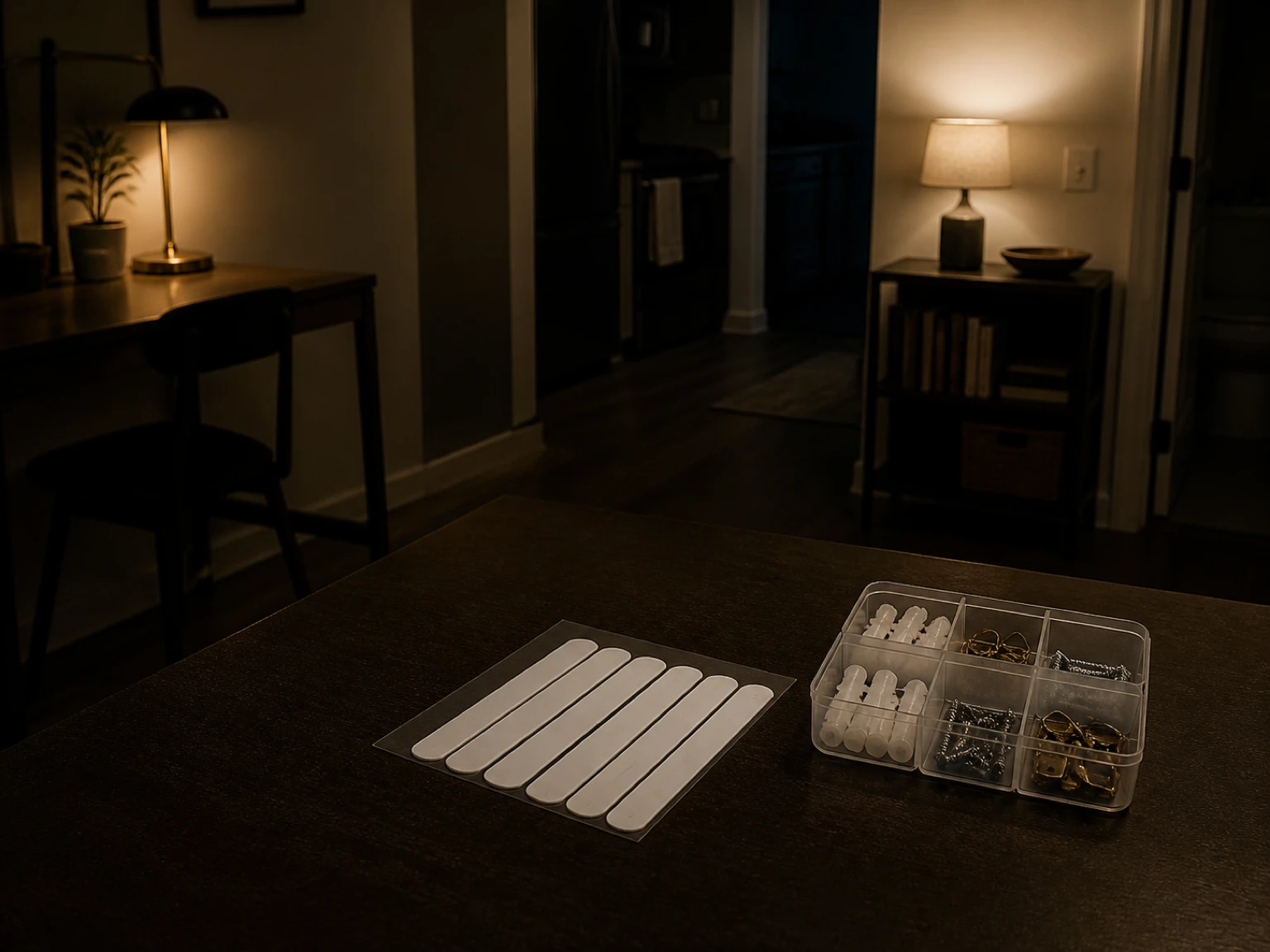
Start with the full product name and version. Loose strips without clear identification create guesswork. Their shape or colour may resemble a current pack while the adhesive, intended use, or capacity differs. Keep unknown strips for low-consequence uses only when their instructions can be recovered with confidence.
Read the maker's current page or the complete pack. Find the capacity sentence and continue to its end. Words about the product version, surface, object type, or installation method can narrow the claim. Record the whole condition in your choice.
Check the object and the wall together
Find the object's weight from dependable product information or measure it with a suitable scale. Include anything that remains attached during normal use. Then consider whether the object sits flat, projects forward, moves, or receives regular handling.
Return to the wall with that load in mind. Confirm that the finish is sound and that the maker names the surface as suitable. Check the full installation and removal instructions before the adhesive touches the wall. A hidden removal path can turn a simple hanging choice into a repair problem.
Fragile, valuable, or hazardous objects deserve a more conservative method. A published maximum describes the edge of the stated claim. It does not promise that every real wall, installation, and moving object will behave like the maker's stated conditions.

Plan removal before installation
A renter needs the bond to release as designed. Read the removal direction before placement and leave enough access for that motion. Furniture, moulding, or the mounted object itself can block the path if the strip sits too close to an edge.
Check the lease and the wall finish as separate concerns. A product can be designed for removable use while a landlord still restricts adhesive mounting. A weak paint layer can also lift during correct removal. Product suitability cannot grant permission or strengthen the coating beneath it.
Keep the product instructions with any spare strips. That small step preserves the rating, the named surfaces, and the removal method after the outer pack leaves the drawer. Future choices can then use the published conditions instead of memory.

Let the qualifier decide
Capacity figures remain useful when they stay attached to their conditions. The exact product sets the claim. The surface decides whether the wall belongs within it, while the object's weight and behaviour decide whether the load fits.
Read past the bold figure. Match the product to the surface and the object you need to hang. That habit makes different capacities easier to understand because each statement keeps its own job.
The result is a calmer choice for a rental. You can use the maker's figure without treating it as a universal promise, and you can reject a poor match before the wall finish or the object carries the cost.

Before hanging: identify the exact strip, read the complete capacity claim, inspect the wall finish, and consider how the object will pull. For broader planning, see the renter-friendly wall guide. Compare removable surface choices in the peel-and-stick guide. For nearby curtains and lights, use the no-damage hanging guide.