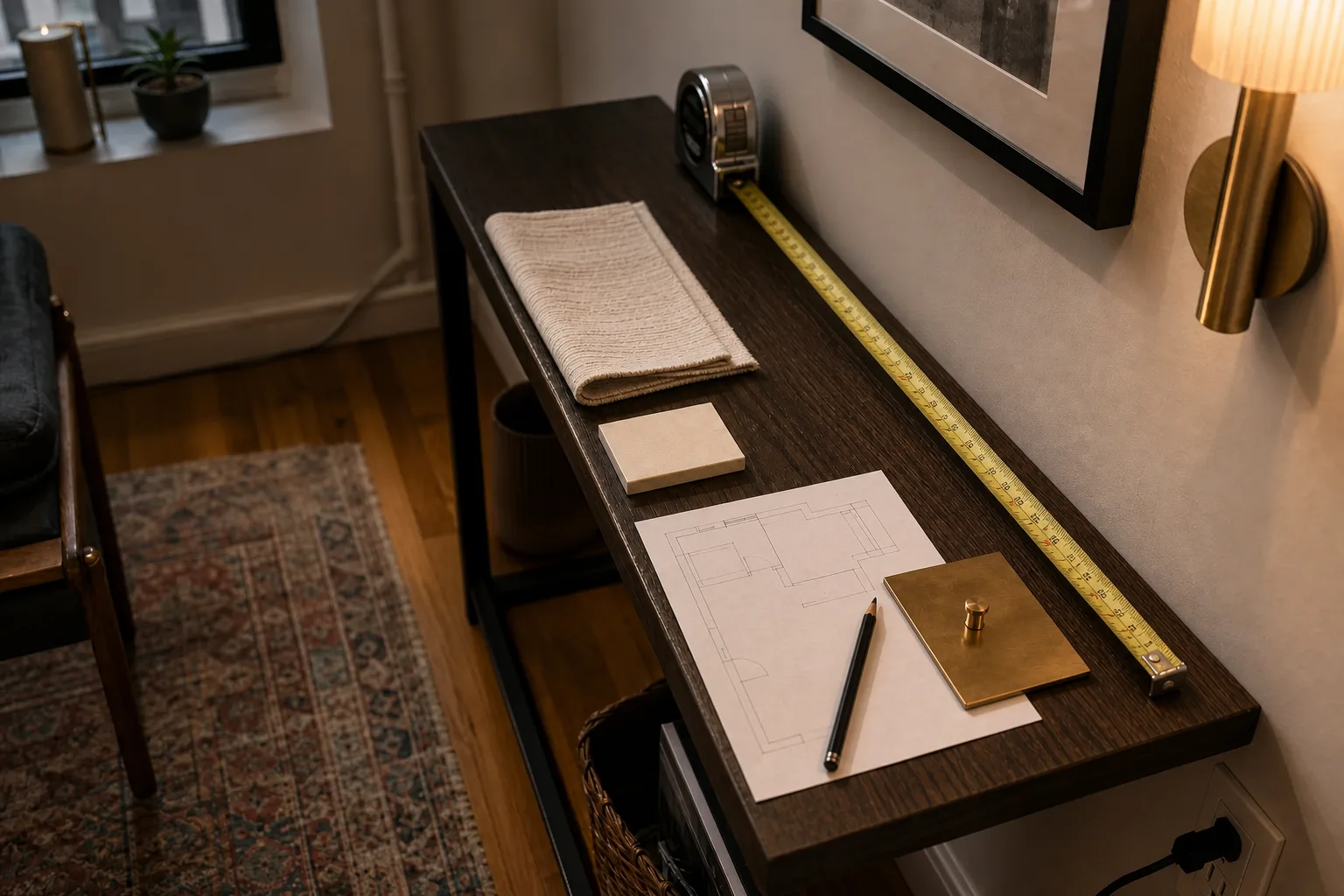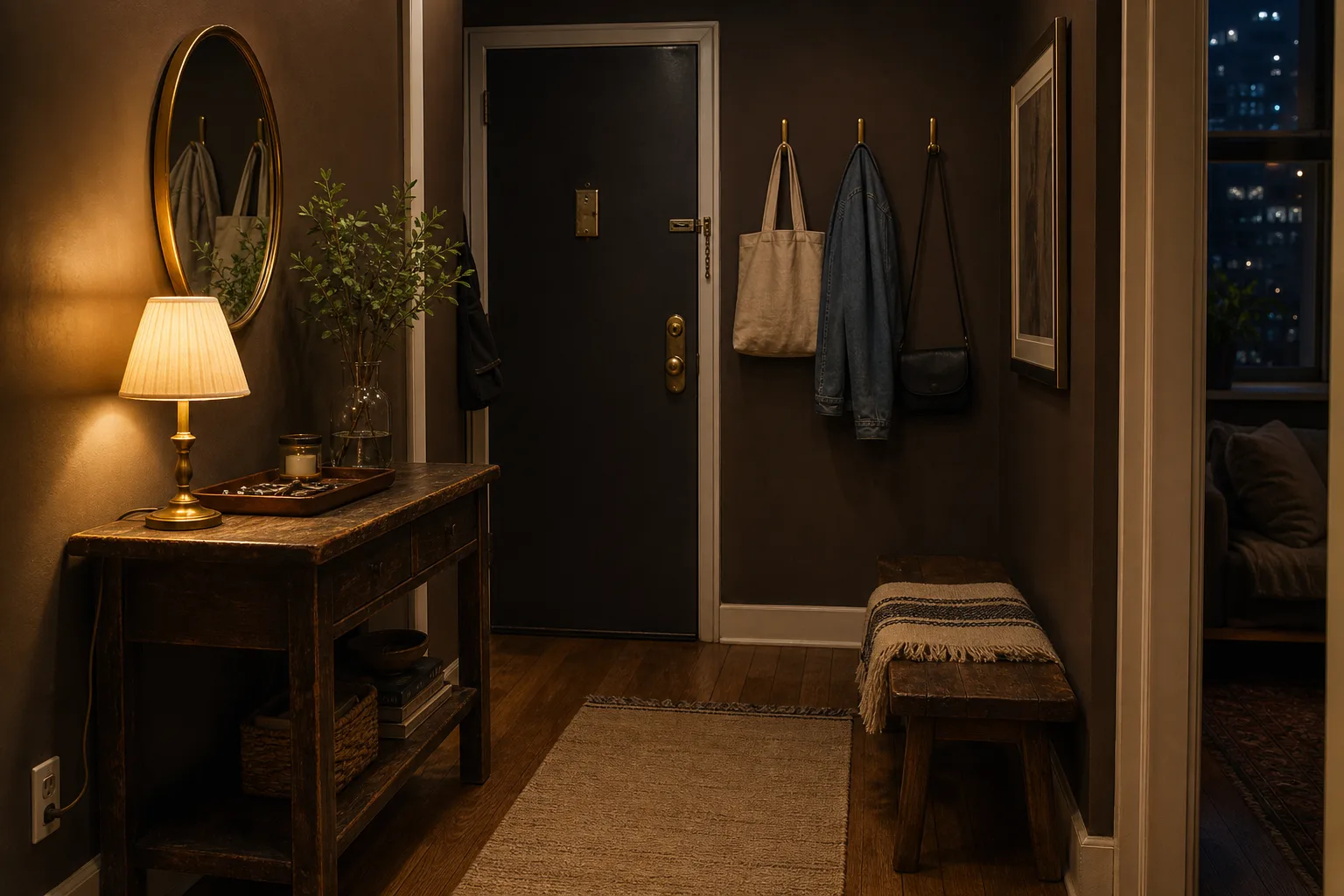
A rental often feels temporary after the furniture is in because the small transitions are still unresolved: keys land wherever, a bare bulb glares through a cheap shade, the entry has no landing place, and everyday bottles become the room’s visual focus. Buying more decoration rarely fixes that. It usually creates ten new objects without solving one daily annoyance.
The better under-$50 purchase has a job and a home. Before buying, name the unfinished moment, measure the exact spot, and decide what the new item replaces. Prices below are broad retail and secondhand ranges, not promises. Shipping, materials, and local availability can move them, so the right dimensions and finish matter more than finding the lowest number.
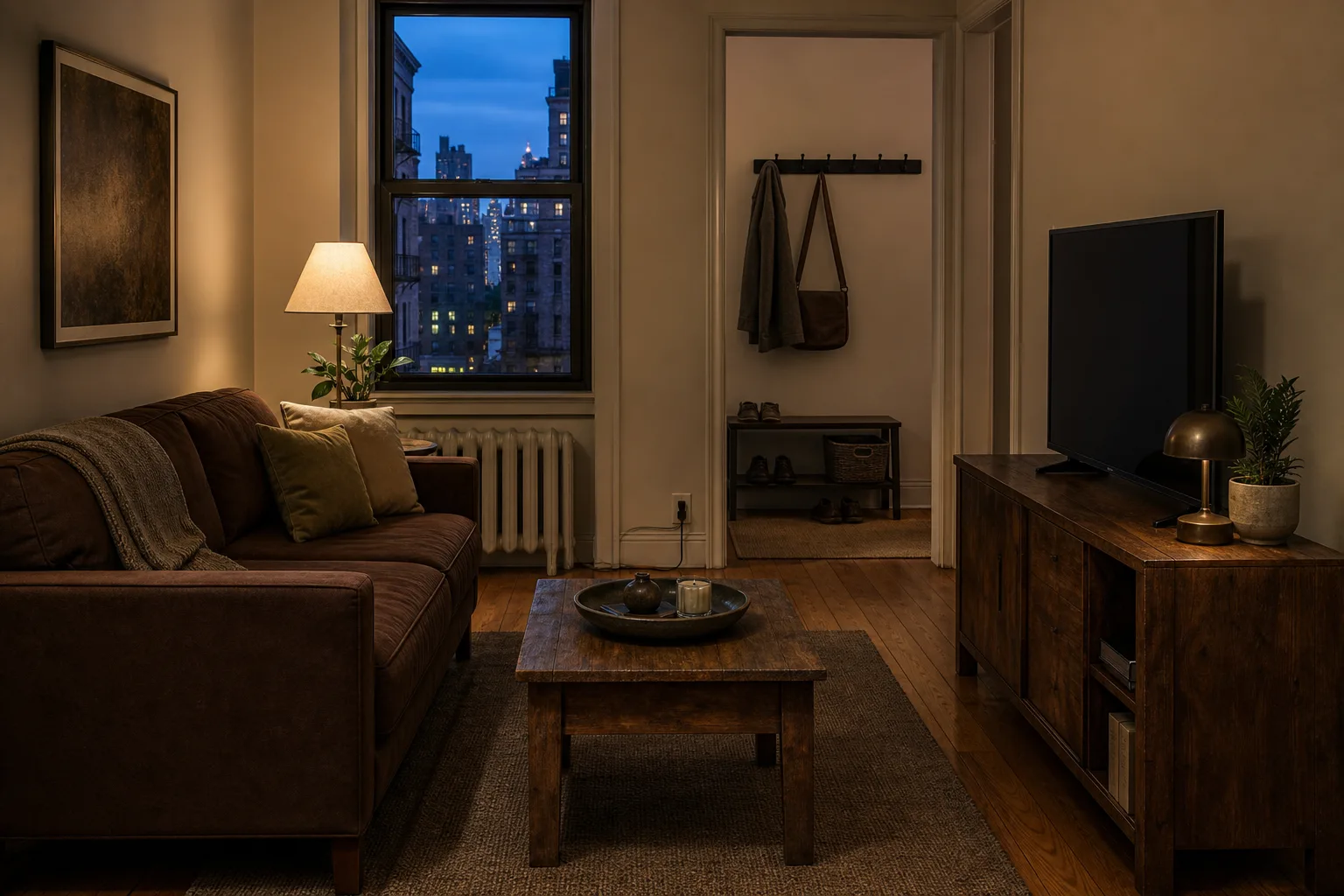
Start with the things you touch every day
1. A shallow tray for one busy surface
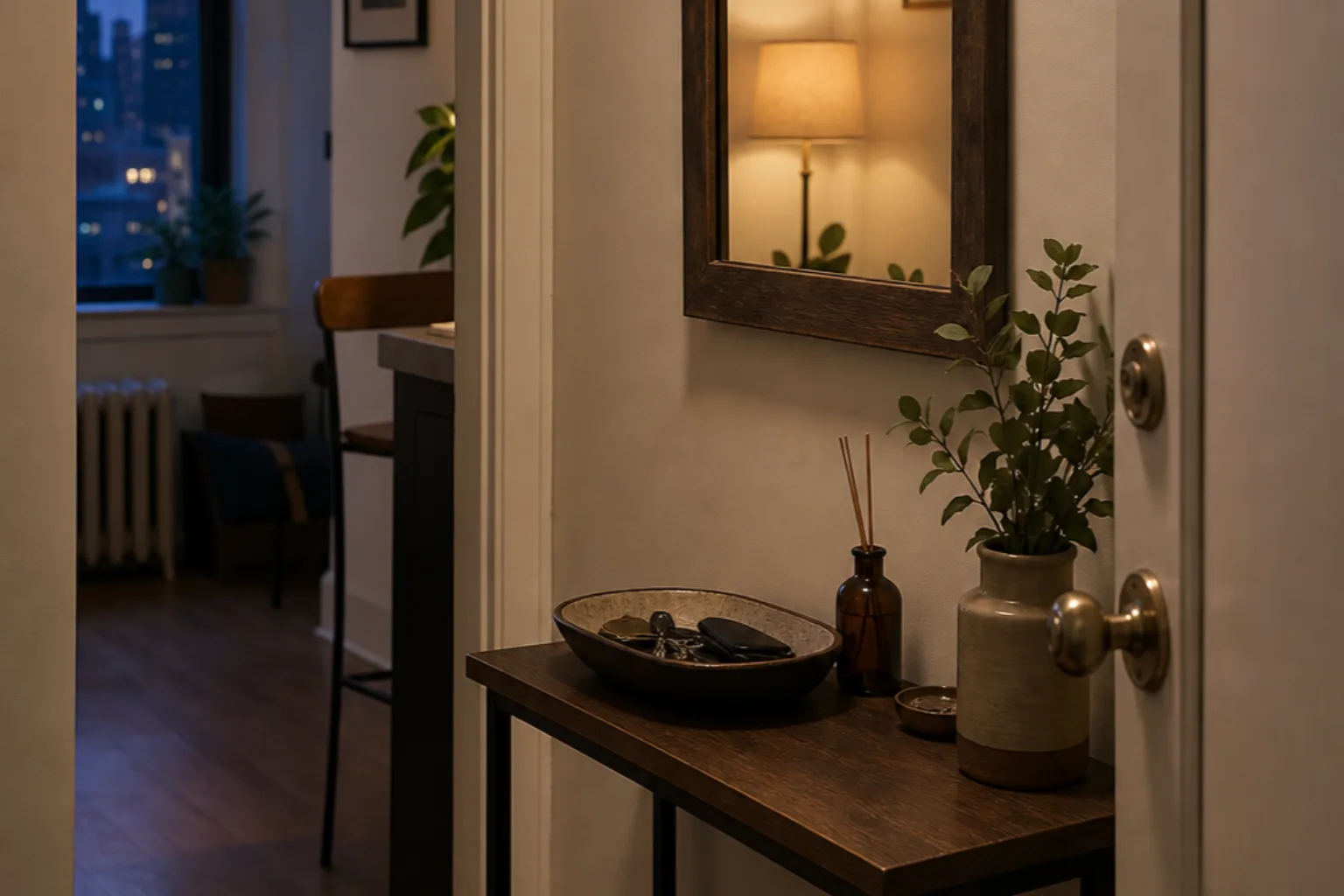
A tray turns scattered keys, remotes, glasses, or cooking oils into one deliberate group. Choose one only slightly larger than the objects it must hold; an oversized tray steals working space and becomes another place to pile things. Wood, dark metal, or matte ceramic tends to look quieter than mirrored finishes. Expect roughly $12–$40 new and less secondhand. Felt feet protect a landlord’s counter or console from scratches.
2. Matching switch and outlet covers
Yellowed plastic plates can make an otherwise calm wall feel neglected. Simple replacement covers usually cost $3–$15 each. Match the opening configuration exactly and keep every original plate, screw, and part in a labeled move-out bag. Turn off power at the breaker before removing a cover, confirm the switch or outlet is not energized, and stop if the device itself is loose, damaged, or unfamiliar. A cover swap is cosmetic; electrical repair belongs to the landlord or a qualified electrician.
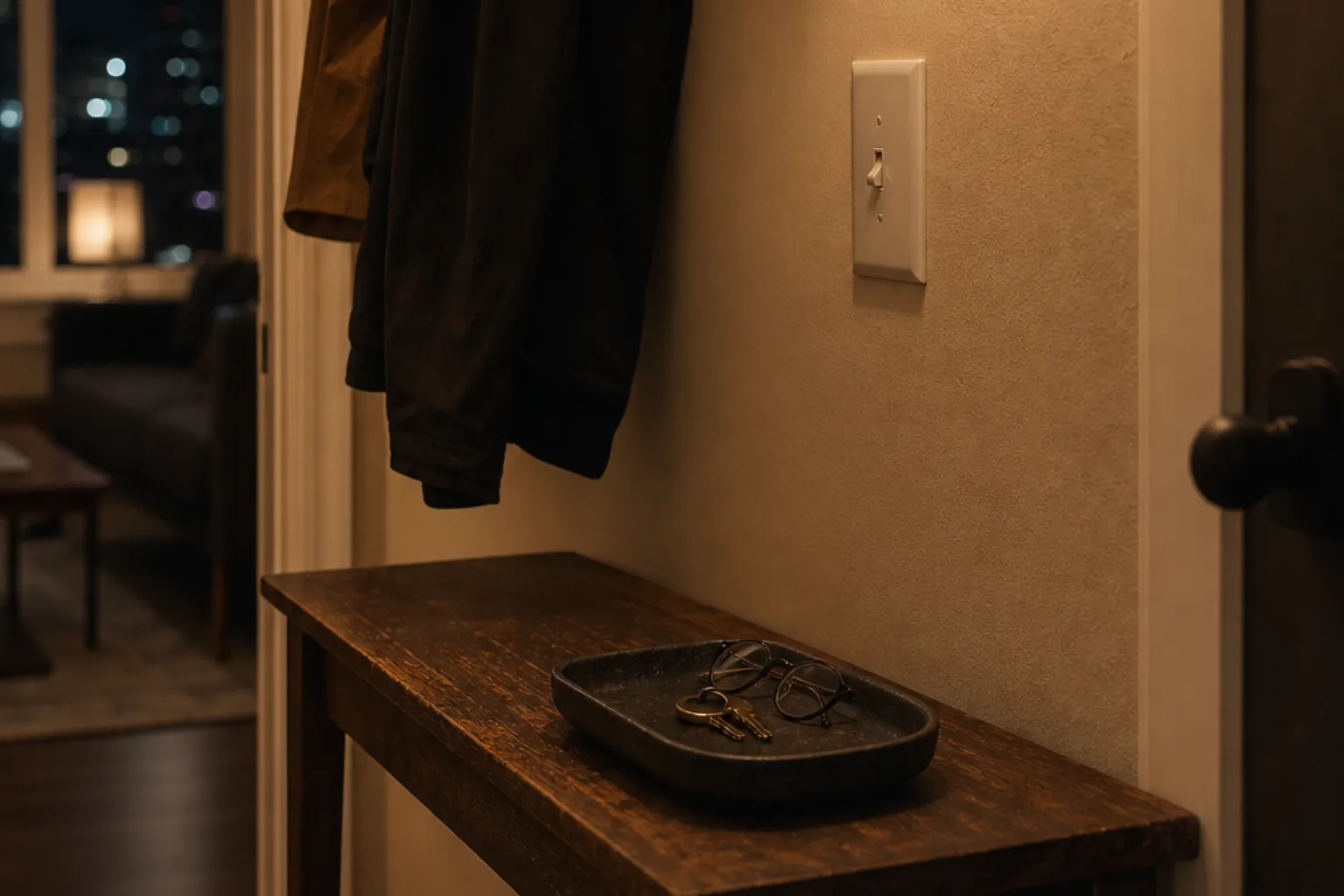
3. A compact entry catchall
A narrow basket, divided dish, or lidded box gives mail, sunglasses, and dog supplies a boundary near the door. Measure the full door swing and walking width before adding anything to a tiny entry. A $15–$45 piece is useful only when it does not force you to turn sideways. Prefer one container with compartments over several decorative bowls.
Correct the light and soften one hard edge
4. Warm frosted LED bulbs
Replacing one icy or painfully bright bulb can improve a room more than another accessory. Around 2700K is a dependable warm white; use lumens to choose brightness and check the fixture’s base, maximum wattage, dimmer compatibility, and enclosure rating. A multipack commonly runs $8–$25. Keep the old working bulbs for move-out, and do not use a higher-wattage bulb than the fixture allows.
5. A better lampshade
A shade changes both the lamp and the shape of its light. A warm ivory paper or linen-look drum can calm a spindly thrifted base; an opaque shade sends more light down for reading. At $15–$50, fit is the trap. Record the fitter type, top and bottom diameter, height, and bulb clearance. Bring the lamp to a local shop if possible. A shade that exposes the socket hardware or overwhelms the base looks less finished, not more.
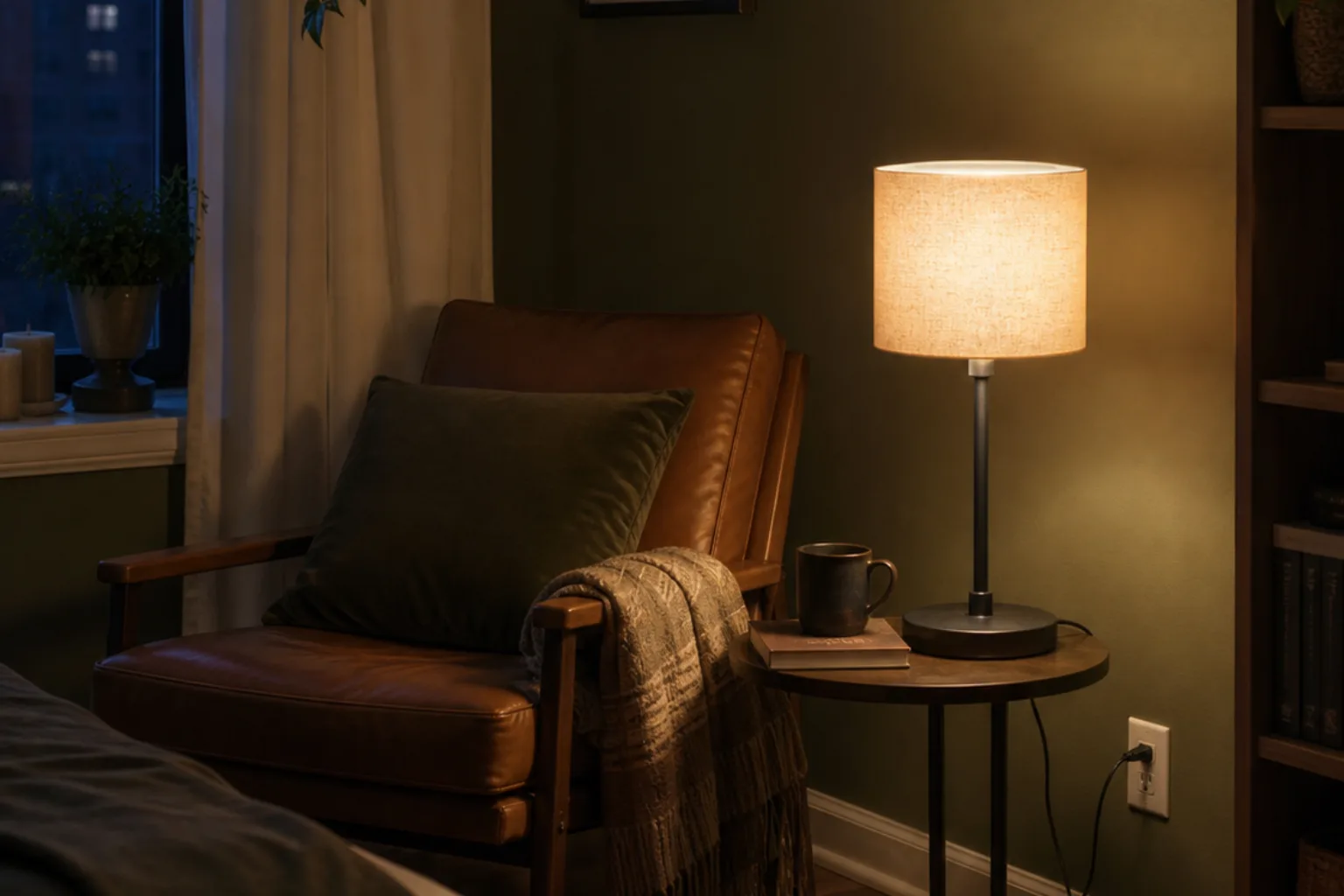
6. One textile that covers a problem
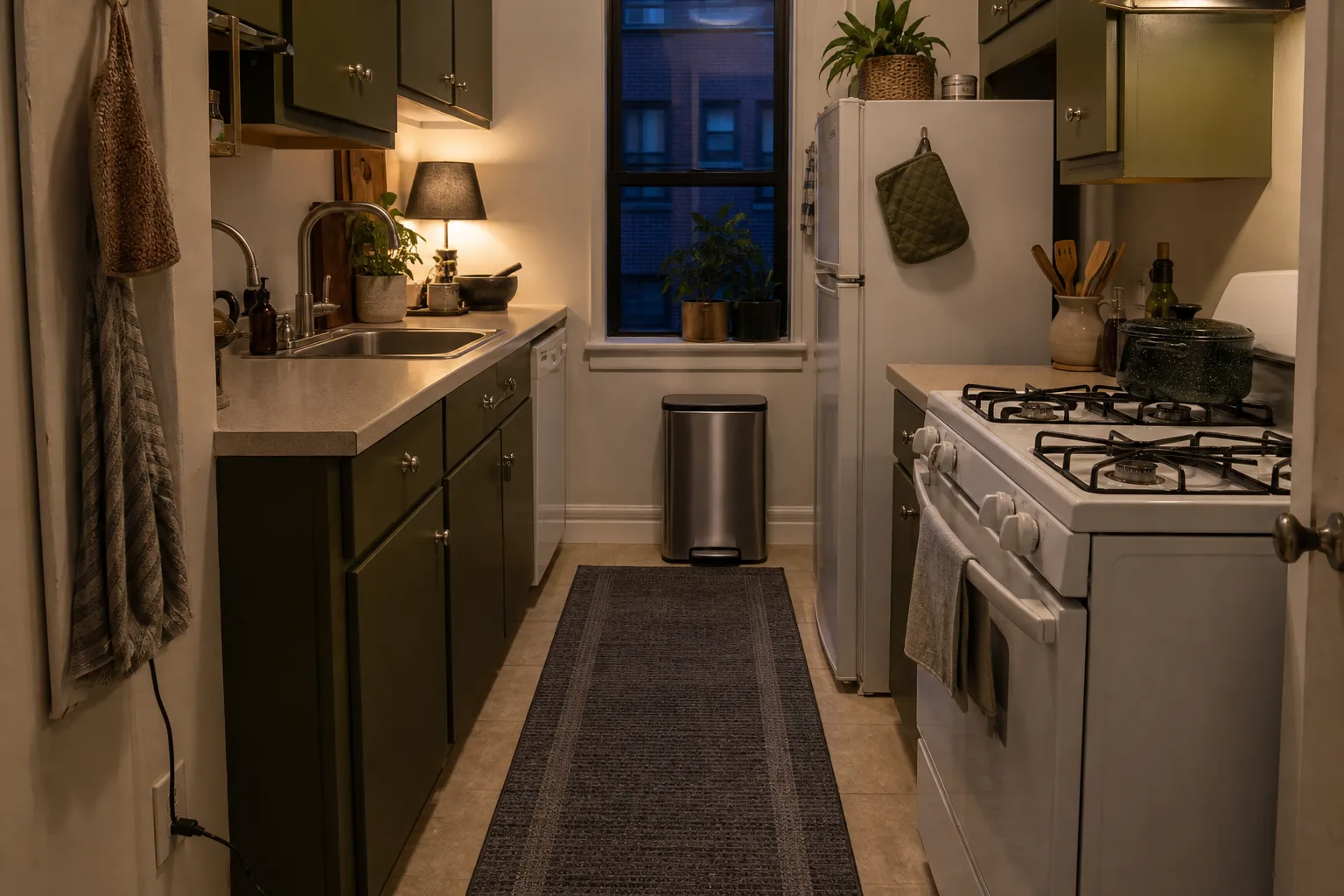
A washable runner can soften a narrow kitchen, a lumbar cushion can improve an uncomfortable chair, and a throw can cover a worn sofa arm. Choose the problem first. Natural-looking texture and a restrained solid or small pattern are easier to repeat than a loud theme. Budget $20–$50, check care instructions, and avoid rugs that curl at an exit or slide without the correct pad.
Use the walls without gambling on them
7. Removable hooks that match
Three identical hooks can make coats or kitchen tools look organized, but the complete hanging weight matters. Read the approved-surface and load instructions, clean and cure the surface as directed, and test one in a hidden area. Old paint, wallpaper, texture, steam, and heat can all make adhesive unreliable. Spend $8–$25, hang well below the stated limit, and never place breakable or heavy objects over a bed or seat.
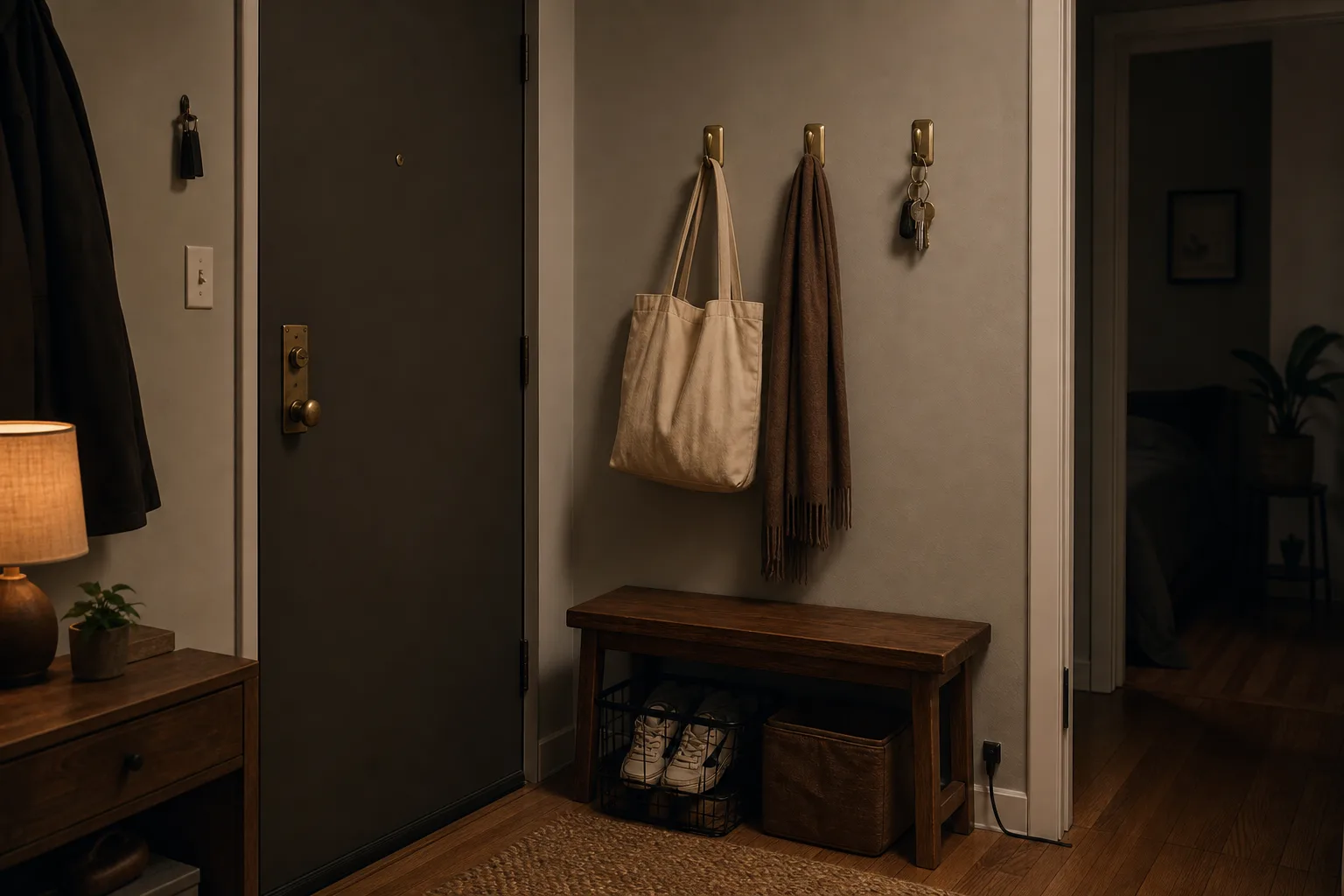
8. A plug-in cord cover kit
A wall light feels intentional when its cord follows a straight, planned path. A basic raceway kit costs about $12–$35. Size it for one appropriate low-voltage or fixture cord, keep plugs and connections exposed, and follow both the light and raceway instructions. Adhesive can lift weak paint, so test first. If a cord must cross a doorway or walking path, move the lamp instead of trying to disguise the hazard.
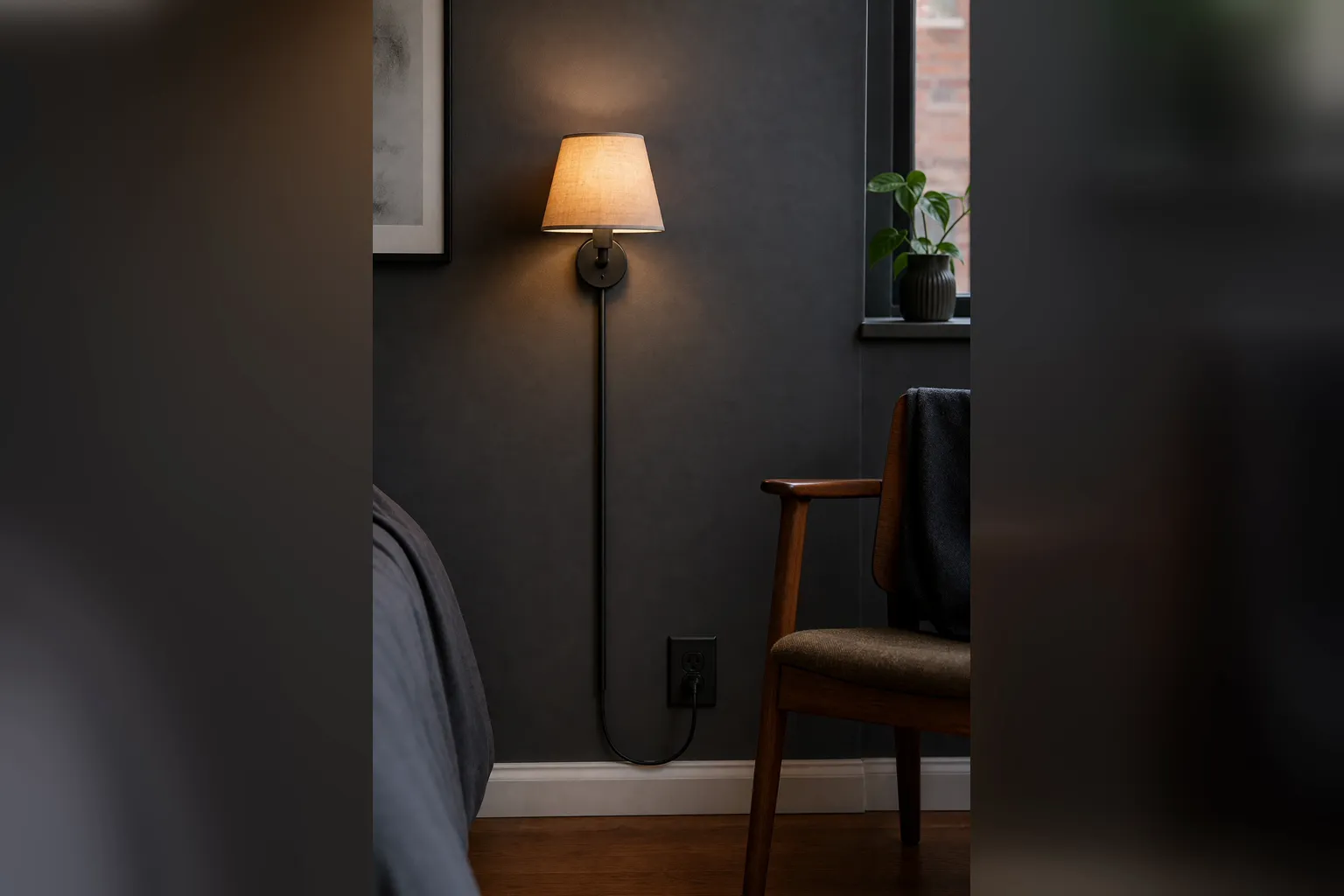
9. A small framed mirror or secondhand frame
A mirror can return light to a dim entry, while a substantial secondhand frame gives simple art more presence. Spend $15–$50 and inspect corners, backing, glass, and hanging hardware. Weigh the finished object, not the empty frame. Use lease-approved hardware suited to the wall, or lean a small stable piece on a deep console with anti-slip protection. Do not lean a tall mirror unsecured where it can tip.
Finish with one piece that repeats the room
10. A secondhand object with useful scale
Look for one footed bowl, ceramic lamp base, wood stool, or lidded box that repeats a material already in the room. The goal is not a “luxury” imitation; it is a sturdy object with weight, texture, and a clear role. Check for wobble, sharp edges, odor, pests, cracks, unsafe wiring, and finishes that shed. Upholstered and electrical finds deserve extra caution. A $10–$50 piece is a bargain only if it needs no costly repair and replaces something weaker.
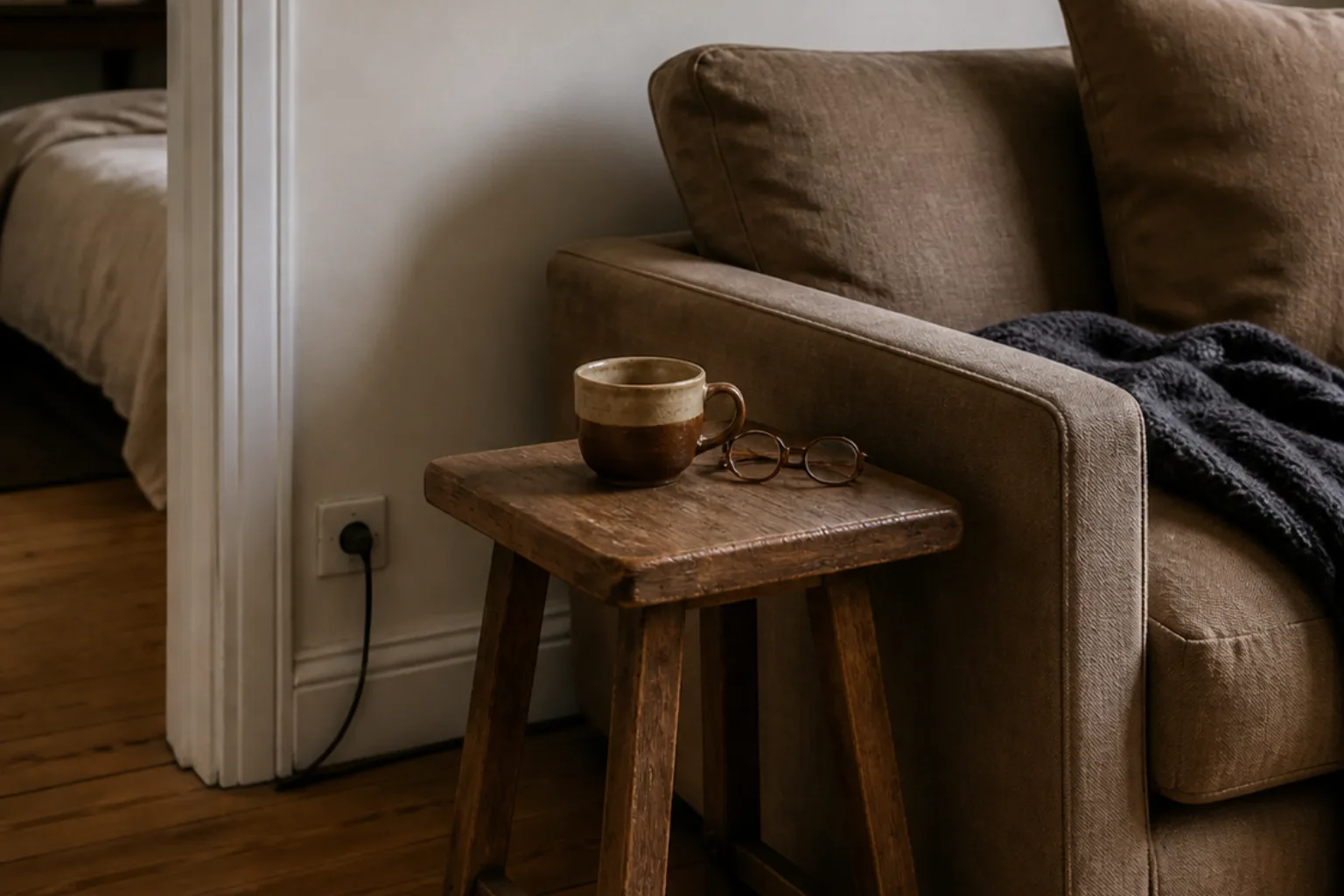
The five-question buying test
Before checkout, ask: What exact annoyance does this solve? Where will it live? What are the maximum dimensions? What must leave the room when it arrives? Can it move with me? If any answer is vague, wait. A finished room is not one where every surface has an object. It is one where the light is comfortable, necessities have predictable homes, and the few visible pieces relate to each other.
The finished-rental rule: repeat two or three materials and solve one daily problem per purchase. For the lighting layer, use the warm lighting guide. If your upgrade involves adhesive, read the peel-and-stick risk guide. You can also browse more renter upgrades or all articles.