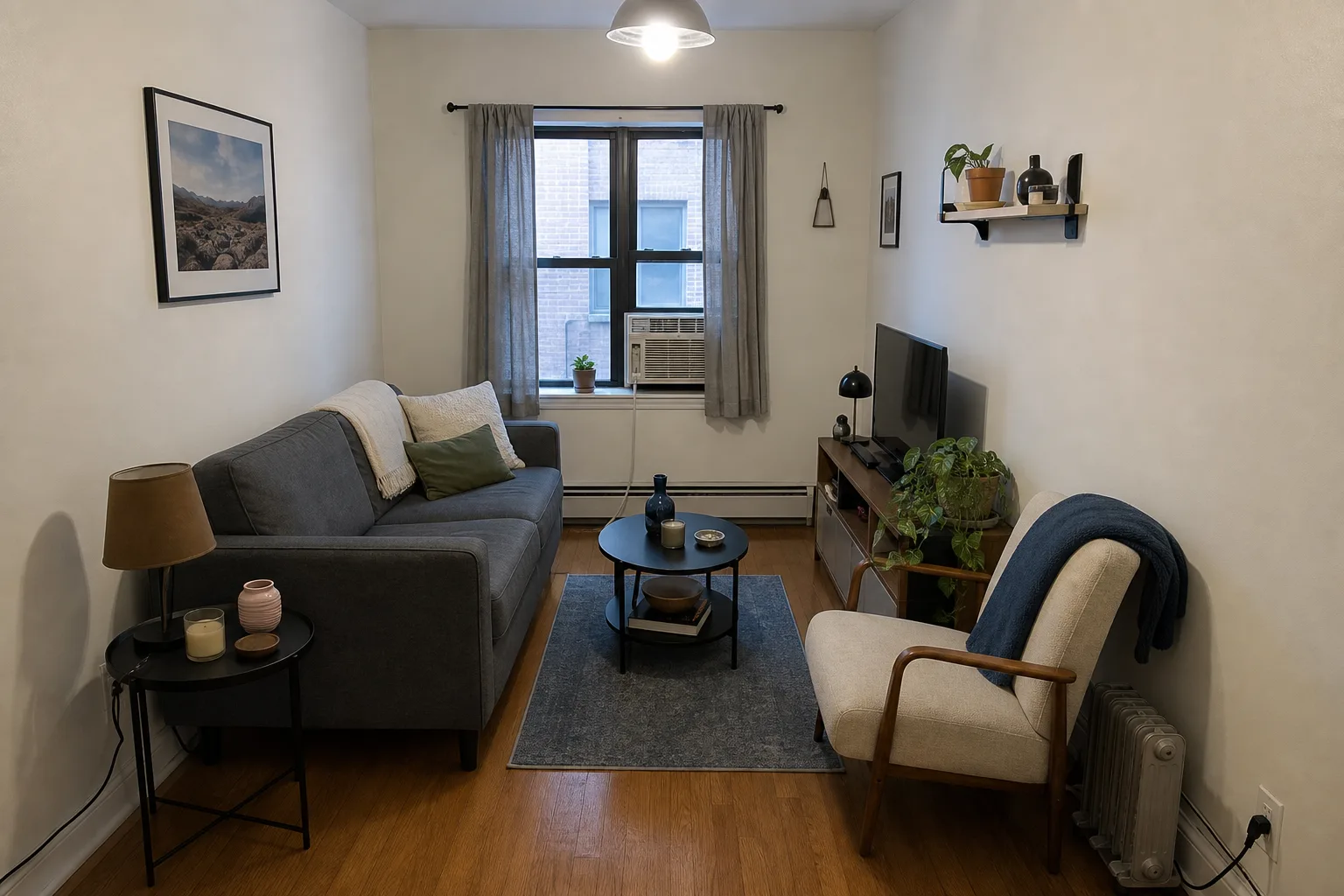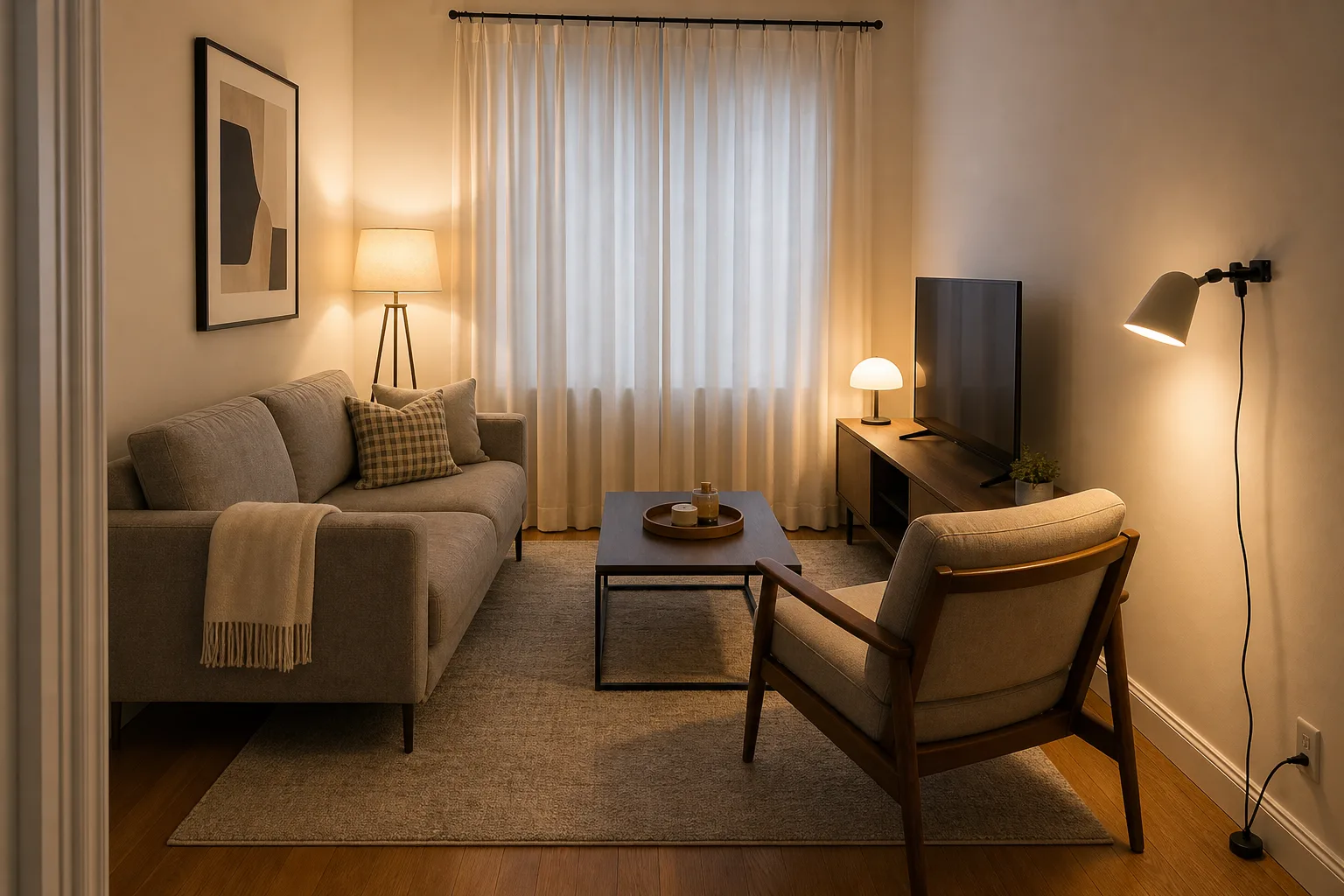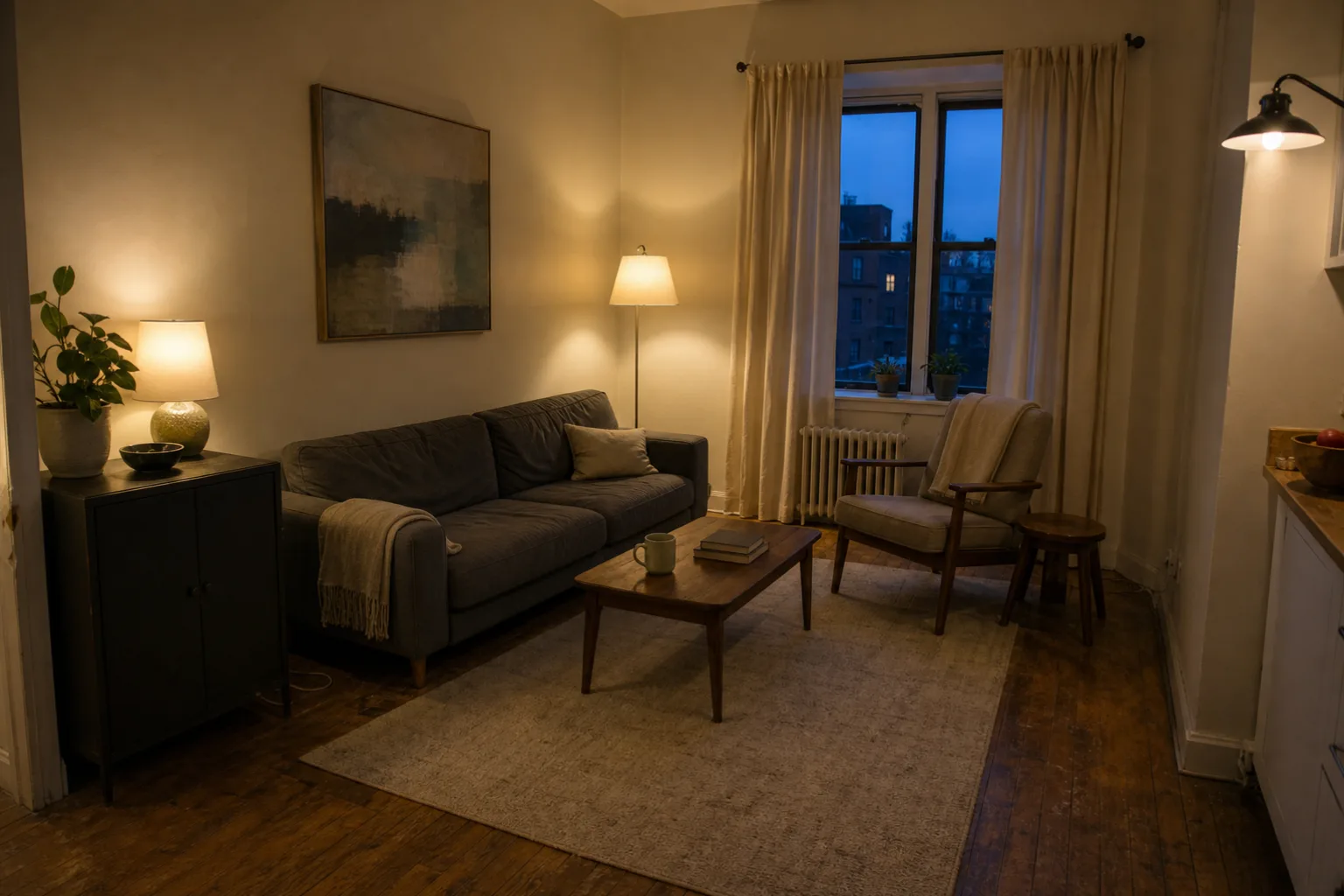
A tiny living room feels cheap when every decision announces its compromise: a rug too small for the sofa, thin curtains ending above the floor, one glaring ceiling fixture, and many little objects trying to add personality. None is necessarily expensive to correct, but buying random “luxury-looking” accessories usually makes the room busier and the budget worse.
Here, expensive means that furniture fits, materials have believable texture, light arrives in layers, and everyday clutter has a quiet home. Start by measuring the room, including doors, windows, radiators, outlets, vents, and the real walking route. Protect those constraints. Then spend in the order that affects the largest visual area.
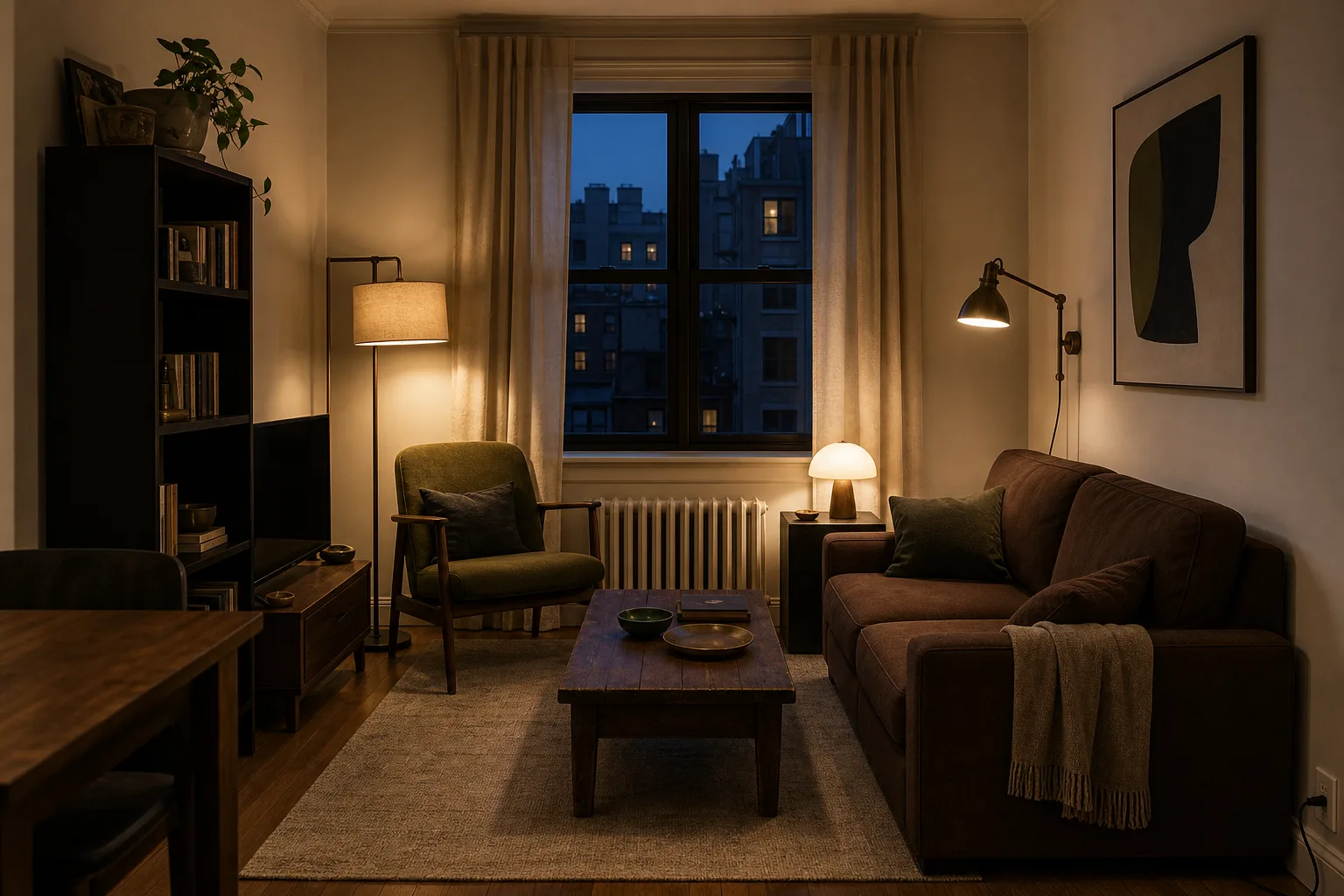
Fix proportion before style
1. Draw the walking path first
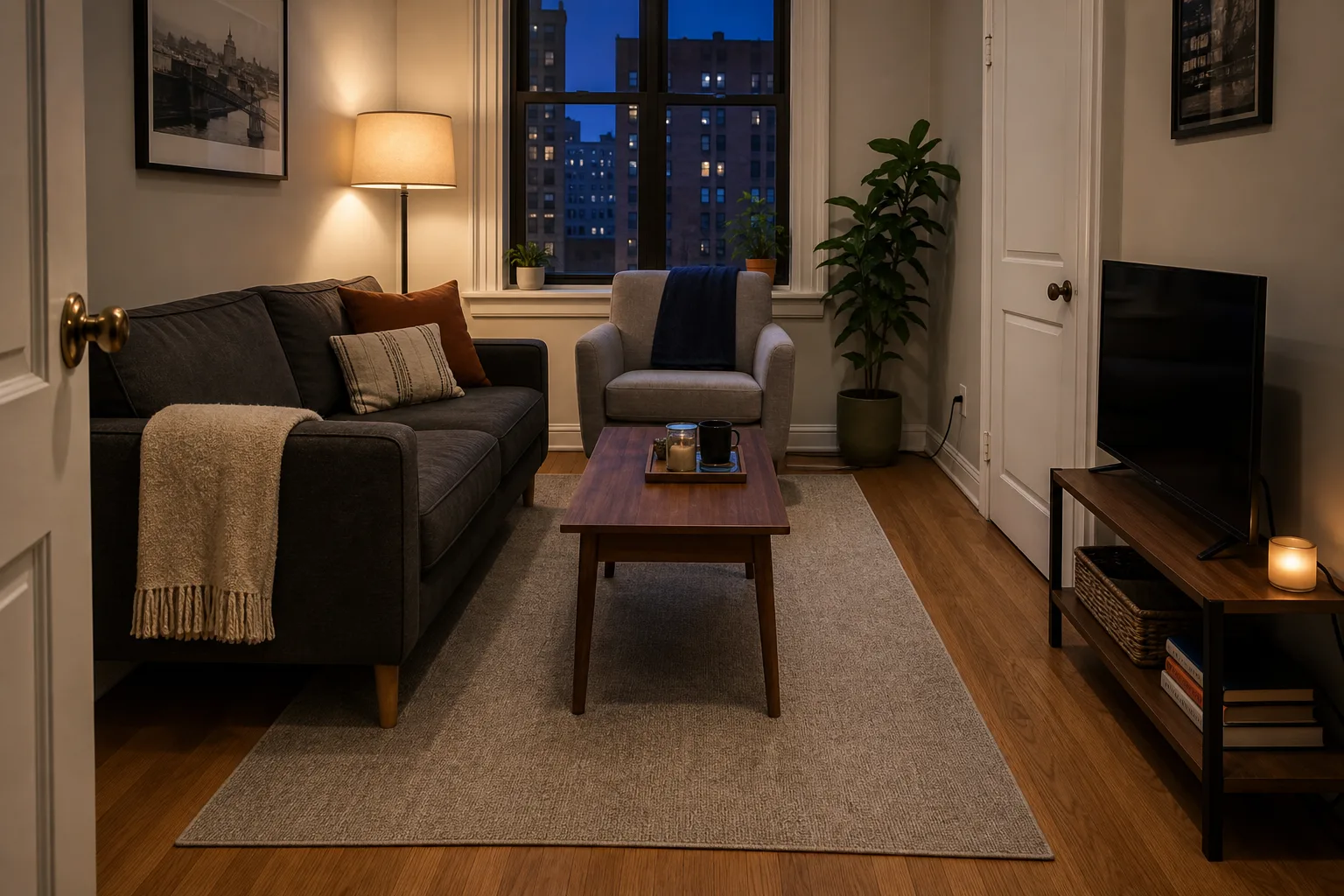
Use painter’s tape or folded sheets to mark furniture footprints without sticking tape to a delicate floor. Keep the route from the entry to the next room clear and avoid forcing people through the conversation area. A compact sofa with arms and legs that fit the room often looks more substantial than an overstuffed sectional squeezed against every wall.
2. Let the rug connect the seating
A rug that floats like a small island can fragment the room. Ideally, the sofa’s front legs and at least part of the adjacent chair or table relationship meet the rug. If that size is too costly, layer a smaller textured rug over an inexpensive flat woven base. Measure door clearance and use an appropriate nonslip pad. For common small-room sizes, budget roughly $80–$350 depending on fiber and construction.
3. Choose one table that performs two jobs
A storage ottoman can provide a soft coffee surface with a tray and hold blankets. A narrow C-table can serve the sofa without filling the center. A stable vintage stool can be both side table and spare perch if it is designed for that load. Spend $30–$180, then check height against the seat, complete footprint, stability, edge shape, and clearance when someone is seated.
Make inexpensive materials look convincing
4. Repeat one honest material
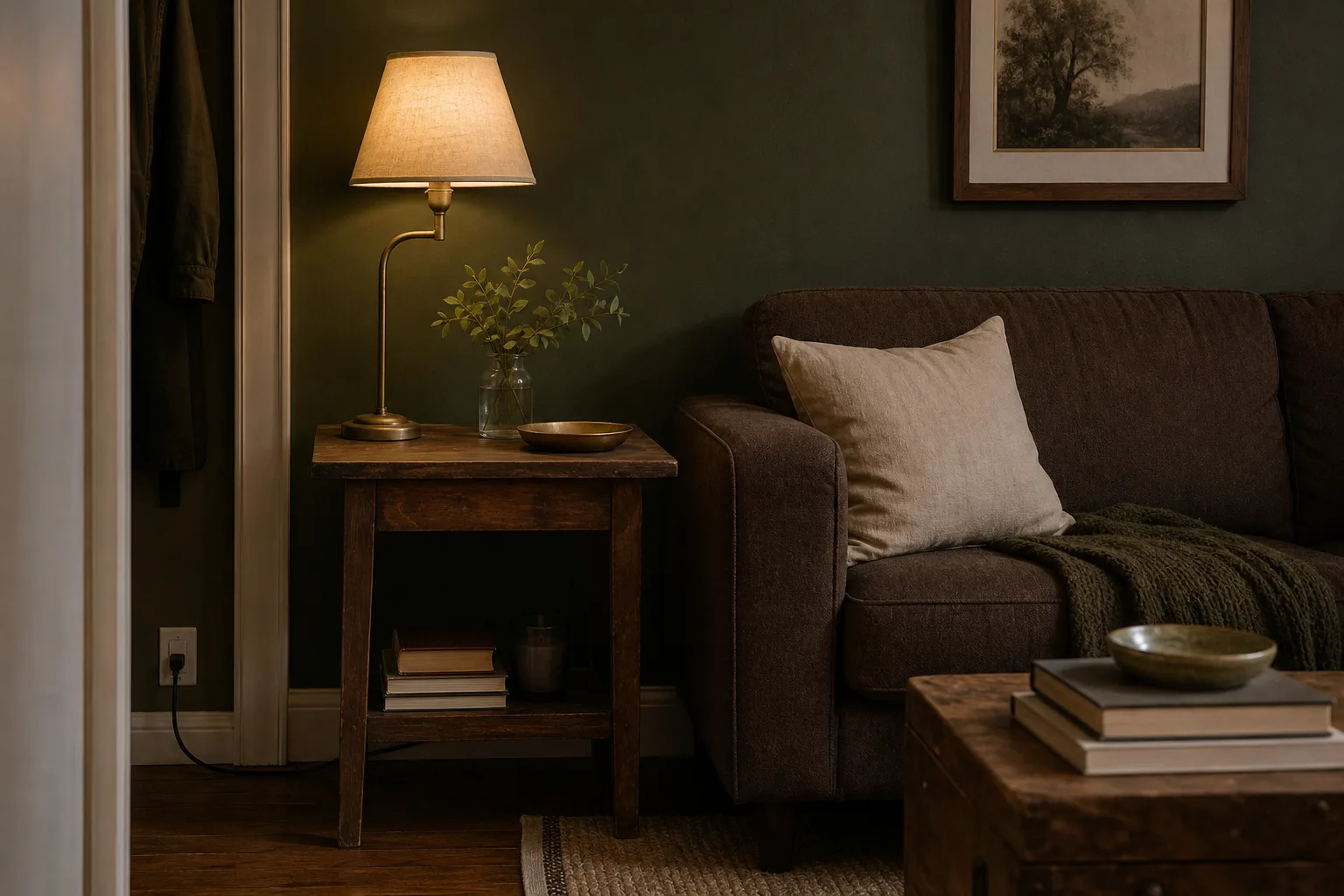
Choose worn wood, dark metal, matte ceramic, or woven natural fiber and repeat it two or three times. A secondhand wood side table, wood frame, and small tray create more coherence than unrelated faux-marble pieces. Inspect used furniture for wobble, odor, pests, splitting, and unsafe repairs. Honest wear can look good; peeling laminate pretending to be stone rarely improves with styling.
5. Upgrade the lampshade before the lamp base
A warm ivory paper or linen-look shade makes a budget lamp feel softer and better proportioned. Record fitter type, height, diameter, bulb clearance, and maximum wattage. A $15–$50 shade can be high impact, but only when it conceals the bright bulb and balances the base. Keep it clear of curtains and upholstery.
6. Use fewer, larger textiles
One substantial throw and two useful cushions read more calmly than a collection of small decorative pillows. Choose washable covers, real texture, and colors already present in the rug or curtains. Feather alternatives, wool blends, and textured cotton all have tradeoffs in care, allergens, and cost. Budget $20–$100 and prioritize something comfortable enough to use.
7. Frame simple art with real depth
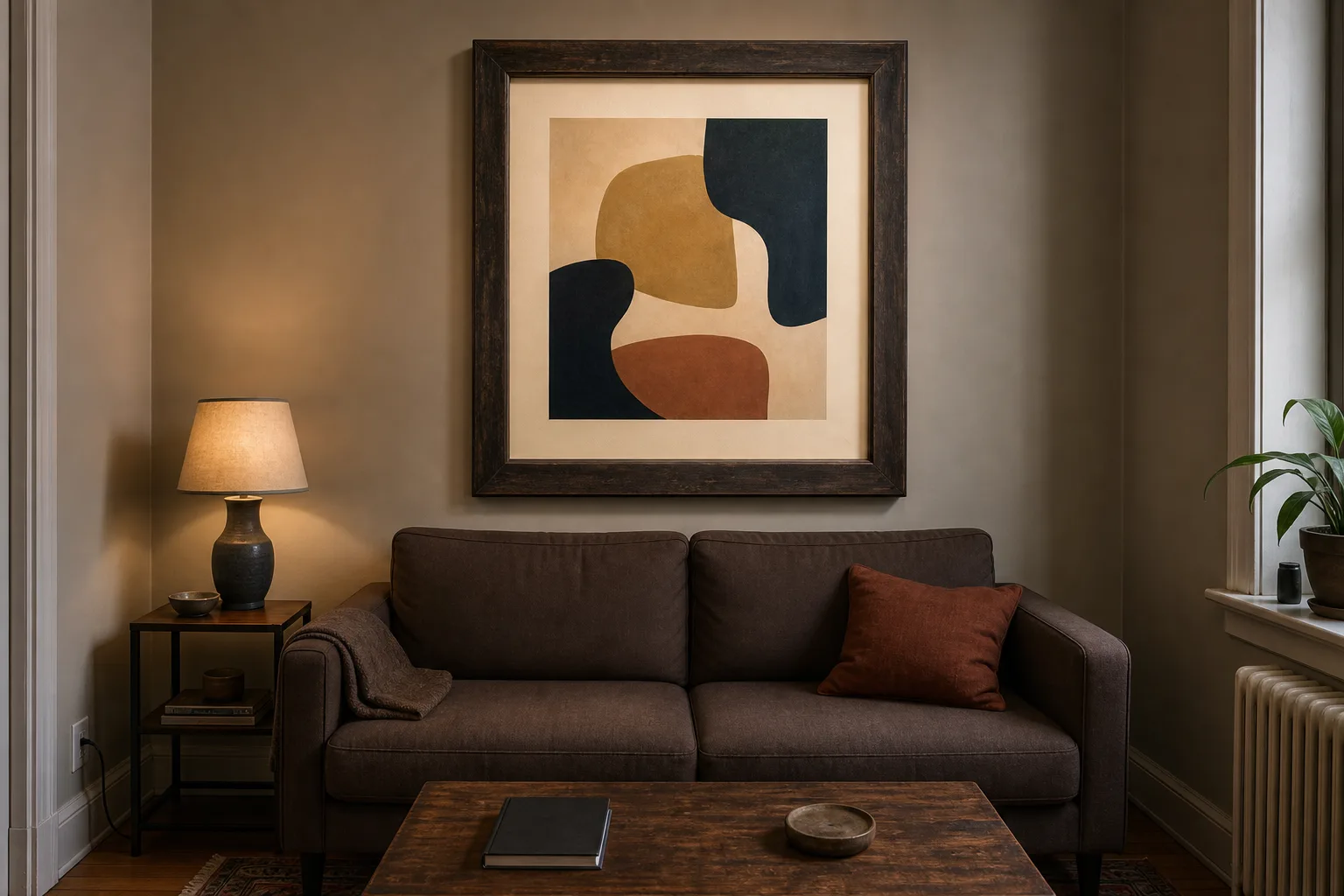
A secondhand wood frame or a generous mat can give a modest print, personal photograph, or simple abstract more presence. Use artwork you own or have permission to reproduce. Weigh the complete framed piece and choose lease-approved hardware for the wall. One medium work over the sofa often looks stronger than many tiny frames whose spacing is difficult to maintain.
Layer the light and the window
8. Use three lights at different heights
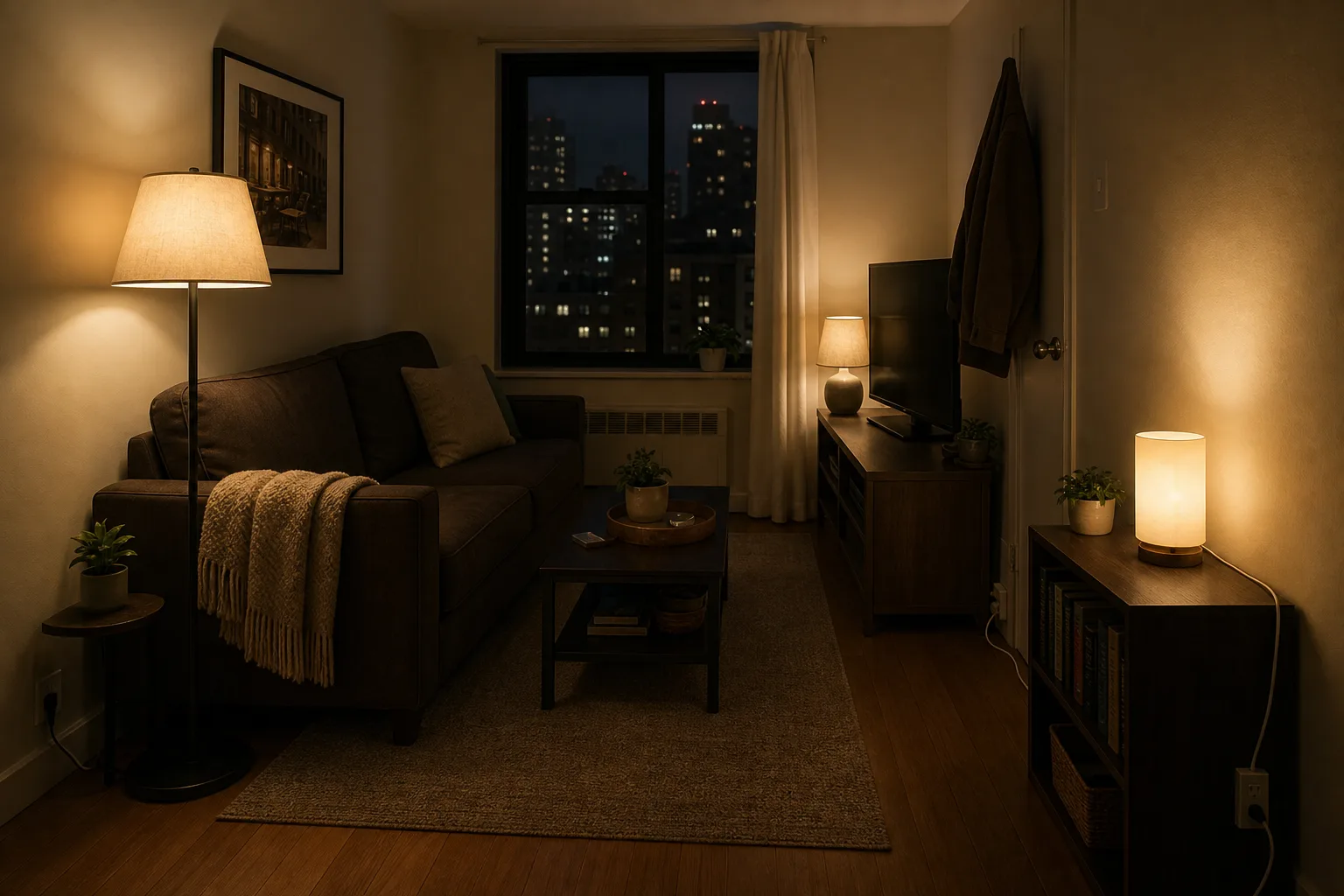
Place a floor lamp near the main seat, a small lamp across the room, and one low shelf or picture light. Around 2700K keeps the family warm; vary brightness by purpose. This plan usually costs $60–$250 depending on what you already own. Every base must sit outside the walking path, and cords should follow walls or baseboards to suitable outlets.
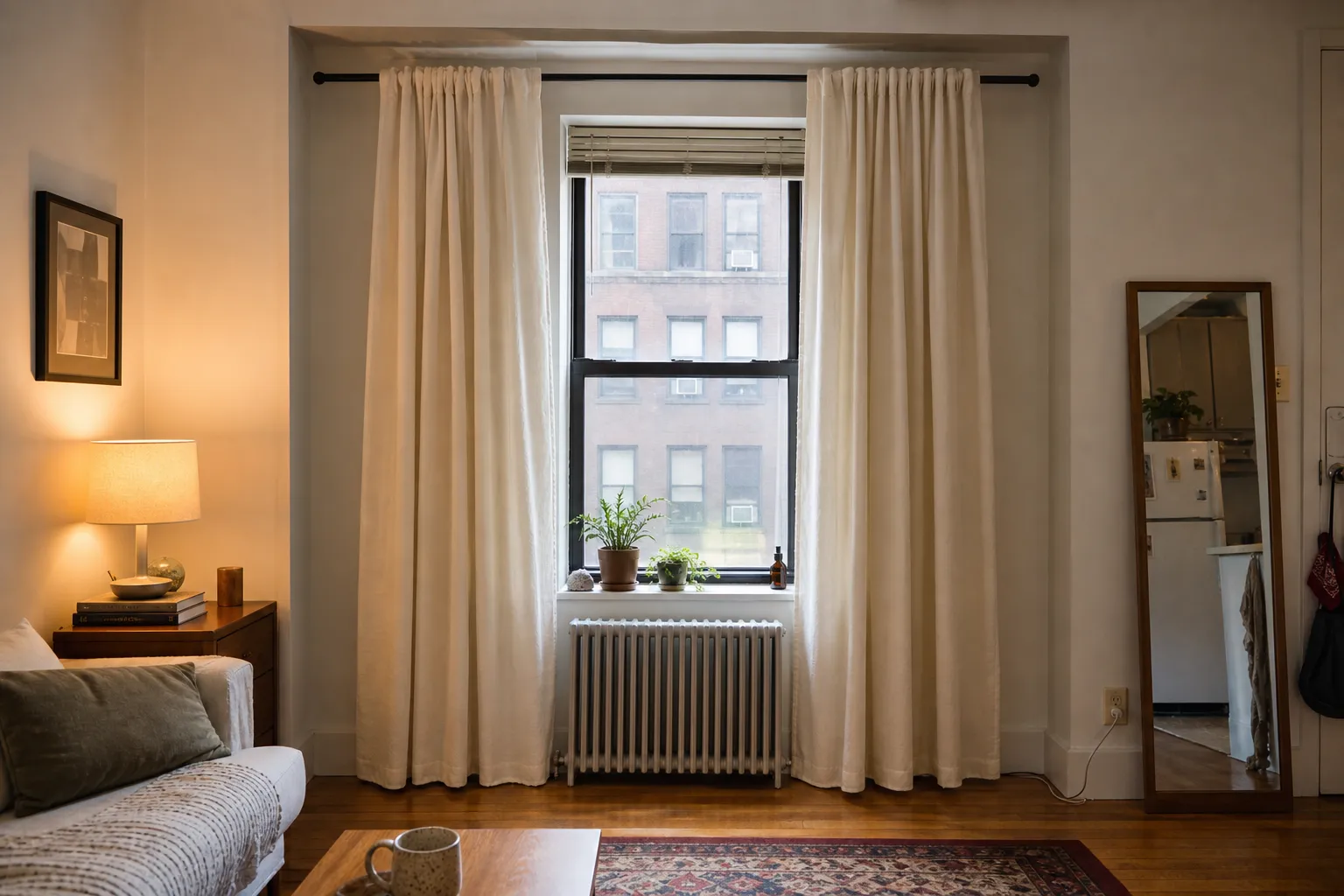
9. Hang curtains for the whole window wall
Where drilling is allowed, panels placed above and just beyond the frame can make a modest window feel more generous. Where it is not, a correctly rated tension or twist-and-fit system may work within a sound recess. Measure width, drop, stack-back space, and full textile weight. Lightweight lined panels often look fuller than very heavy fabric crowded onto an unsuitable no-drill rod.
10. Keep cord routes visible but orderly
A plug-in sconce or lamp loses its calm effect when the cable loops across the floor. Plan the outlet connection before choosing the fixture. Use correctly sized removable clips or a raceway only on an approved, tested surface. Keep plugs and connections accessible; never hide cords beneath rugs or pinch them behind furniture.
Edit what remains visible
11. Give daily clutter one closed home
Use one lidded basket, drawer, or storage ottoman for remotes, chargers, throws, and game controls. Assign one category instead of filling it with miscellaneous objects. Check hinges, ventilation needs, and weight limits. A $25–$150 container is worthwhile when it replaces several smaller organizers and remains easy to open from the main seat.
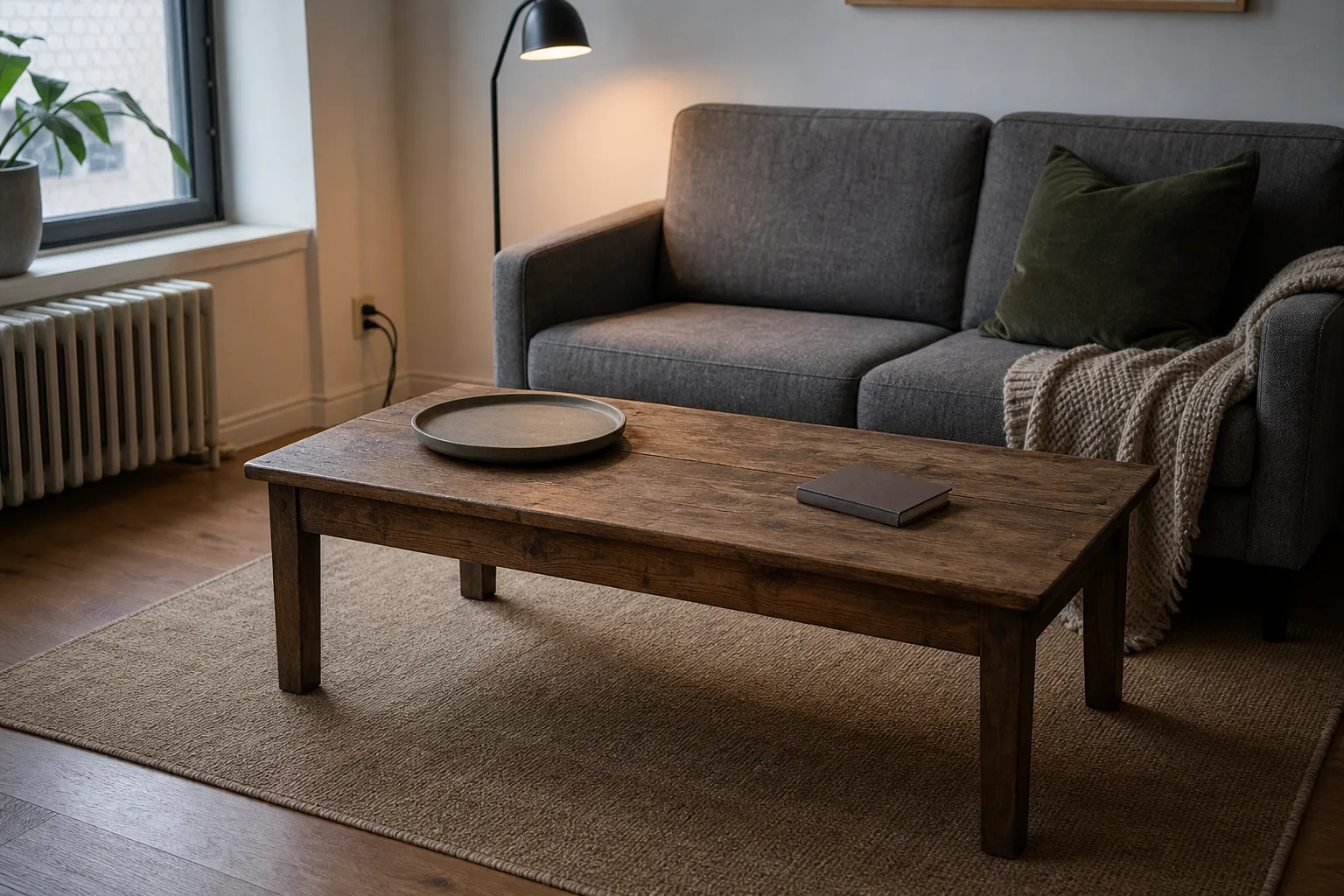
12. Make one surface intentionally sparse
On the coffee table, try a tray, one useful object, and open space. On a console, use a lamp and one low bowl. Negative space lets the eye register the table’s material and makes cleaning easier. If objects have sentimental value, group two or three together rather than spreading them across every ledge.
13. Remove the weakest imitation
Survey the room for one item pretending hardest to be expensive: glossy marble film with a repeating print, a metallic coating that is peeling, or a pile of tiny mirrored accessories. Remove it and leave the space empty for a week. Restraint is free, and an ordinary honest material almost always ages better than a poor imitation used across a large surface.
A budget order that protects the result
First correct the layout for free. Second buy the rug or large textile that connects the seating. Third improve bulbs, lamps, and shades. Fourth resolve the curtains. Fifth add closed storage. Only after those foundations work should you buy art or decorative objects. Set a total before shopping and reserve part of it for rug pads, bulbs, mounting supplies, and returns—the invisible pieces that make the visible idea safe.
The finished-rental rule: put the budget into fit, texture, and useful light before anything labeled luxurious. Use the under-$50 finds guide for smaller finishing pieces, plan the glow with the warm lighting guide, and browse more small-space ideas.