
A cold rental limits the renter. The building heating system stays with the landlord, while a portable heater can change how one occupied area feels during autumn and winter. That limited control makes careful placement more useful than a broad product comparison alone.
Small rooms make the guidance harder to satisfy. A bed, chair, curtain, laundry basket, and narrow walking route may compete for the same open floor. The heater needs its own zone within that existing plan.
Begin with the room while the heater remains unplugged. Look for a suitable wall connection and an open floor area that does not depend on moving soft items later. The useful question is whether the room can keep that area clear during normal life.
Treat the heater zone as part of the furniture layout. It must still work after someone pulls back the bedding, opens the curtains, drops a bag, sets down laundry, or moves a chair. A plan that survives those ordinary changes is easier to follow on a cold evening.
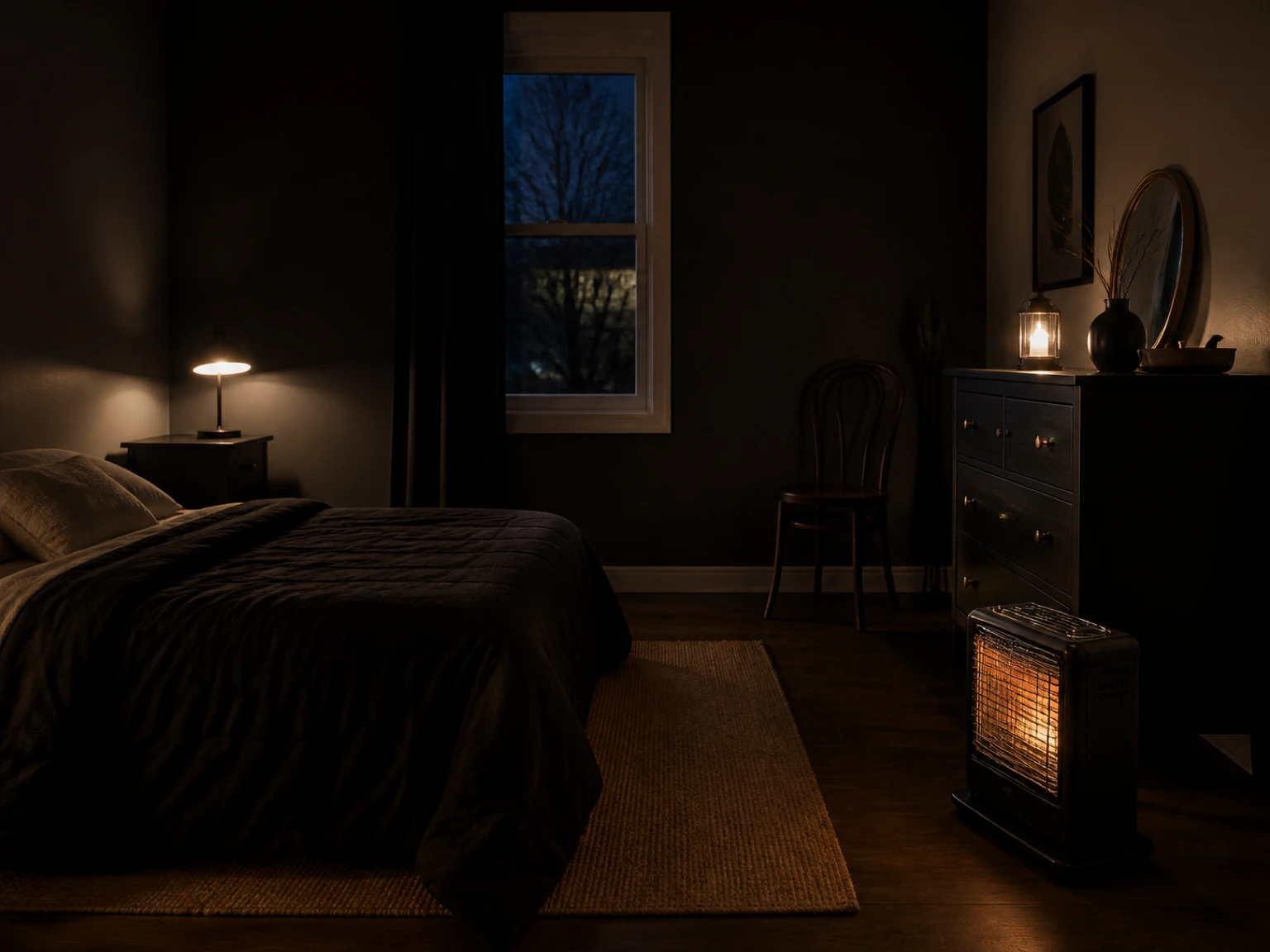
Reserve a clear heater zone
Let the clearance rule shape the room
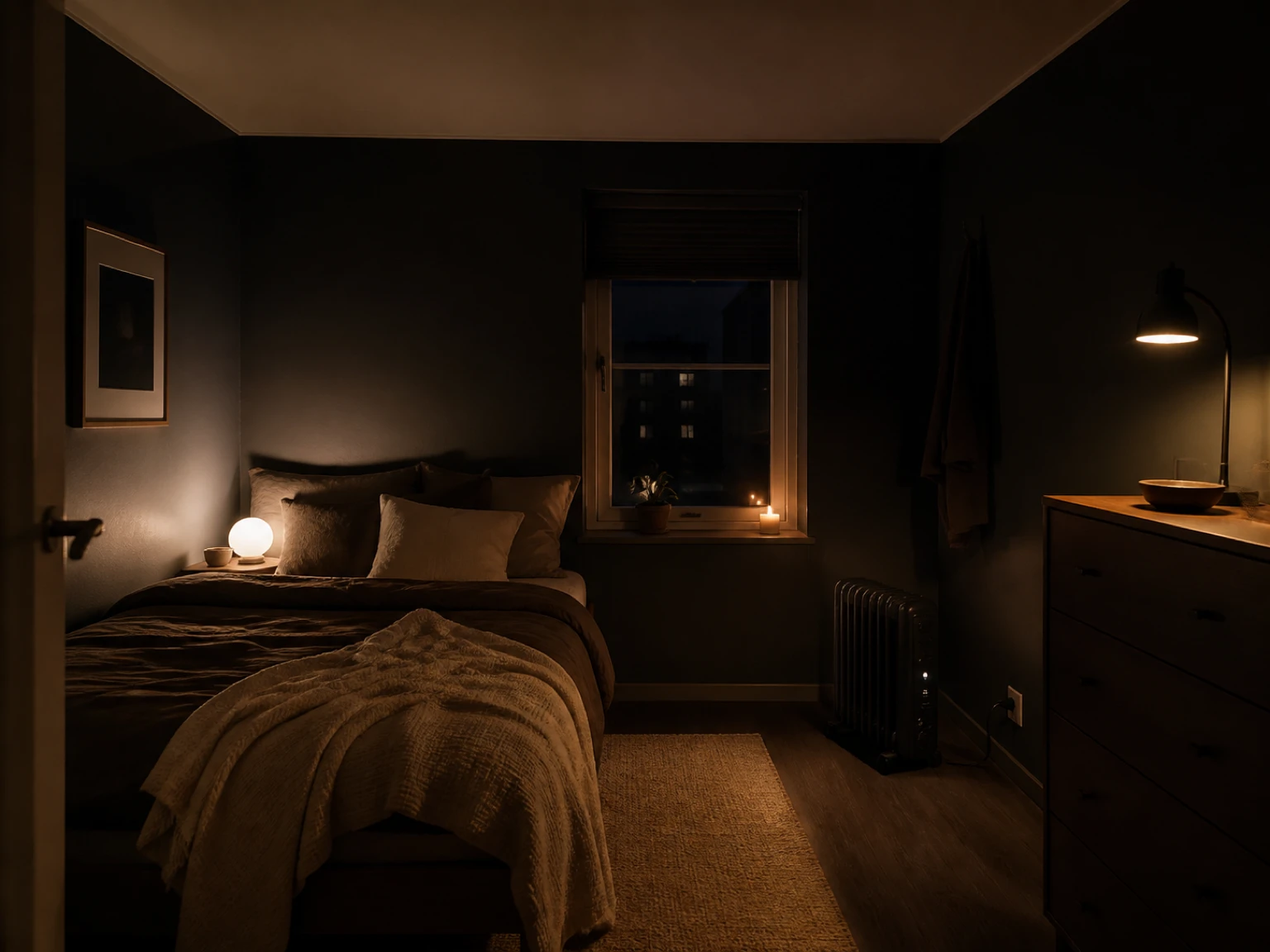
Heaters must be kept at least three feet from anything that can burn. In a small bedroom, that clear area can displace a bedside table, a soft chair, a hamper, or the edge of the bed. Make those furniture decisions before choosing the heater location.
Look beyond the heater's footprint. Curtains can hang into the zone. Bedding and clothing can spread beyond their stored positions. The layout must account for the full path of flexible items as their positions change during the check.
A clear patch beside the bed may disappear when the room is in use. Pull the covers into their usual position and open nearby storage. Move any object that enters the heater zone, then decide whether the remaining furniture still supports the room.
Curtains need special attention because their position changes with daylight and privacy needs. Check them when open and closed. A tieback can help the room, but the heater plan should remain safe when someone forgets to arrange the fabric.
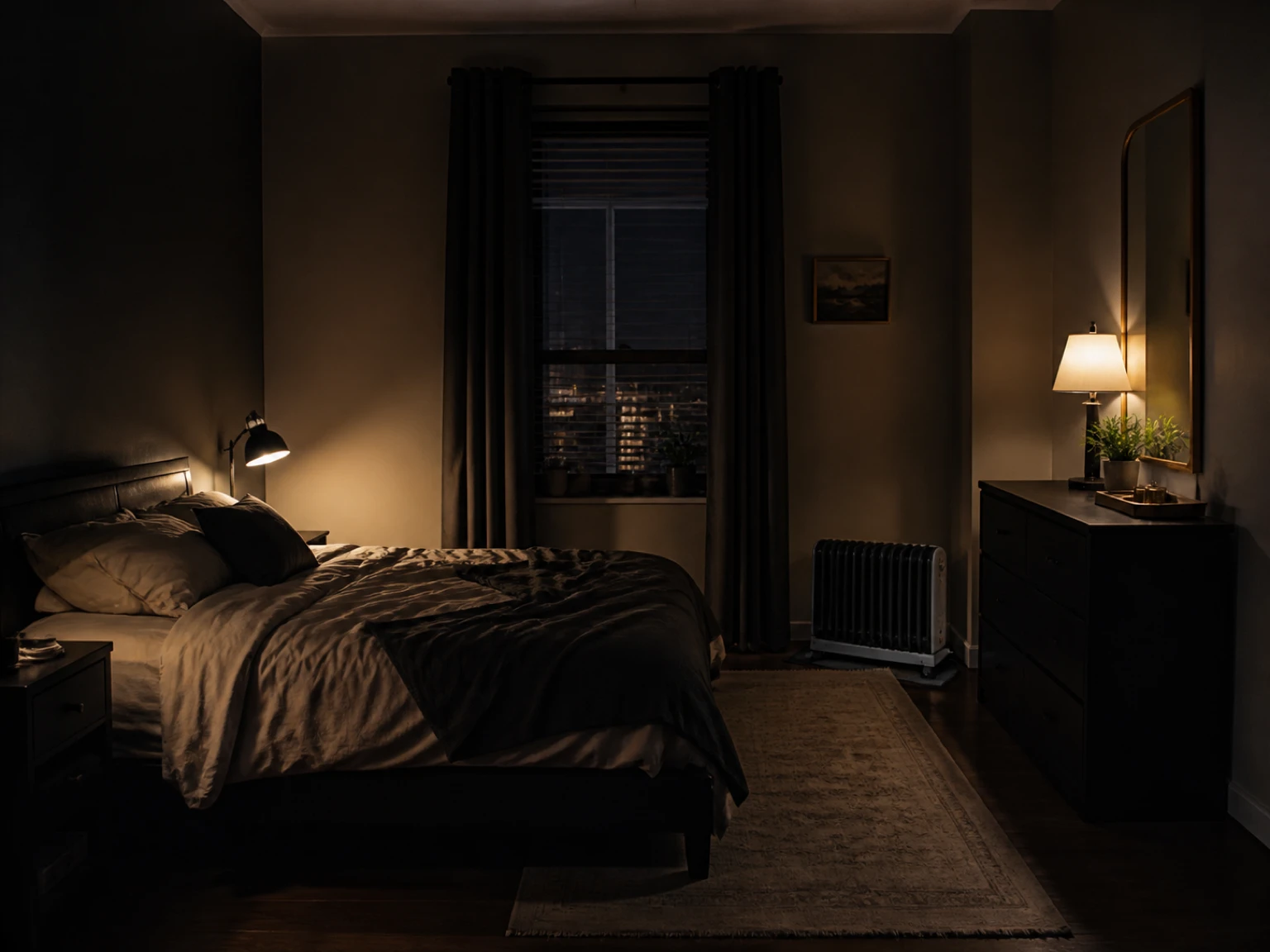
Protect the zone from daily drift
Give loose items another home before cold weather settles in. A hamper can move to a closet edge, while blankets can stay on a shelf or in closed storage. The goal is a room that does not invite soft items into the heater area.
Keep the walking route outside the reserved area. Someone crossing the room should not need to step around the heater or carry laundry over it. If the main path overlaps the zone, another furniture arrangement is needed before use.
Door movement can also change the plan. Open the room door and any nearby closet door through their full normal travel before use. The heater should stay outside those paths, and the open doors should not push stored items toward it.
The calmest setup has a clear visual boundary. Open floor and an exposed wall section can make the zone easy to recognize. Avoid decorative baskets or spare stools there, because an inviting empty corner tends to collect objects.
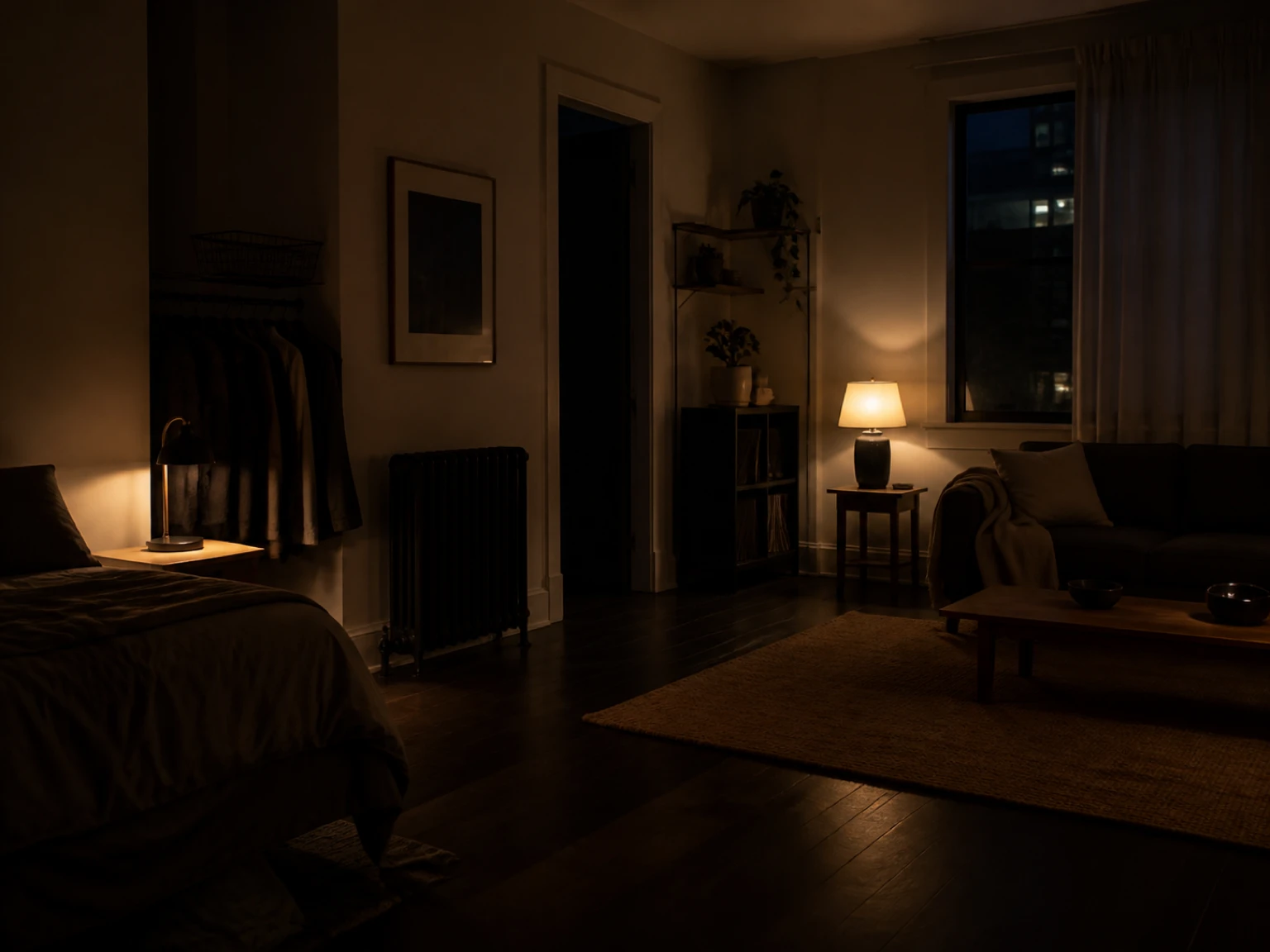
Give the heater a direct wall connection
Plan from the wall outward
A space heater should plug directly into a wall receptacle outlet. That requirement makes the outlet part of the furniture plan. A location across the room cannot become suitable through a longer temporary connection added for convenience.
Do not use an extension cord or power strip with the heater during any room setup. If its own cord does not reach the intended wall connection without tension, move the heater zone or change the furniture arrangement. Keep the heater unplugged while making that choice.
Check the route from the heater to the wall before moving any furniture back. The cord should remain visible and relaxed throughout use, according to the product instructions. A cabinet that hides the plug can make routine inspection harder.
The nearest outlet may sit behind a bed or bookcase. Do not force that location to work. A different wall can produce a clearer connection even when it asks the room to give up a preferred chair position.
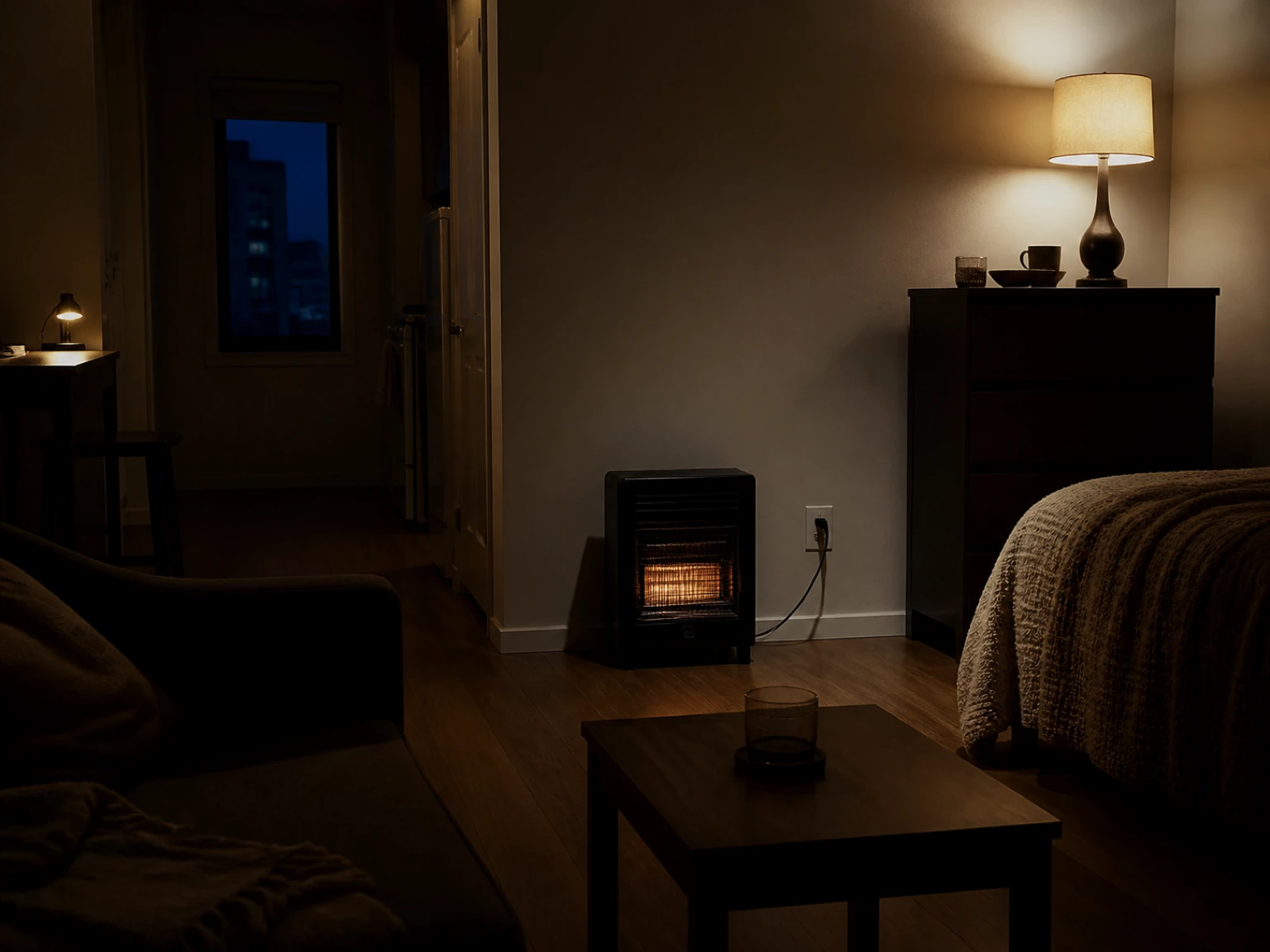
Keep the outlet for the heater
Do not plug any other electrical devices into the same outlet as the heater. A bedside lamp, phone charger, clock, or small fan may need another suitable wall location. This can change which side of the bed works best for the heater zone.
Remove the other device from the outlet during planning, then give it a separate suitable connection elsewhere. Avoid treating an empty socket beside the heater plug as spare capacity for another room device. The published guidance assigns that outlet to the heater.
Shared rooms need a visible agreement about this connection. A housemate may see an open socket and add a charger without knowing the heater plan. Keep the area easy to see and explain which wall connection belongs to the heater.
If the room has no workable wall connection, stop the setup. Ask the landlord about the heating problem and any outlet concern. A portable heater cannot solve a small-room layout that conflicts with its published connection guidance.
Keep the heater on a permitted surface
Protect useful furniture from the setup
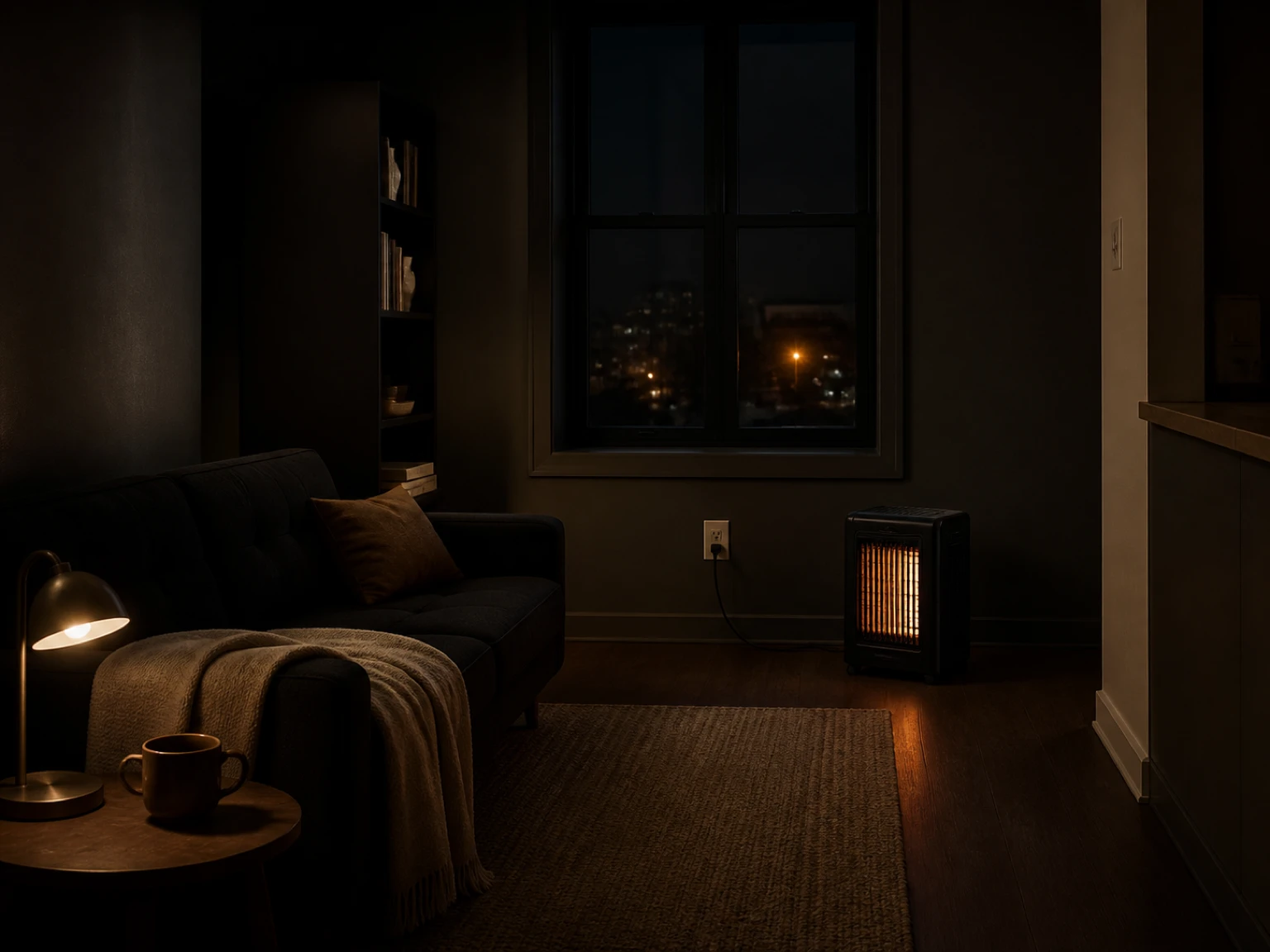
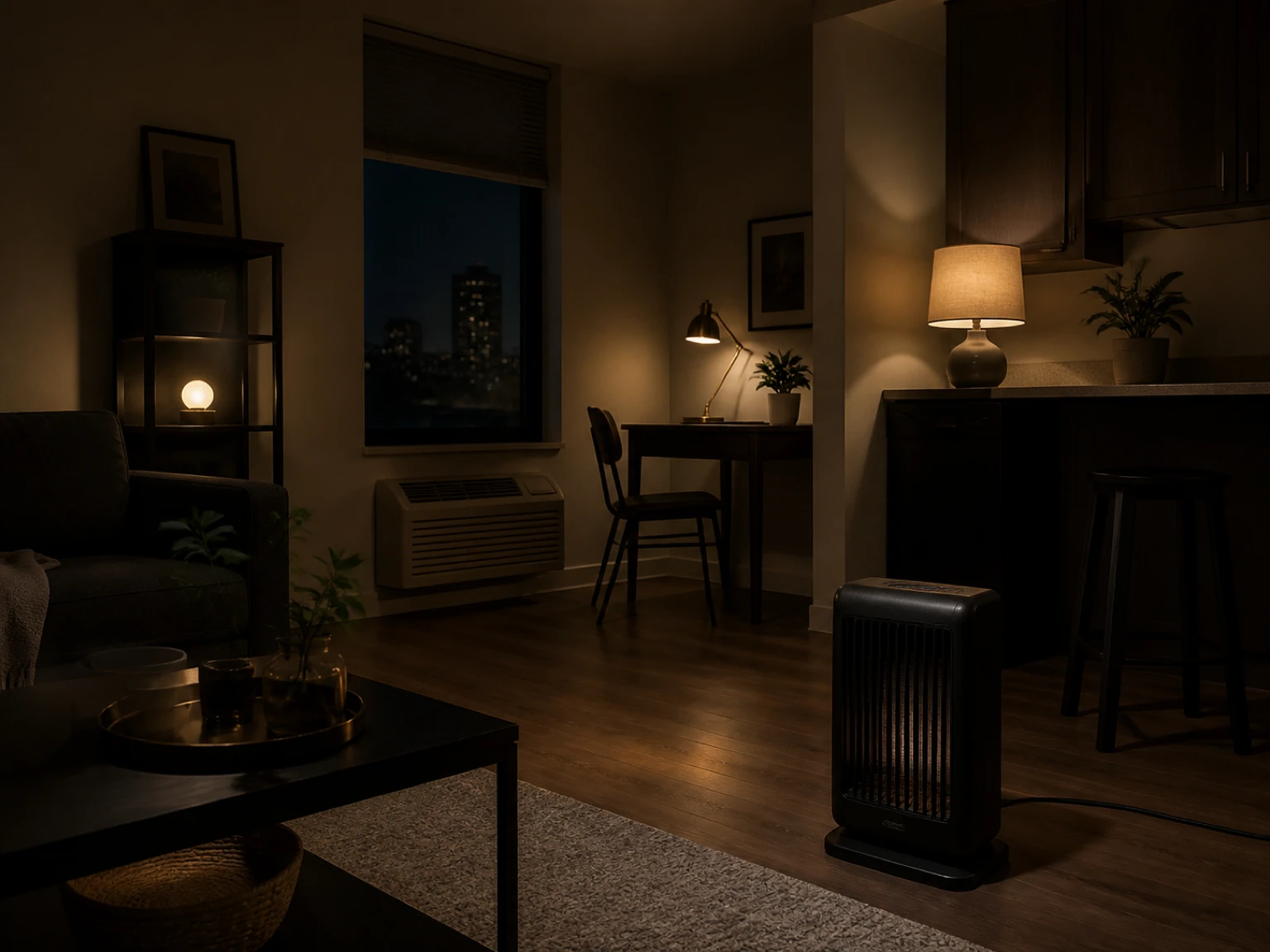
Never place the heater on cabinets, tables, furniture, or carpet. A small room can make an elevated surface seem convenient, especially when the floor feels crowded. That convenience conflicts with the published placement guidance.
Read the heater instructions for permitted floor placement and keep them with the product. The available floor must meet those directions while preserving the full clear zone around it; otherwise, the room needs another heating solution.
Avoid using a table to bring heat closer to the occupied bed or chair area. Move the occupied furniture instead, while preserving the clearance. This keeps a useful surface available and removes a placement that the guidance forbids.
A rug can cover most of the available open floor area in a compact rental room. Rework the rug and furniture plan before the heater arrives. Folding an edge for each use creates a temporary arrangement that can drift back into the zone.
Use the heater only for room comfort
Keep household tasks away from the heater
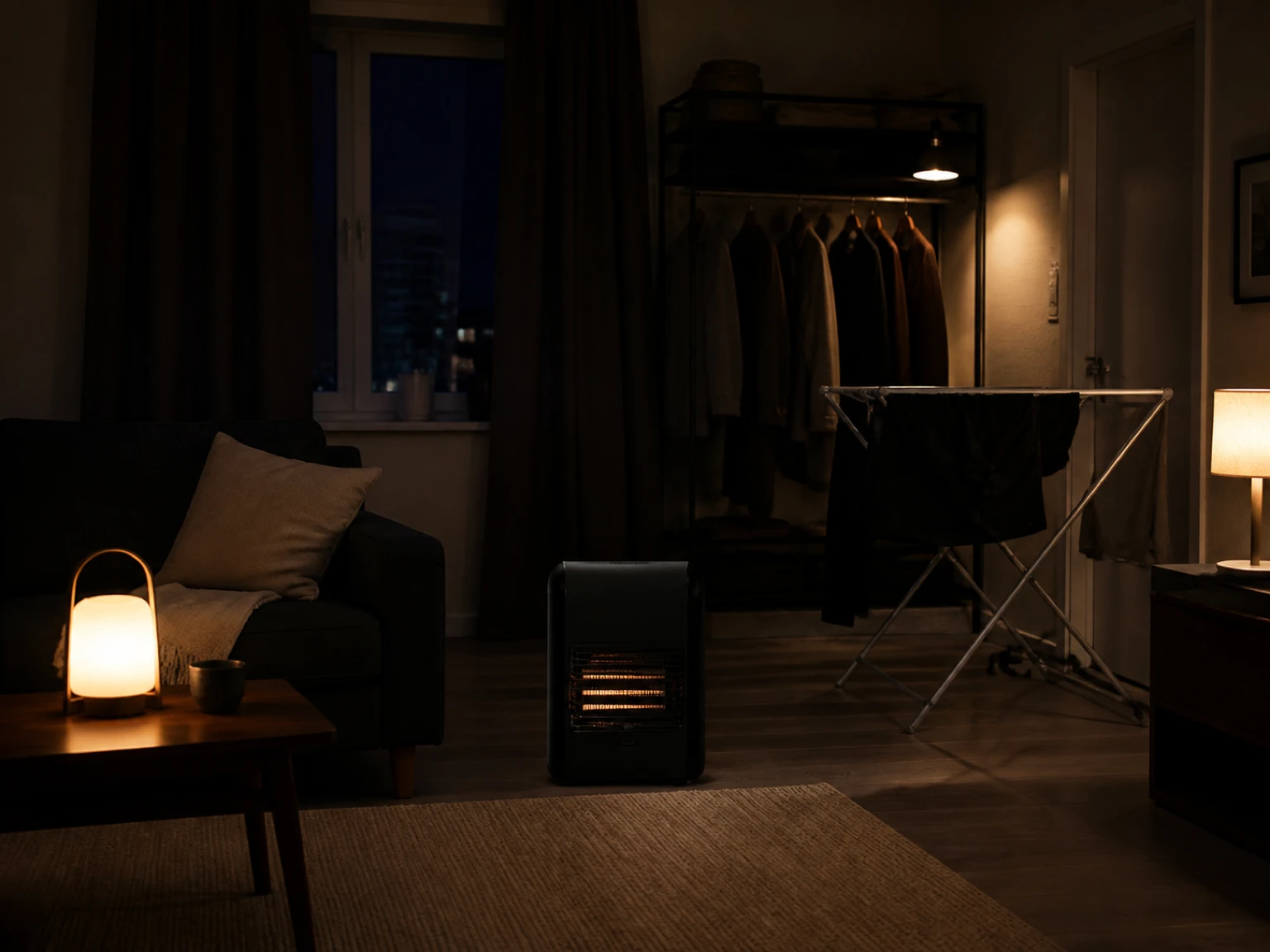
Never use supplemental heat from a space heater to warm bedding, cook food, dry clothing or thaw pipes. Those tasks bring household items toward the heat and defeat the clear zone that the room plan protects.
Wet gloves, a damp towel, a cold blanket, or a soaked coat need another drying or warming method. Keep them in their normal storage area until they can be handled as the item maker directs. The heater remains separate from that task.
A cold bed can tempt someone to aim the heater directly toward loose covers nearby; move the heater zone away from the bed instead. Use bedding as intended, and keep every loose soft edge outside the required clearance during use.
Keep food and drinks on their usual surfaces. A heater should never become part of cooking or serving. This boundary also keeps spills and temporary furniture away from the connection and the reserved floor area.
Make the safe layout easy to keep
Set the room before each use
Look at the full zone before plugging in the heater. Move loose fabric and restore the walking path before checking the wall connection carefully. Then compare the setup with the heater instructions, since furniture can shift between cold evenings.
Keep the heater controls and plug easy to reach. Do not bury the cord behind storage or place daily objects around the base. A visible setup makes an unwanted room change easier to notice before the next use.
When the heater leaves the room, let the planned clear zone remain recognizable between uses. That empty area can support easier cleaning and simpler furniture movement, which reduces the urge to rebuild the room plan during the next cold spell.
A guest or housemate should understand the heater layout without needing a long explanation from anyone. The heater has a defined floor location and a visible wall connection. Nearby soft items have stable homes outside the reserved area.
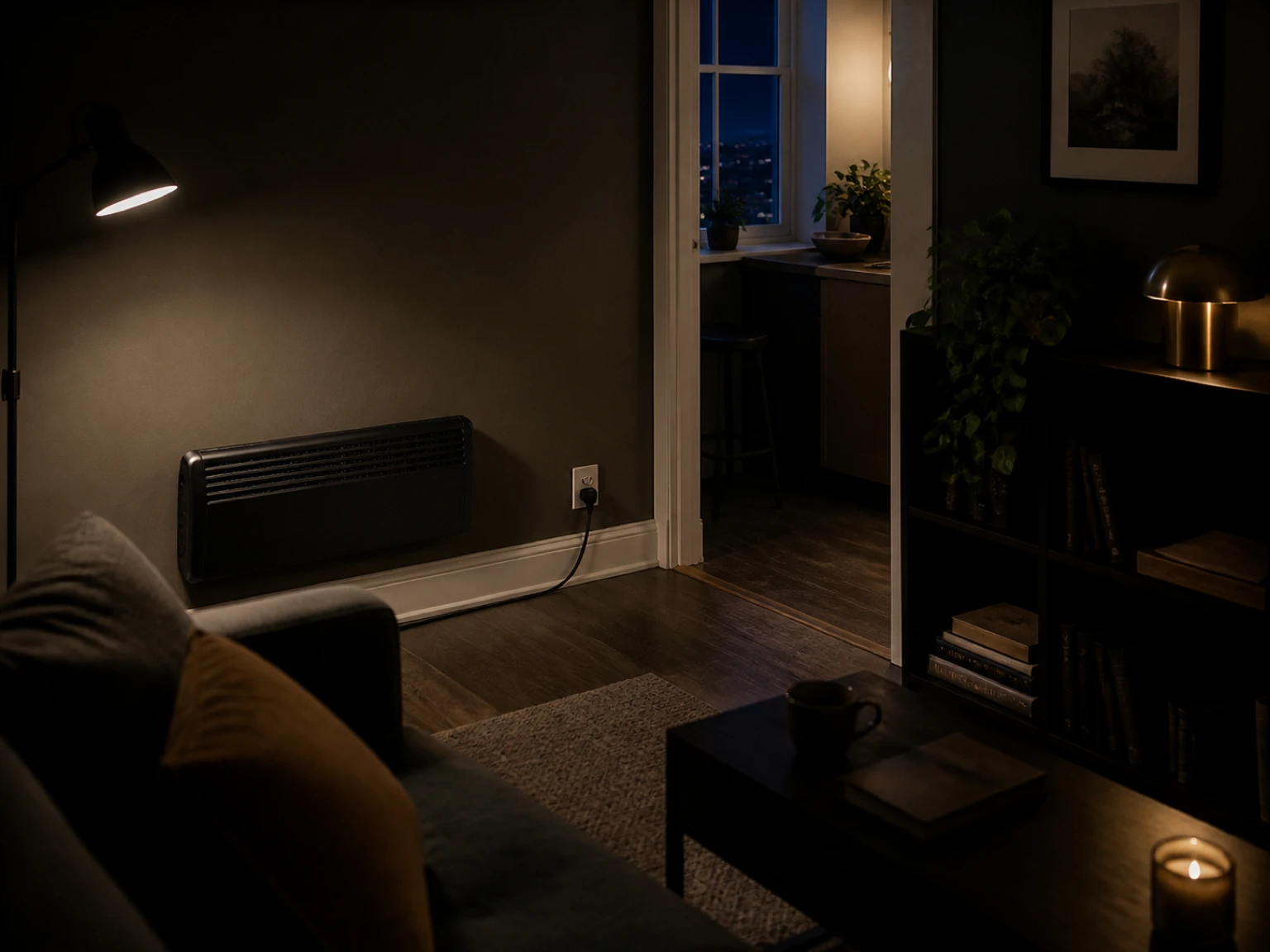
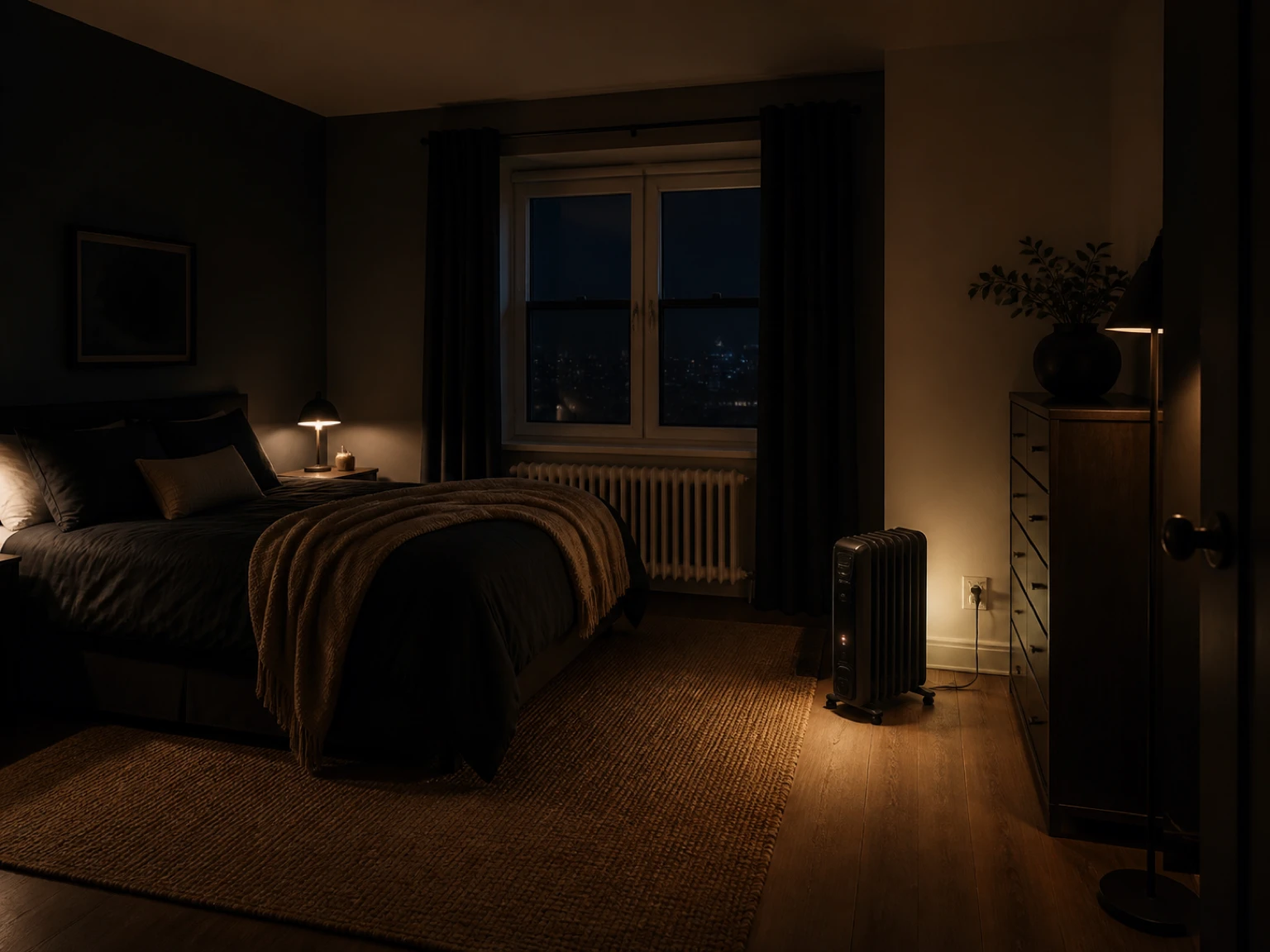
The workable choice may be a less balanced room. A chair can move away from the window, or a bedside table can change walls. That visual compromise is worthwhile when it produces clear floor space and a direct connection.
If every possible heater location collides with bedding, carpet, a walking route, or the wall connection, leave the heater unplugged. Report the cold room to the landlord and describe the layout limits in plain terms.
Before using the heater: confirm the required clearance and permitted floor placement. Check the direct wall connection against the product instructions. Keep the heater outlet clear of other devices. Store loose fabrics away from the zone. For the rest of the room, use the warm-lighting guide or the moody bedroom guide.