
Small apartments do not usually lack storage. They lack storage that does not announce itself. A wire rack of shoes by the door and six plastic bins on open shelves both work perfectly well, and both make a room read as a staging area rather than somewhere a person lives.
The useful rule has two halves. Decide what a thing weighs, and decide how often you handle it. Weight tells you whether a wall can carry it. Handling tells you whether it should be on a wall at all, because adhesive ratings describe a steady hanging load rather than a daily tug.
Sort by handling before you sort by size
1. Put anything you touch daily on the floor
Published adhesive ratings assume a static load. A coat pulled off a hook, a bag lifted from a rail, a basket tugged down from a shelf all apply a sharp changing force instead. That is the load most likely to break a bond, and no rating on the packaging describes it. Coats, bags, and shoes therefore belong on the floor, on a freestanding rack, or on a rail hooked over a door rather than stuck to a wall.
2. Reserve wall mounts for light, rarely-moved things
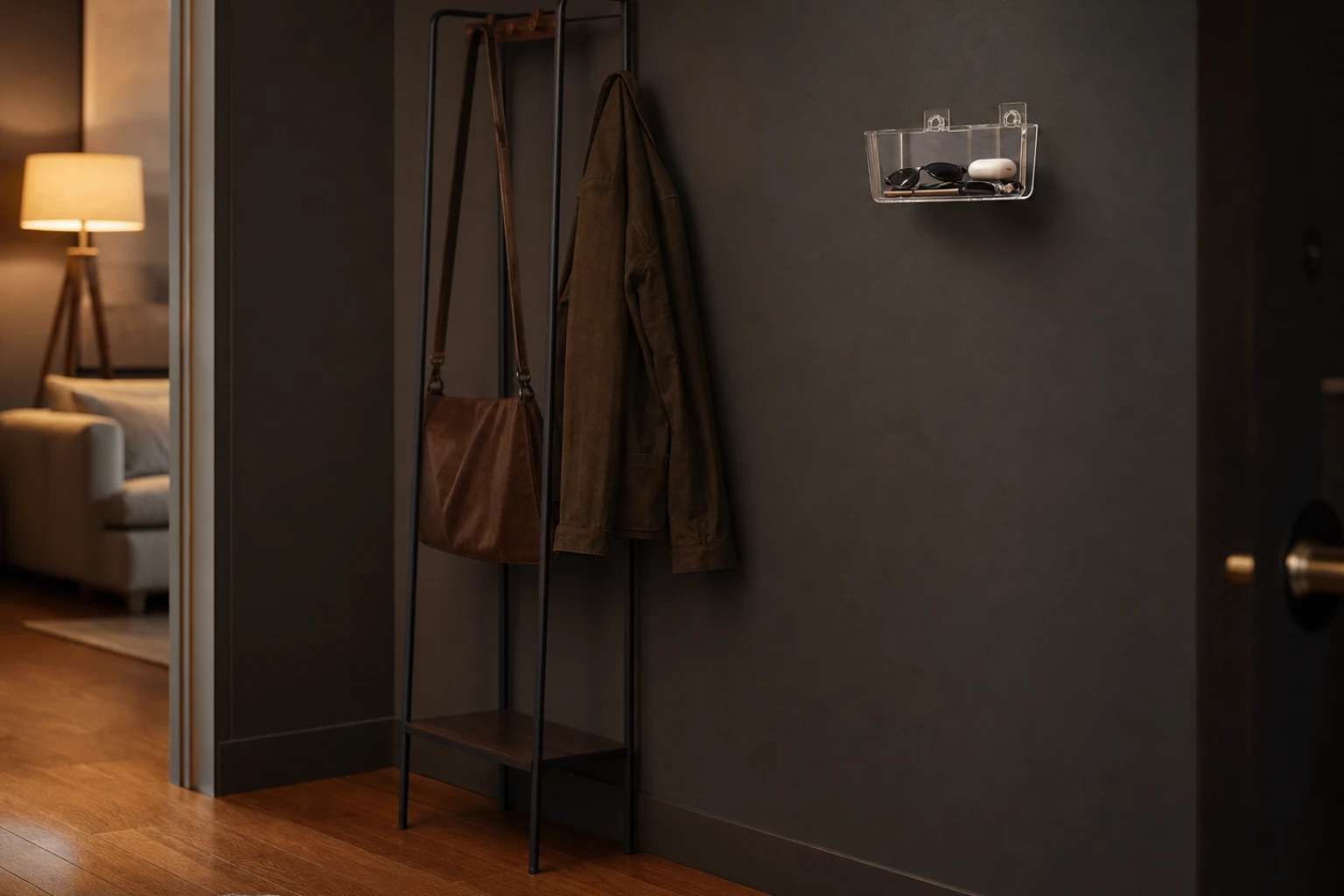
The things adhesive mounts suit are the ones you set down once and leave: a small caddy of pens, a key rail, a bathroom hook. Light, handled gently, and easy to re-hang if it ever lets go. The moment an item on a wall becomes something you grab on your way out of the door every morning, it has moved into the wrong category.
There is a simple test. Imagine the item in your hand on a rushed morning. Are you lifting it off carefully, or yanking it? If it is a yank, the wall is the wrong place. Adhesive does not fail because the manufacturer was optimistic. It fails because a static rating met a dynamic load.
3. Keep the valuable things off adhesive entirely
3M's instructions say DO NOT hang valuable or irreplaceable items. That draws a line a weight rating does not. A rating describes what a mount holds in good conditions on a clean surface. It says nothing about what happens if the wall was dusty, the room was humid, or the strip was pressed for four seconds instead of thirty. Anything you would be upset to replace goes on the floor or on a hook in a stud.
Use rated mounts where they actually fit
4. Match the caddy to the load, not the space
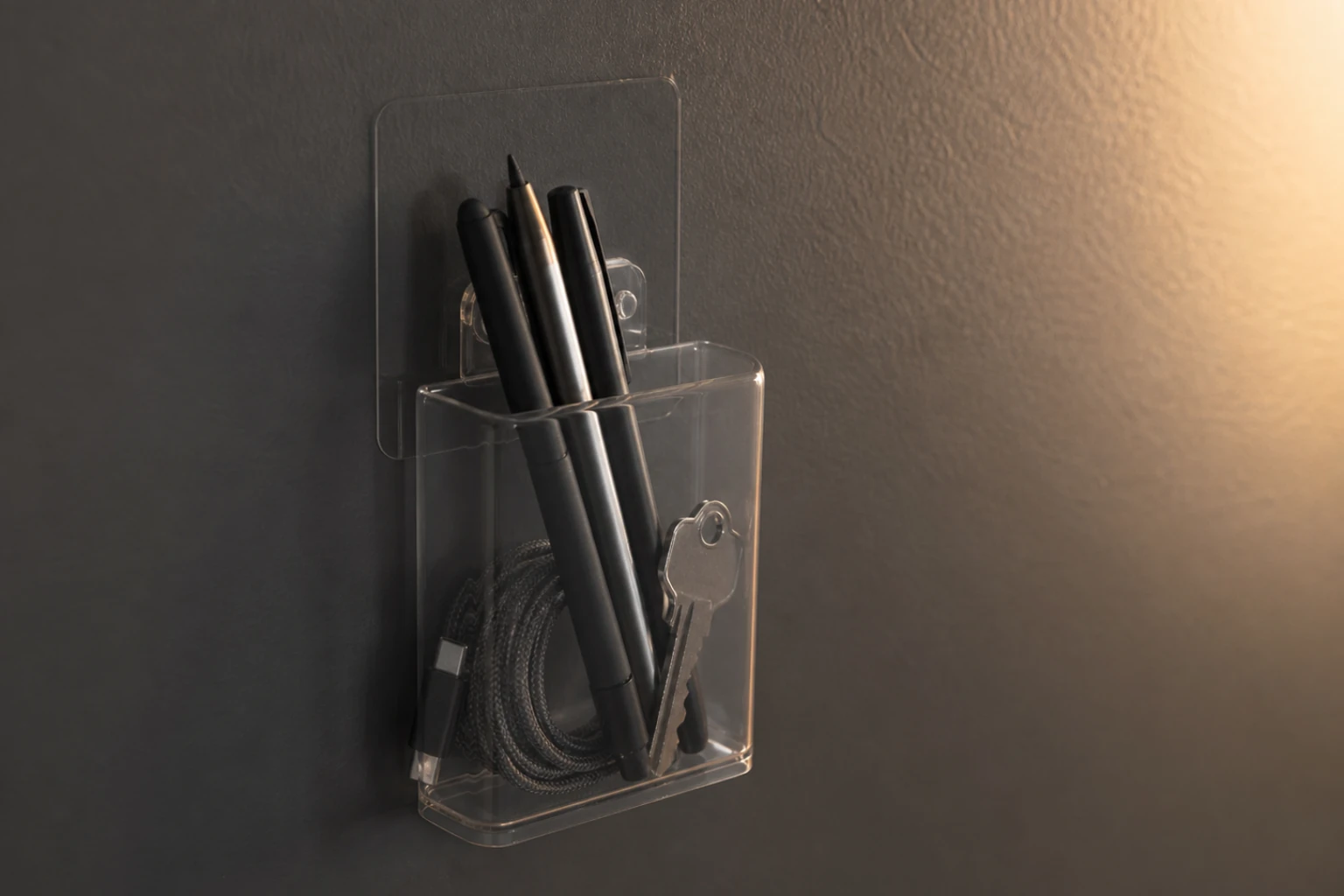
The medium caddy is rated for 2 pounds and the large for 4 pounds. Those are small numbers, and they are easy to exceed without noticing: a caddy of loose coins, batteries, and a couple of chargers gets there quickly. Fill the caddy, then lift it in your hand before mounting anything. If it feels heavy, it is over the rating.
5. Put the under-sink space to work
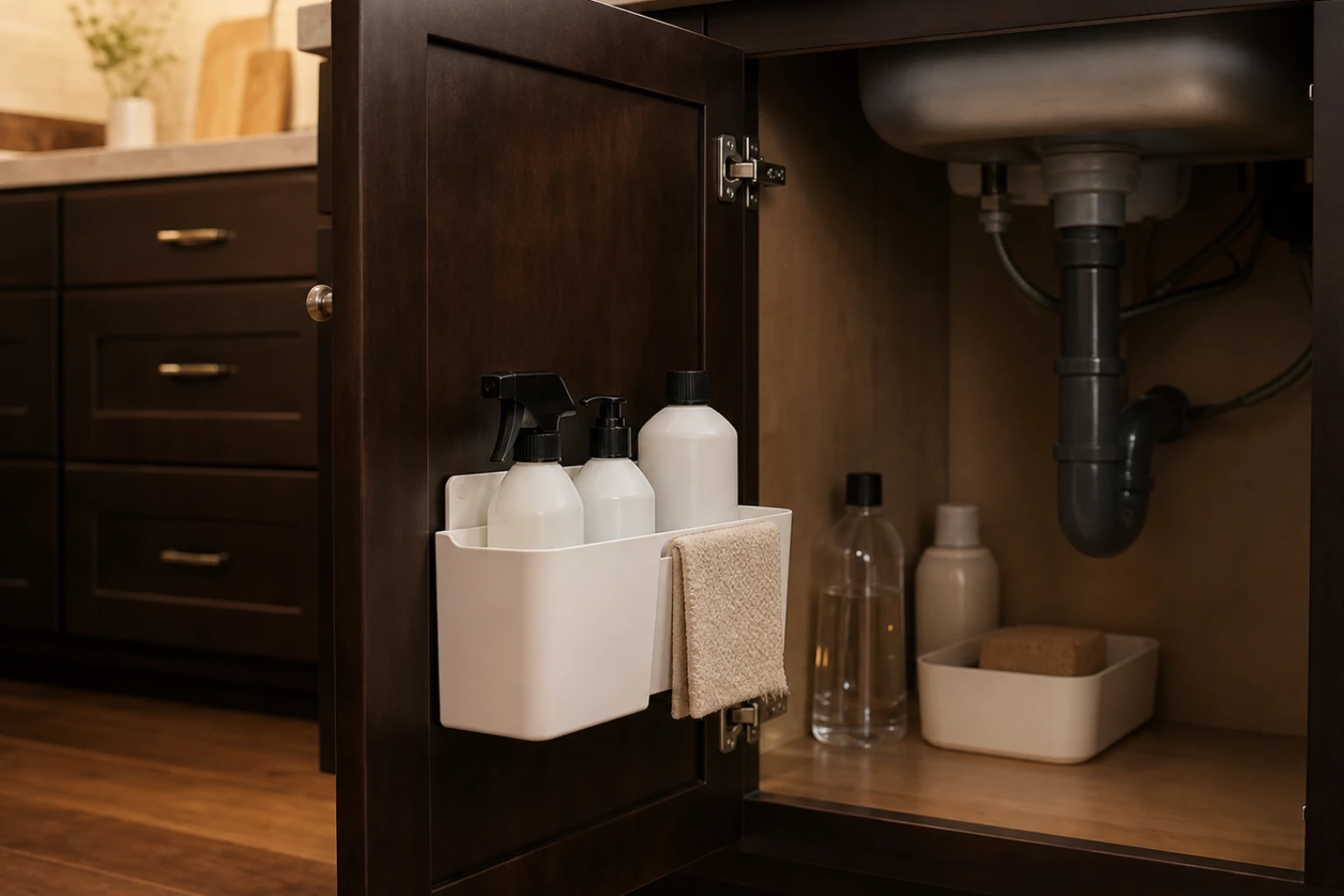
The under-sink cabinet caddy is rated for 7.5 pounds, which is the most generous rating in this family. The cabinet under a sink is usually dead volume with a pipe through the middle, and a caddy on the door turns the wasted depth into usable space that nobody sees. Keep it away from the pipe, and check what the cabinet door itself can take.
6. Hang the cleaning tools out of the sightline
A broom gripper is rated for 4 pounds. That covers a broom or a mop comfortably. The point is placement rather than capacity: inside a closet door, behind the kitchen door, or on the side of a cabinet, where the tool is reachable but never in view from a seat in the room.
7. Give keys a rail rather than a bowl
The small key rail is rated for 2 pounds, and a handful of keys weighs far less than that. A rail beside the door keeps keys off every horizontal surface in the apartment, and horizontal surfaces are where clutter accumulates first. A bowl on a console collects everything that passes it; a rail collects keys and nothing else.
Hide the function inside something else
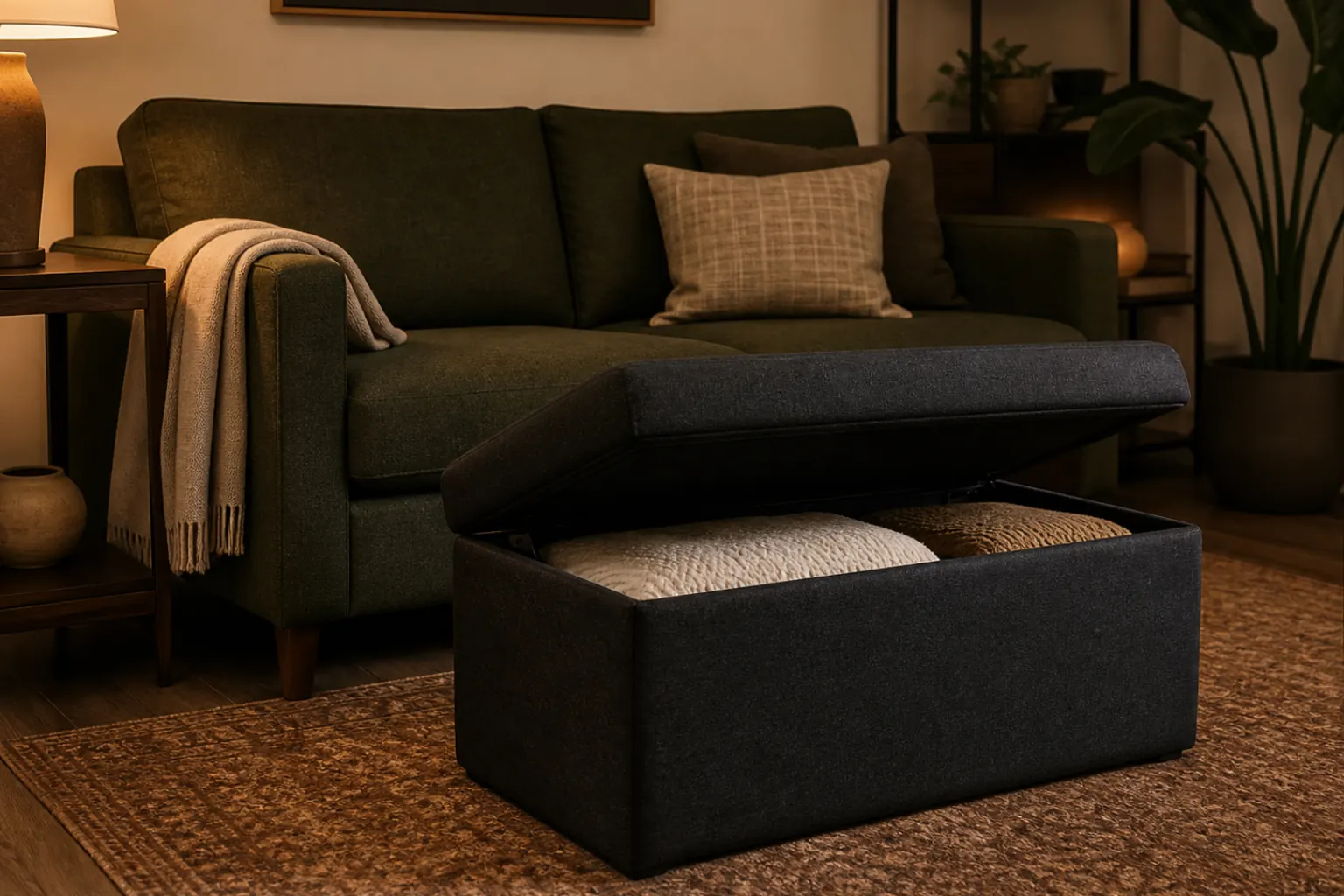
8. Choose furniture with volume inside it
A storage ottoman, a bed frame with drawers, a bench with a lid underneath: each of these earns its place in the room for a reason unrelated to storage, then absorbs a surprising amount of it. In a small rental this is the highest-value swap available, because it removes a bin without adding an object.
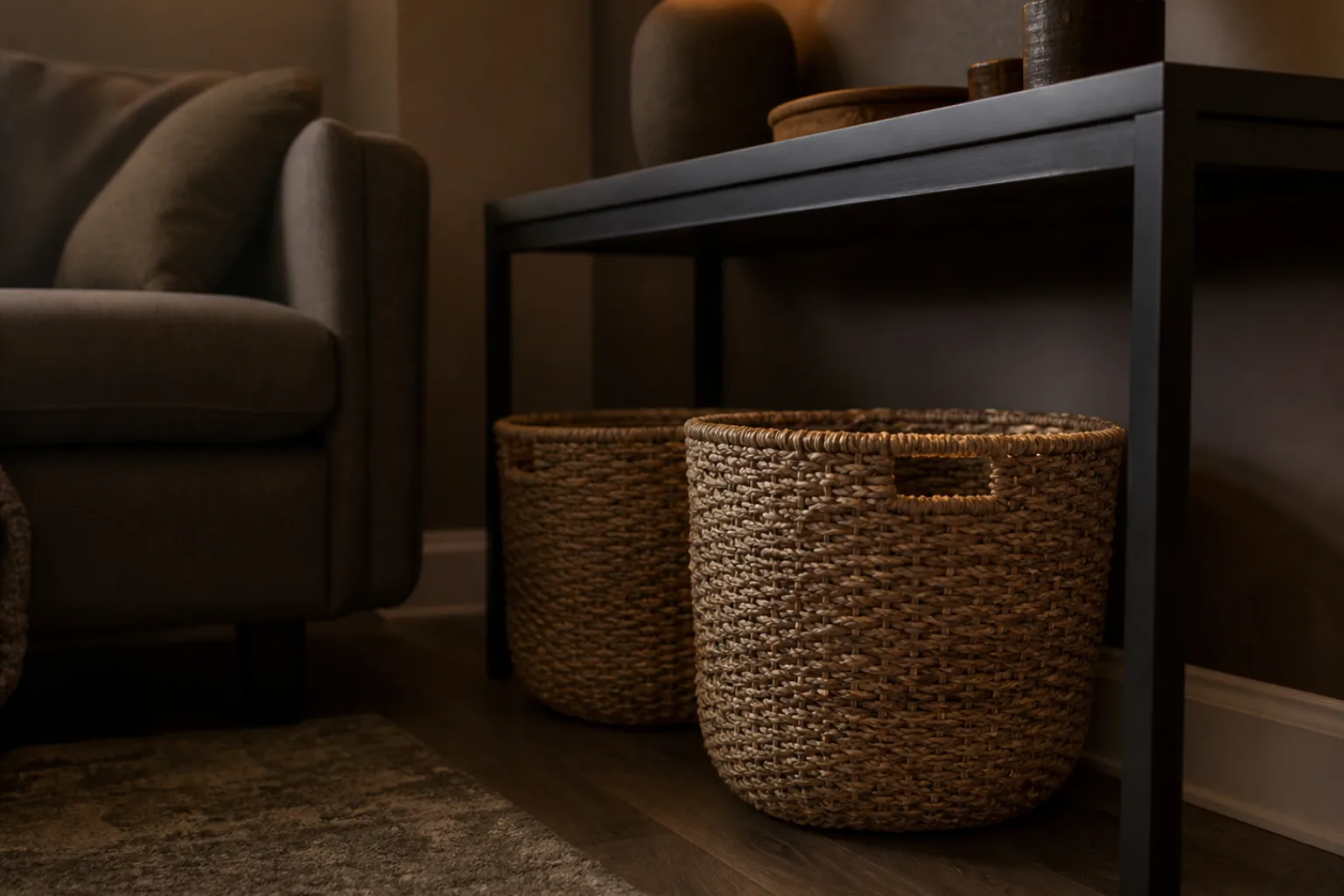
9. Put baskets where the eye does not travel
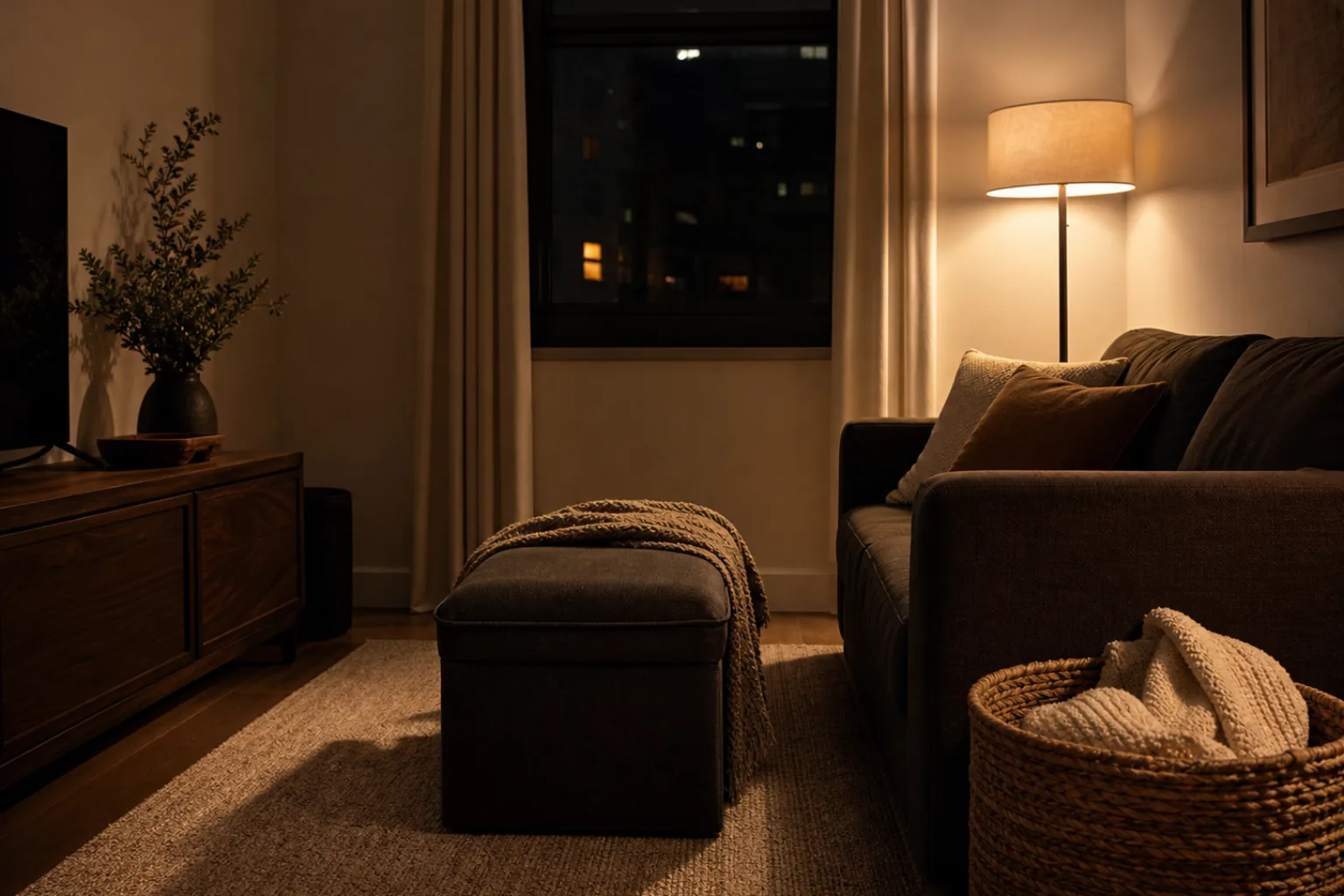
The eye tends to scan at roughly seated height across a room. Baskets on the floor beside a sofa, under a console, or on the lowest shelf sit below that line and effectively disappear, while the same basket at eye level on an open shelf reads immediately as storage. Same object, different placement, completely different impression.
Height is the whole trick. Try it before buying anything. Move a basket you already own from a shelf to the floor and look at the room from the sofa. The basket has not changed. The room has.
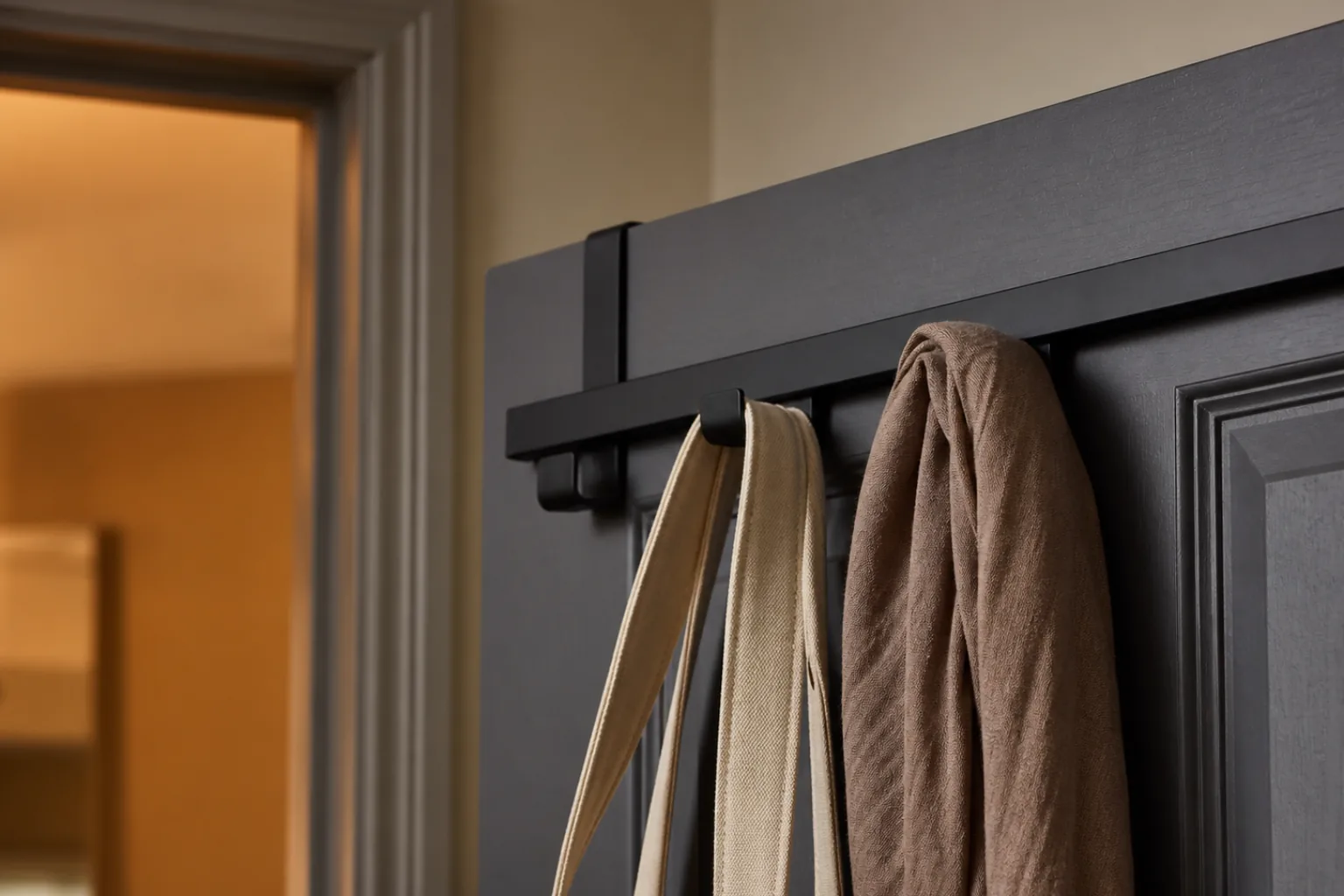
10. Use the back of every door you own
An over-door rail hooks over the top edge and transfers its load into the door rather than into any wall surface, which makes it one of the few genuinely no-damage options for something you handle daily. Closet doors, the bathroom door, and the back of a bedroom door are all usable and all invisible when the door is open against the wall.
11. Let one closed cabinet absorb the mess
Open shelving is honest and unforgiving. One closed cabinet, even a cheap secondhand one, gives you somewhere to put the things that have no natural home, and it stops those things from colonising the surfaces you actually look at. A room with one closed door in it reads far calmer than a room where everything is on display.
Secondhand works well here, and it is worth saying why beyond the price. A closed cabinet does not need to be attractive to earn its place, because its job is to stop being looked at. Paint it the wall colour and it recedes further. Chips and wear matter far less on a piece whose whole purpose is to be visually quiet.
The rule that decides where storage goes
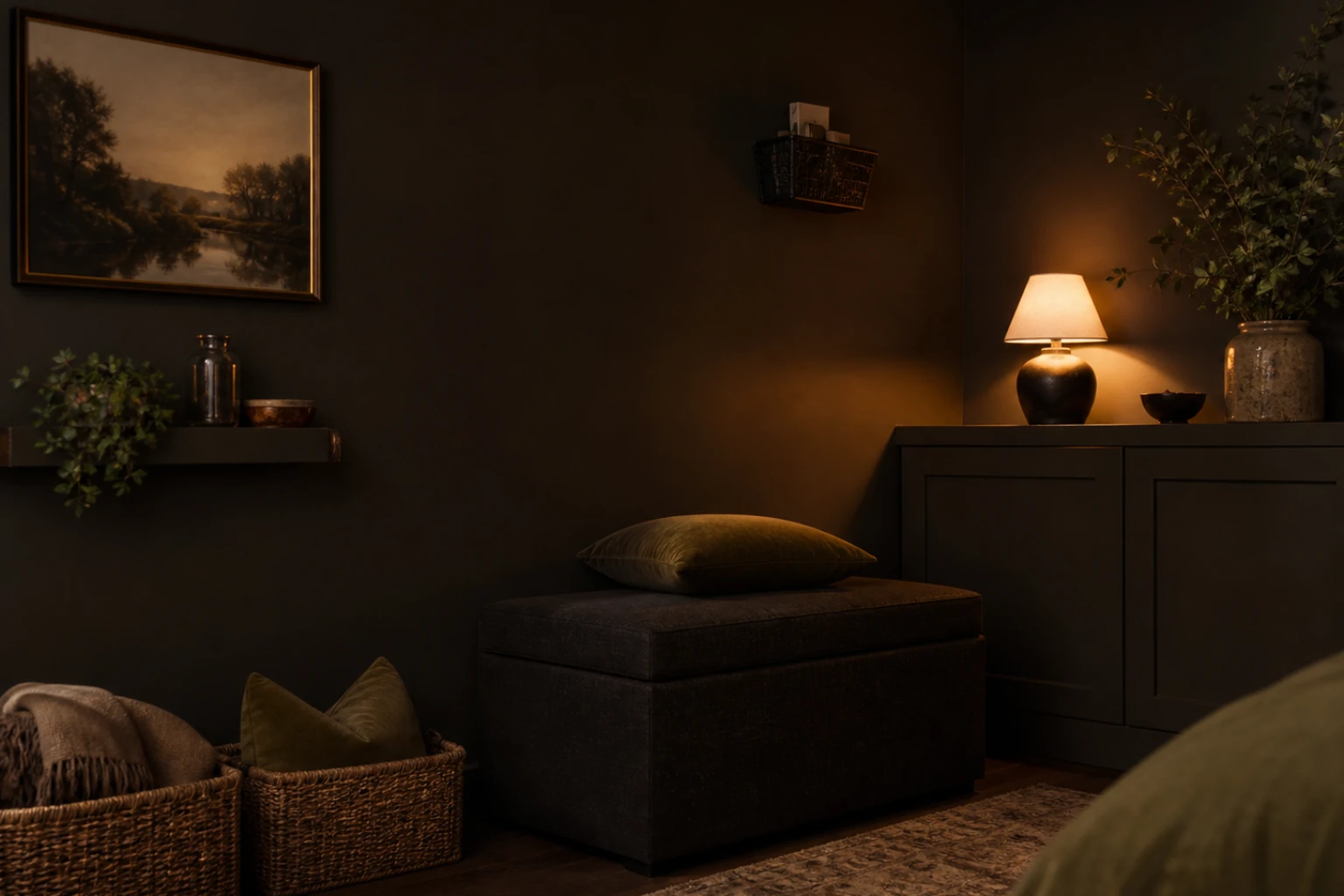
Weigh it. Ask how often you touch it. Handled daily goes on the floor or over a door. Light and rarely moved can go on a rated mount. Valuable goes nowhere near adhesive. Then put whatever is left below seated eye height, and the room stops looking like it is storing anything at all.
Worth checking once a month, the same as anything else mounted with adhesive: lift each caddy and rail gently rather than waiting to find out. A bond that has begun to release gives way under a light pull long before it fails on its own, and a caddy of small parts is much easier to re-hang than to pick up off the floor.
The finished-rental rule: handled things take the floor, set-and-forget things take a rated mount, and anything valuable takes neither. For the same logic applied to art and mirrors, read the no-paint wall guide. For the kitchen version, see small kitchen ideas, browse renter upgrades, or visit all articles.