
A rented bathroom is the easiest room to make dramatic and the easiest to get wrong. It is small, so a dark colour reads as intentional almost immediately. It is also the only room in the apartment that fills with steam twice a day, and steam is what separates a mount that holds from one that lets go in week three.
So the rule here has two halves rather than one. Weigh what you are hanging, then ask what that spot does when the shower runs. A hook beside the door and a hook inside the shower are different problems even when the hook is identical.
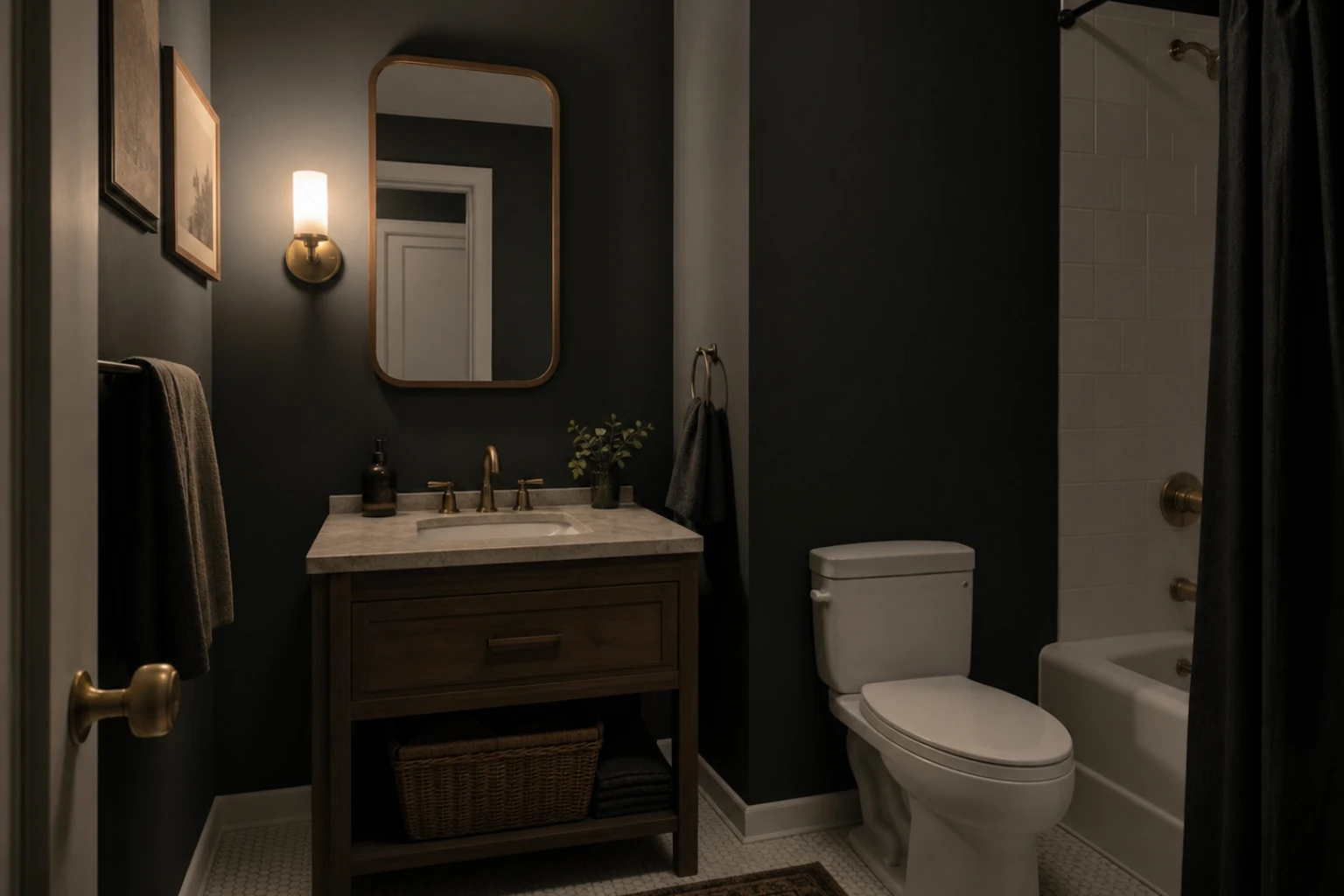
Decide what the room does before you buy anything
1. Separate the room into dry, damp, and wet zones
Three zones, and they behave differently. The wall by the door stays essentially dry. The vanity and the area near the tub get humid and see occasional splashing. Inside the shower enclosure, water runs down the surface. Electrical fittings are rated against these same categories, so a fixture approved for one is not automatically approved for another. Sort your bathroom into the three zones first and every later decision gets easier.
Ventilation changes the picture too. A bathroom with a working extractor fan clears steam in minutes and behaves closer to a merely humid room. One with a painted-shut window and no fan holds moisture for hours after a shower, and every adhesive in it is working harder than the packaging assumed. Run the fan, if there is one, and leave the door open afterwards. That single habit does more for the longevity of everything mounted in the room than any product choice.
2. Read the fixture label rather than the product photo
A listing mark on the fixture itself states the locations it is approved for, and it sits near the electrical connection rather than on the box. A fixture with no such marking is a dry-location fixture, whatever the retail description implies. In a rental this matters twice over: you are not going to rewire anything, so the only lever you have is choosing a fitting already approved for the spot you want to use it in.
Renters have one more constraint worth naming early. Anything that requires opening a fixture, changing a fitting, or touching wiring is landlord territory in most leases, and in many places it is licensed work regardless of what the lease says. Every idea below therefore stops at plug-in, adhesive, freestanding, or textile. That is not a limitation so much as the actual design brief.
3. Respect the 7-day wait if the unit was just repainted
3M's instructions say to wait 7 days after painting before use. Landlords very often repaint a bathroom in the days before a new tenant moves in, which puts that clock squarely in your first week. Applying strips to fresh paint in a room that steams daily is the fastest way to pull a strip and a patch of paint off together.
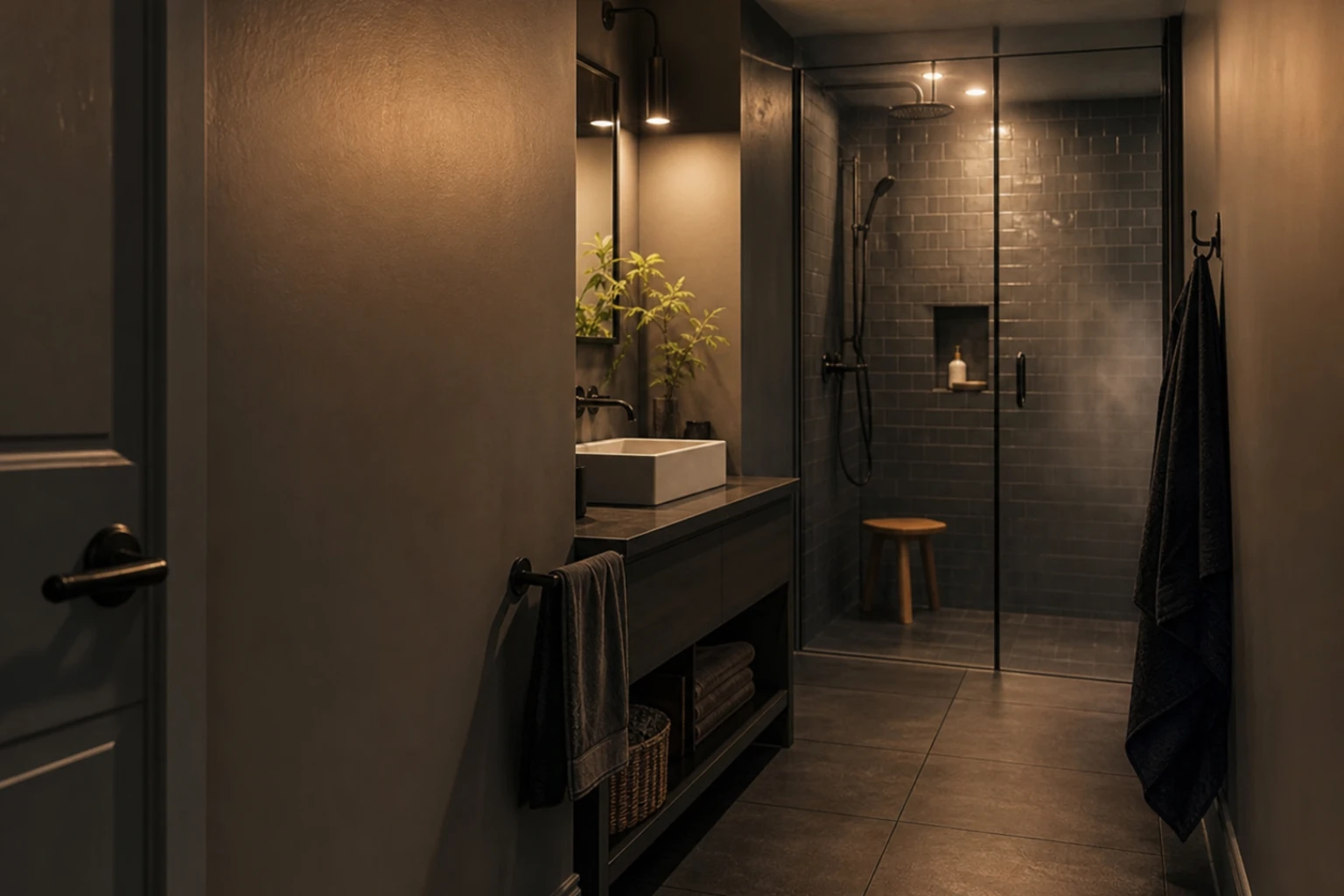
Hang the daily things on rated mounts
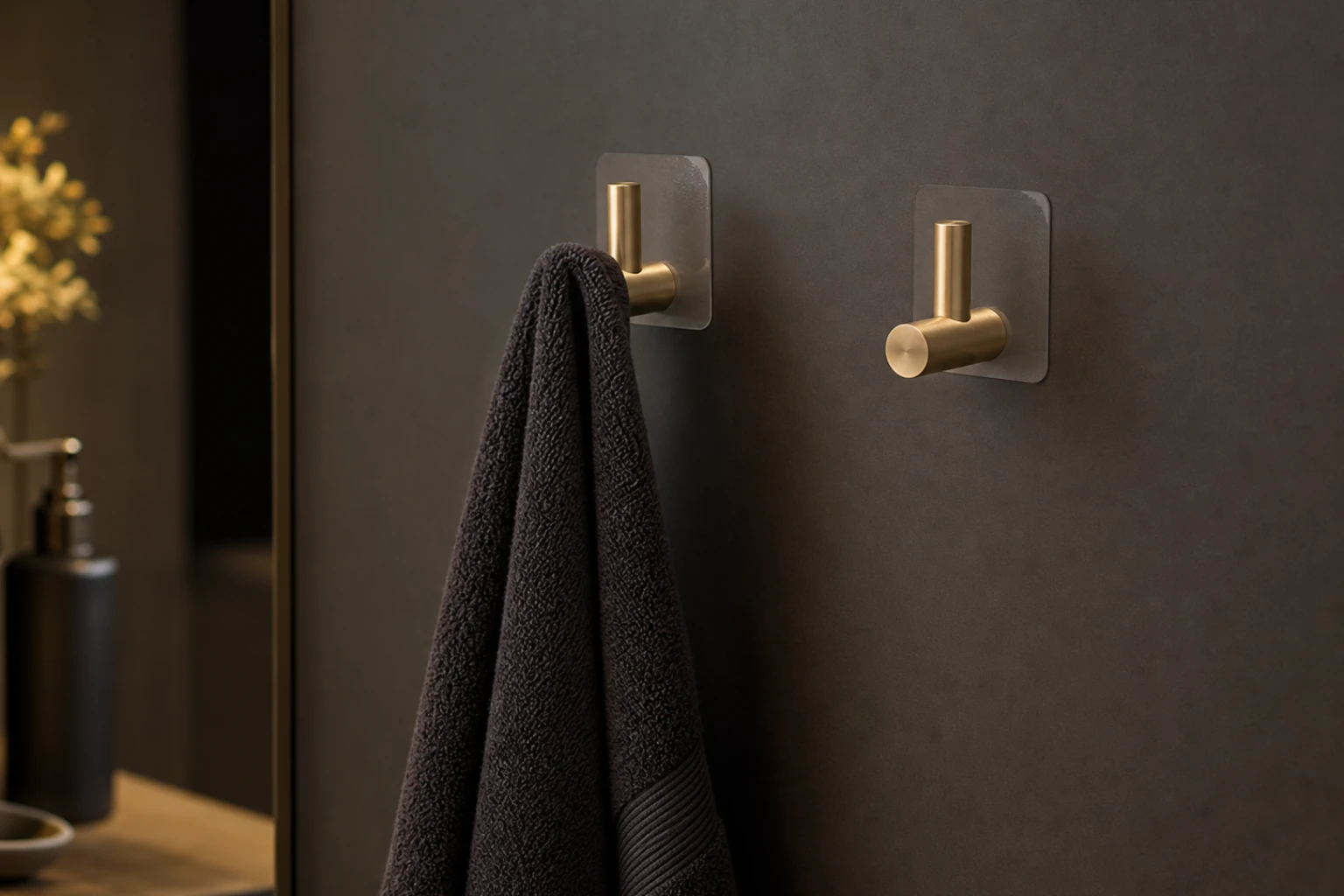
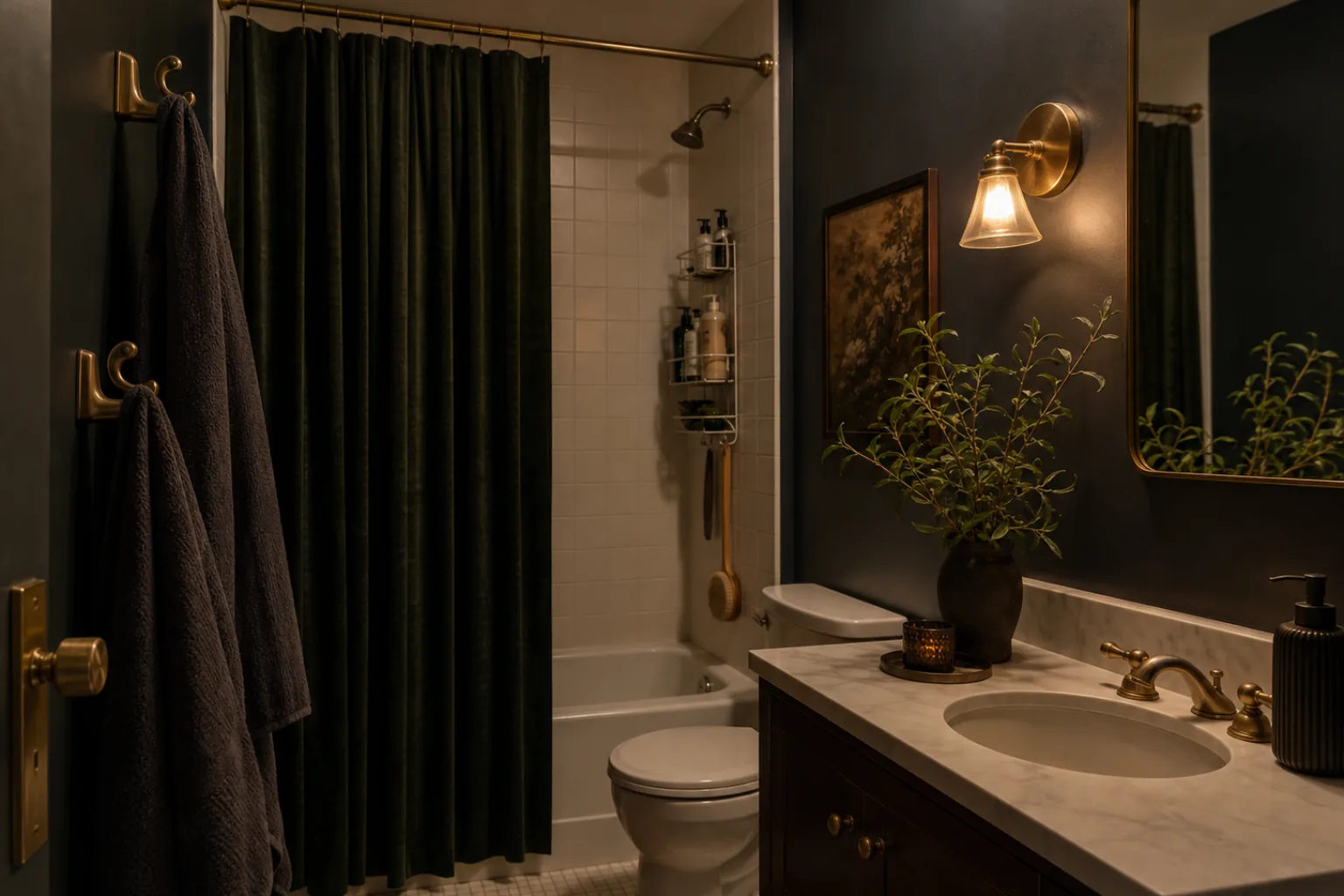
4. Match a towel hook to a wet towel, not a dry one
The large towel hook is rated for 5 pounds. Weigh the towel you actually use, soaked, before deciding whether one hook is enough. A bath sheet holds a surprising amount of water, and the load a hook sees at 7 a.m. is nothing like the load it saw when you hung a dry towel on it the night before. Two hooks spread the weight and dry the towel faster.
5. Keep smaller hooks to smaller jobs
Medium bath hooks are rated for 3 pounds. That covers a robe, a loofah, a small plant, a hand towel. It does not cover a heavy wet bath sheet, and it does not cover a hanging basket once you fill it. Use the small hook where the job is genuinely small and step up rather than hoping.
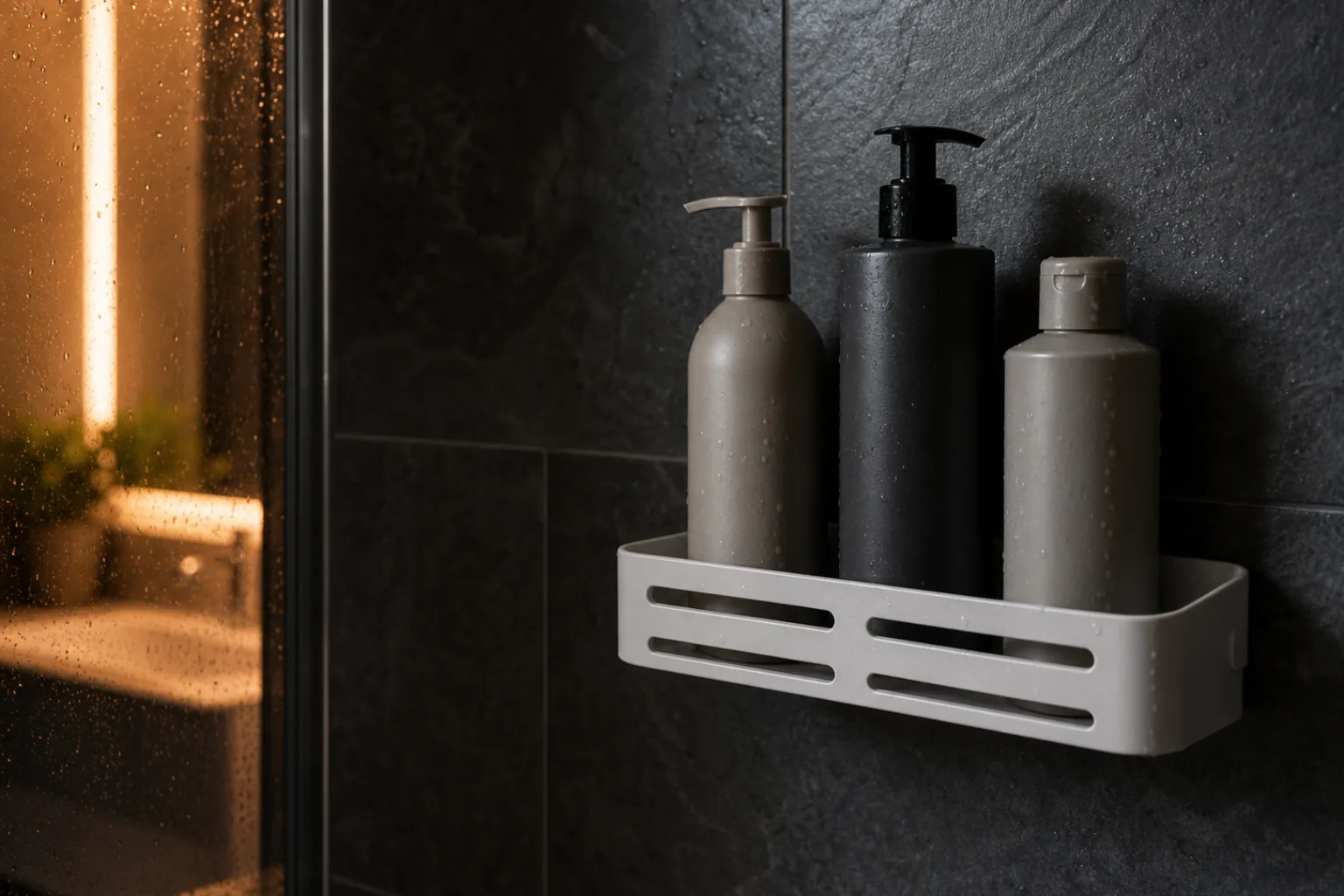
6. Give the shower a caddy built for the shower
The shower caddy is rated for 7.5 pounds, which is the most generous rating in the bathroom line and still finite. Bottles are heavier than people estimate, especially the large refill sizes. Load it, lift it, and if it feels close to the limit, split the contents across two caddies rather than trusting one.
Position matters as much as rating inside a shower. A caddy on the wall opposite the showerhead sees far less direct water than one mounted beside it, and the surface stays closer to merely damp. Where the tile lets you choose, take the sheltered wall. Where it does not, expect to re-hang sooner and keep a spare set of the correct strips on hand.
Build the mood without touching the fabric of the room
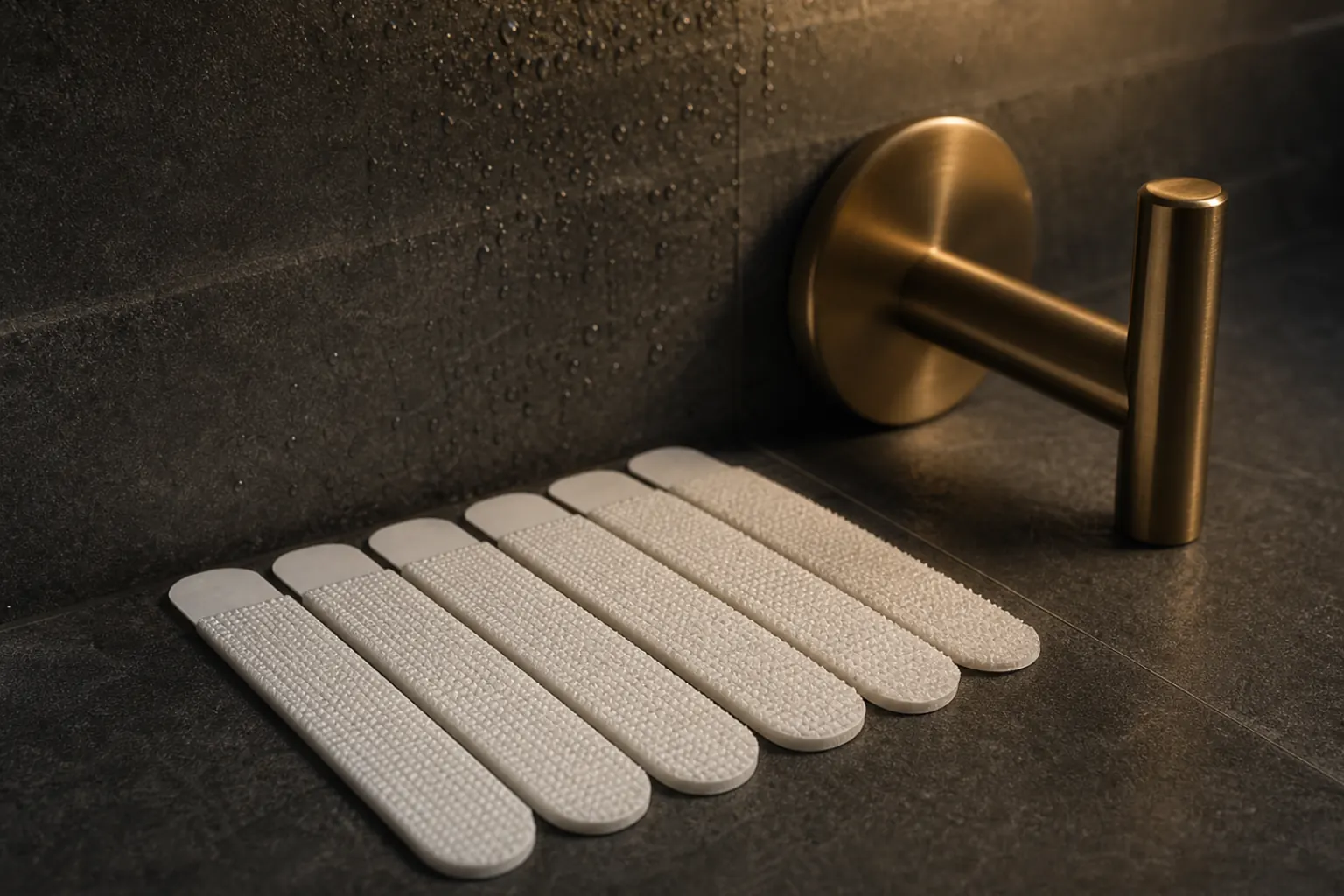
7. Choose a water-resistant strip for the humid zones
3M sells water-resistant refill strips specifically for this. In a room that steams daily, a standard indoor strip is being asked to do a job it was not specified for. When you re-hang something in a bathroom, check whether the replacement strips in the pack are the water-resistant kind rather than assuming every refill is equivalent.
8. Let textiles carry the colour
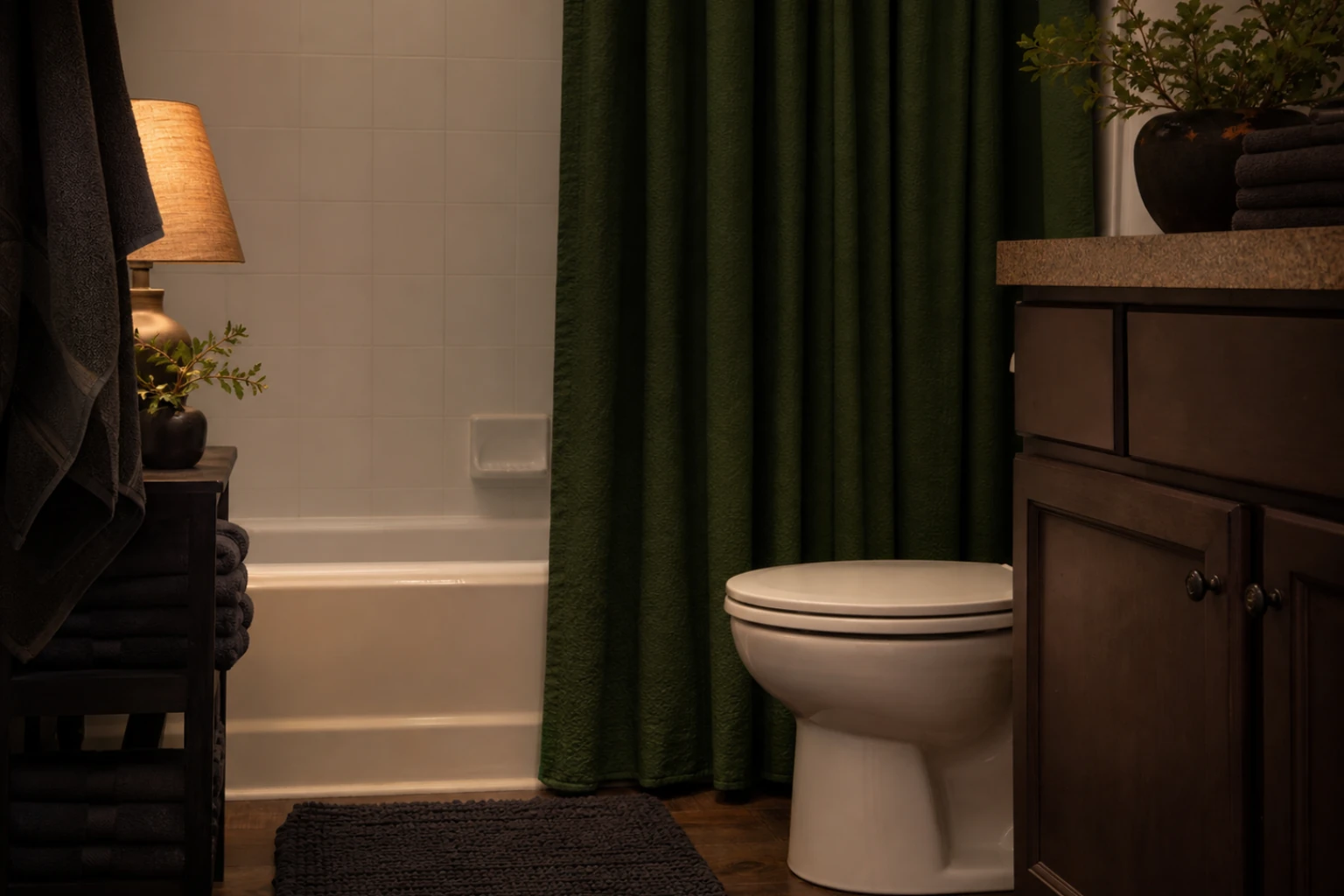
A dark towel, a deep bath mat, and a shower curtain in a saturated colour change a bathroom more than anything you can mount to the wall, and they leave with you. This is also the cheapest way to test a dark scheme before committing to anything permanent. If the room feels closed in rather than cocooned, swap the textiles instead of undoing hardware.
There is a practical test for a dark bathroom before spending anything. Hang the darkest towel you already own on the back of the door, turn off the overhead light, and switch on whatever small lamp you can borrow from another room. If the space reads as calm in that rough state, the scheme will work once it is done properly. If it reads as a cupboard, the room is telling you it wants contrast rather than depth, and no amount of correct hardware fixes that.
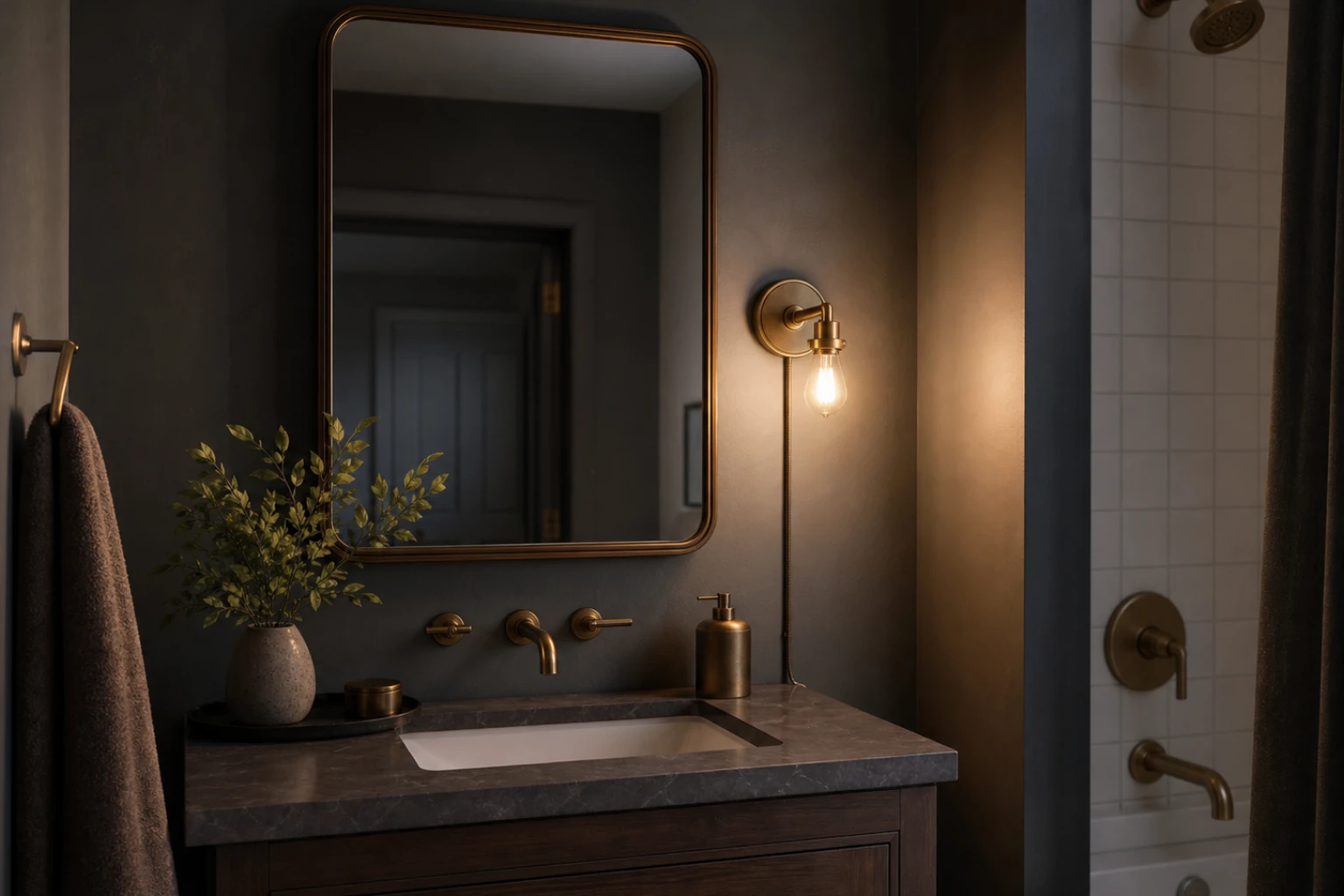
9. Add warm light at face height
Overhead bathroom light is usually a single bright fixture that flattens everything and makes a dark wall look grimy rather than moody. A small warm light nearer face height, in a genuinely dry spot and approved for the location, does more for the room than any paint colour. Keep the cord out of the splash area and off the floor where it can sit in water.
The rule that decides every bathroom fitting
Weigh the thing wet. Decide which zone it lives in. Then pick a mount rated for that weight and strips specified for that much moisture. If any of the three is unknown, put the object on the floor, on a freestanding shelf, or over the door on a rail that hooks rather than sticks.
One more habit worth building. Every mount in a bathroom is on a slow clock, because heat and humidity work on adhesive in a way that a bedroom wall never does. Check the hooks and the caddy once a month by lifting gently rather than waiting for something to fall into the tub. A strip that has begun to release gives way under a light pull long before it fails on its own, and re-hanging one hook on a quiet afternoon costs nothing compared to replacing a bottle of shampoo and a chipped tile.
None of this is about restraint for its own sake. A dark bathroom that stays intact for the length of a tenancy is a better room than a dramatic one that sheds hardware every few weeks, and the difference between the two is almost entirely a matter of reading the ratings before buying rather than after.
The finished-rental rule: in a bathroom, rate for the wet weight and the wet zone, not the dry ones. For the same logic on ordinary walls, read the no-paint wall guide. For lighting that suits a dark room, see the warm lighting guide, browse renter upgrades, or visit all articles.