
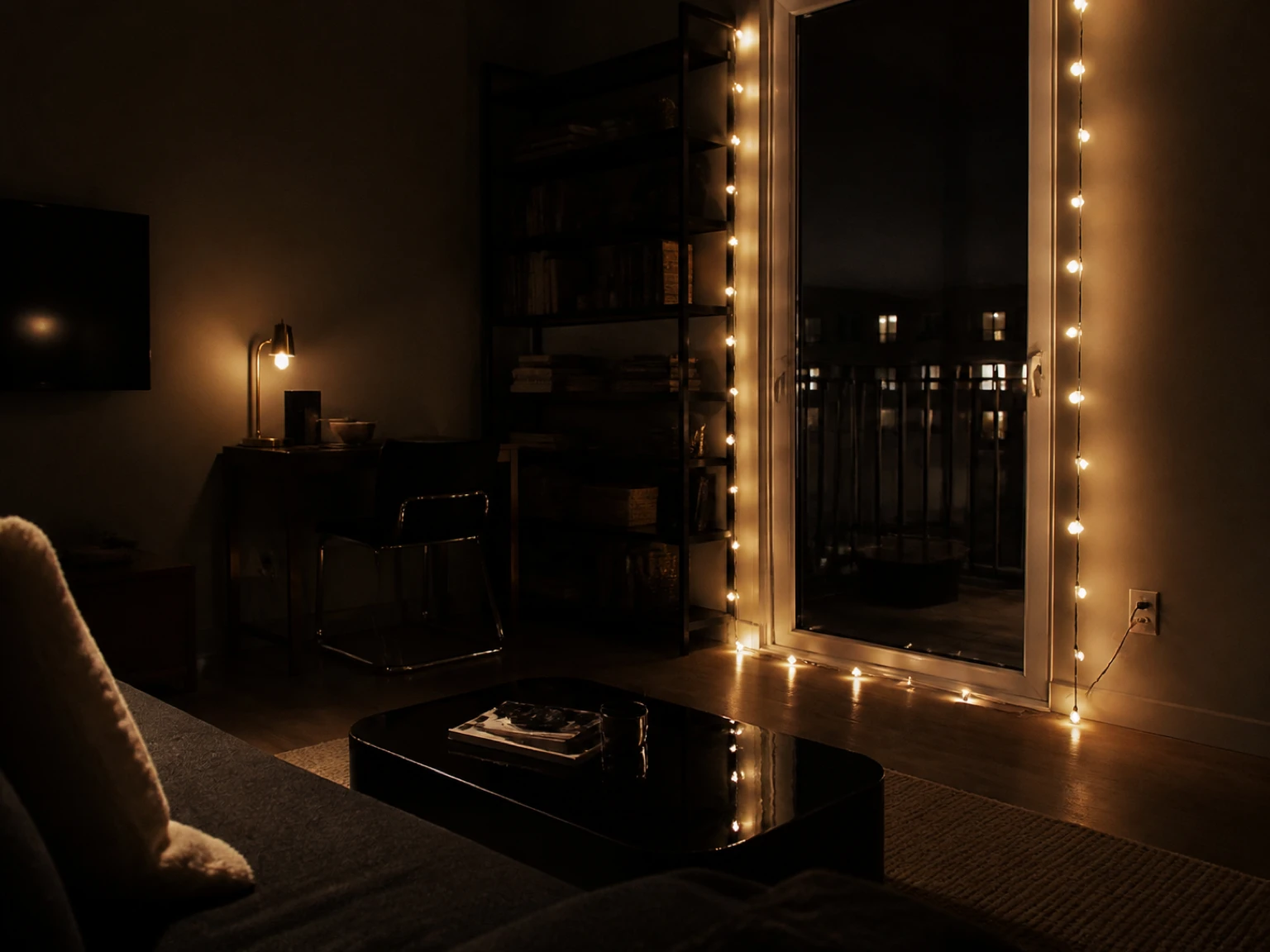
String lights give a rental warm light with little effort. They soften a hard corner, outline a headboard, or bring a gentle glow to a shelf. Many renters put them up once and leave them in place through every season.
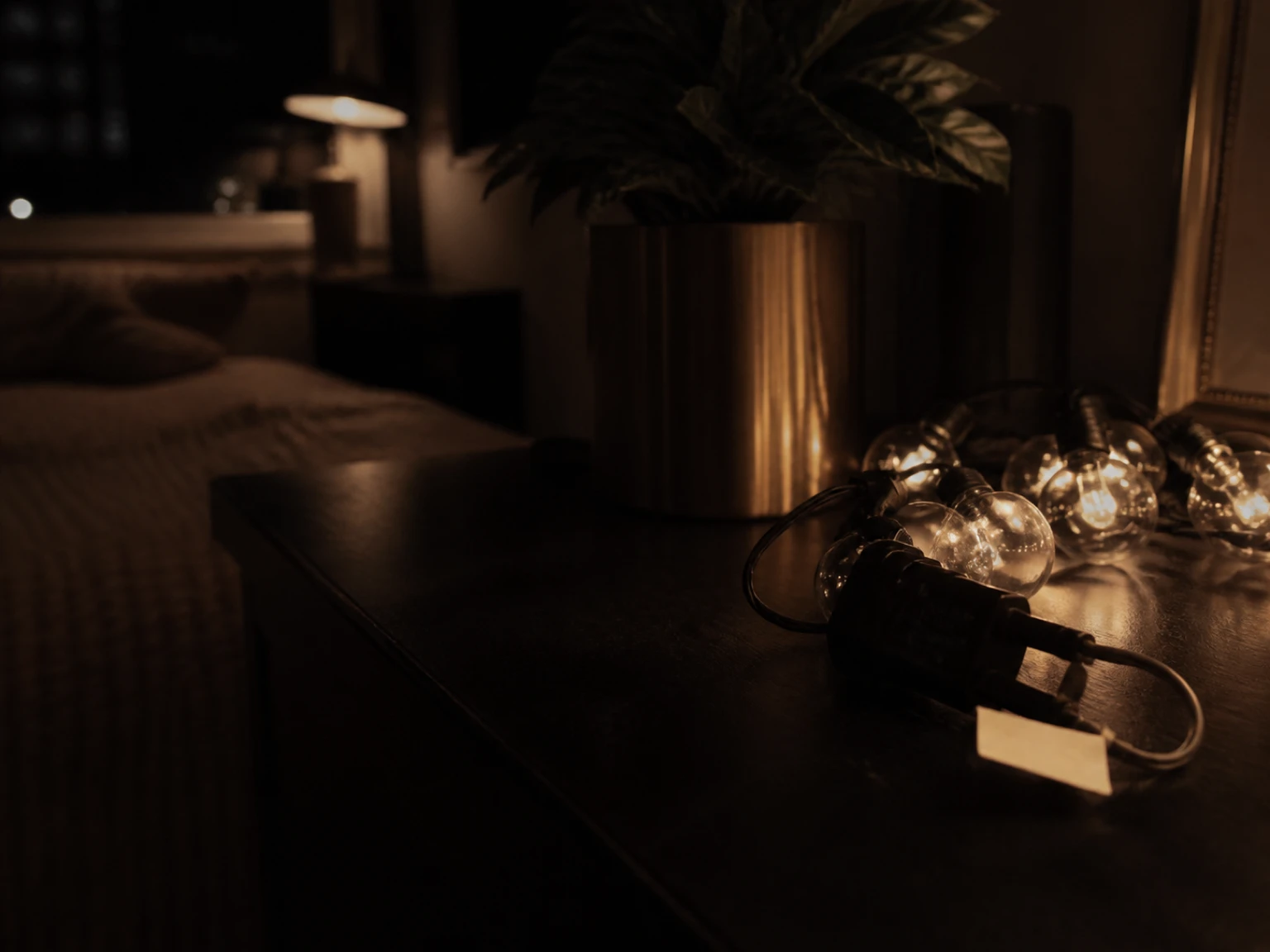
The tag near the plug deserves attention before the string becomes part of the room. It can identify a seasonal decorative product or a string made for year-round use. Its colour can also show whether the product belongs indoors or can go outdoors.
Read that tag while the string is still easy to move. Then choose its home and its length of service from the mark. This small check keeps a simple decor purchase matched to the way the room uses it.
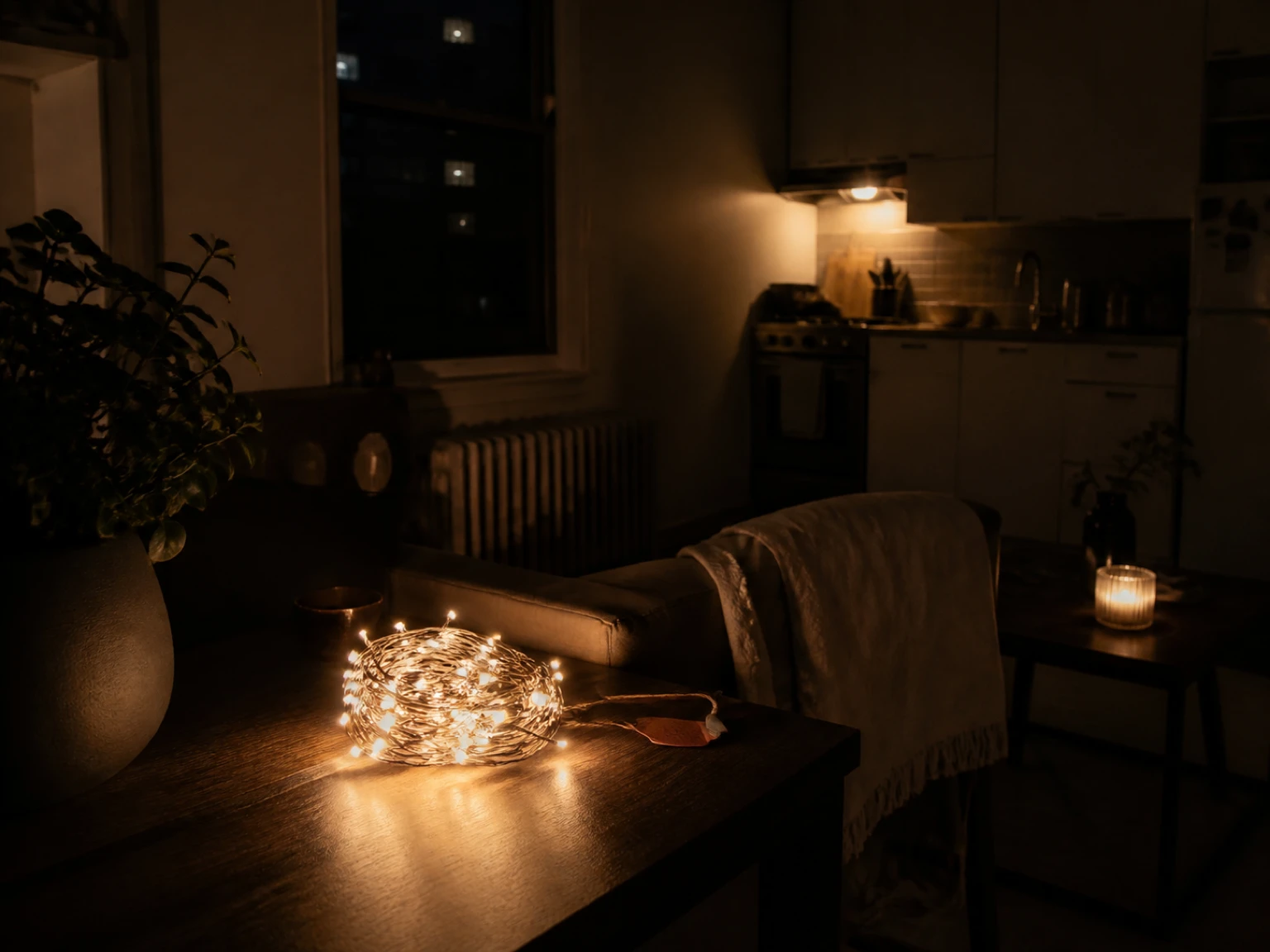
Start with the product category
Seasonal strings carry a narrow purpose
UL Solutions evaluates seasonal decorative lighting strings under UL / ANSI 588. The standard covers seasonal and holiday decorative lighting. That language gives the renter the key distinction: a decorative string can look suitable for a bedroom while its certification still describes seasonal use.
UL also calls this field Seasonal Use Decorative-Lighting Products in its certification material. The phrase belongs to the product category. It tells you how the string was evaluated, which makes it more useful than a styled package photo or a familiar bulb shape.
For strings certified for temporary use, the electrical code puts decorative holiday lighting at up to 90 days. A renter who wants lights above the bed through every season should treat that limit as a reason to check for the year-round category before hanging them.
Seasonal certification still serves a clear decorating purpose. Use that string for the seasonal period described by its mark. Keep the tag with the cord, and take the lights down when that period ends. The label makes the end point part of the decor plan.
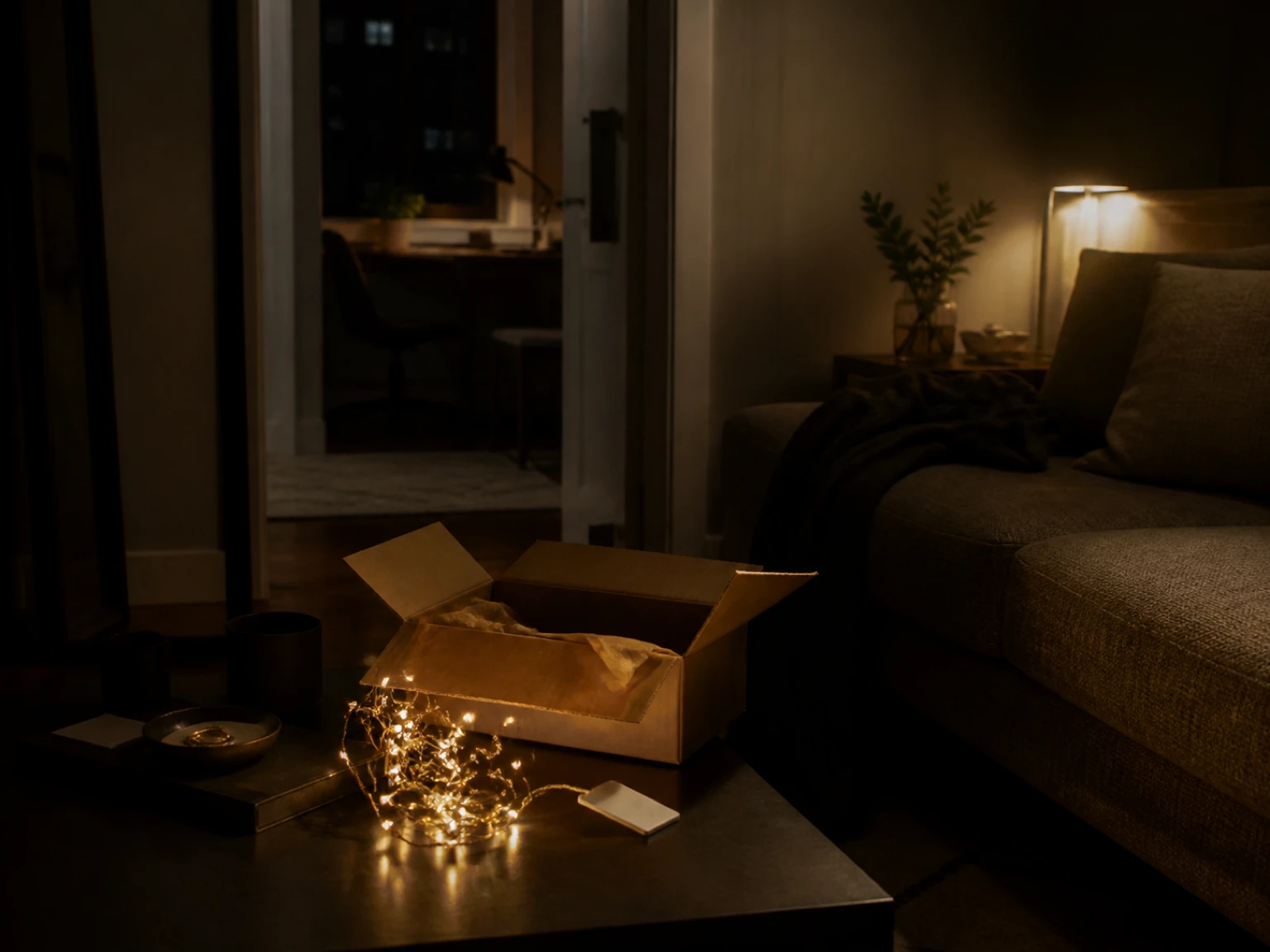
Year-round strings use a different supplement
A lasting installation calls for the year-round supplement to the same standard. Supplement SD covers factory-assembled, parallel-connected string lights intended for year-round use. A product in that category speaks directly to the way renters often use string lights as everyday room lighting.
Under Supplement SD, a year-round string must use a maximum input voltage rating of 120 V. The technical detail belongs on the maker's side of the product. For the renter, the useful action stays simple: find the mark for year-round use and follow its directions.
Keep the label visible until the room plan is settled. A tag hidden behind a cabinet becomes hard to check when furniture moves. Coil spare cord according to the product directions, and place the plug where the label can remain available without becoming part of the display.
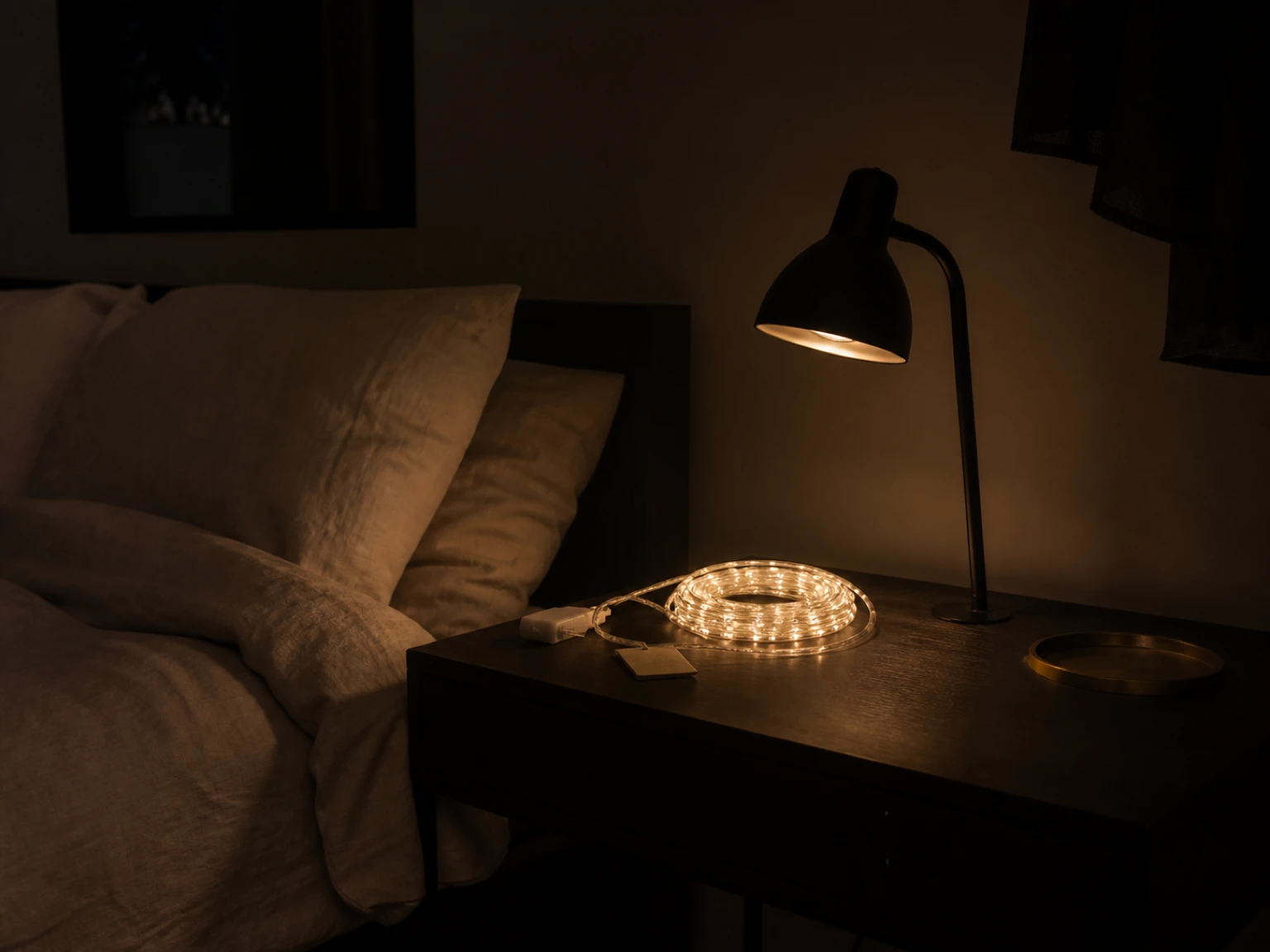
Use the label colour to choose the location
Green stays indoors
UL Solutions uses a green holographic label for an indoor-use-only certified light string. Choose that mark for a dry interior setting that fits the maker's directions. A bedroom wall, a bookcase, or a sheltered reading corner can then be judged against the full label.
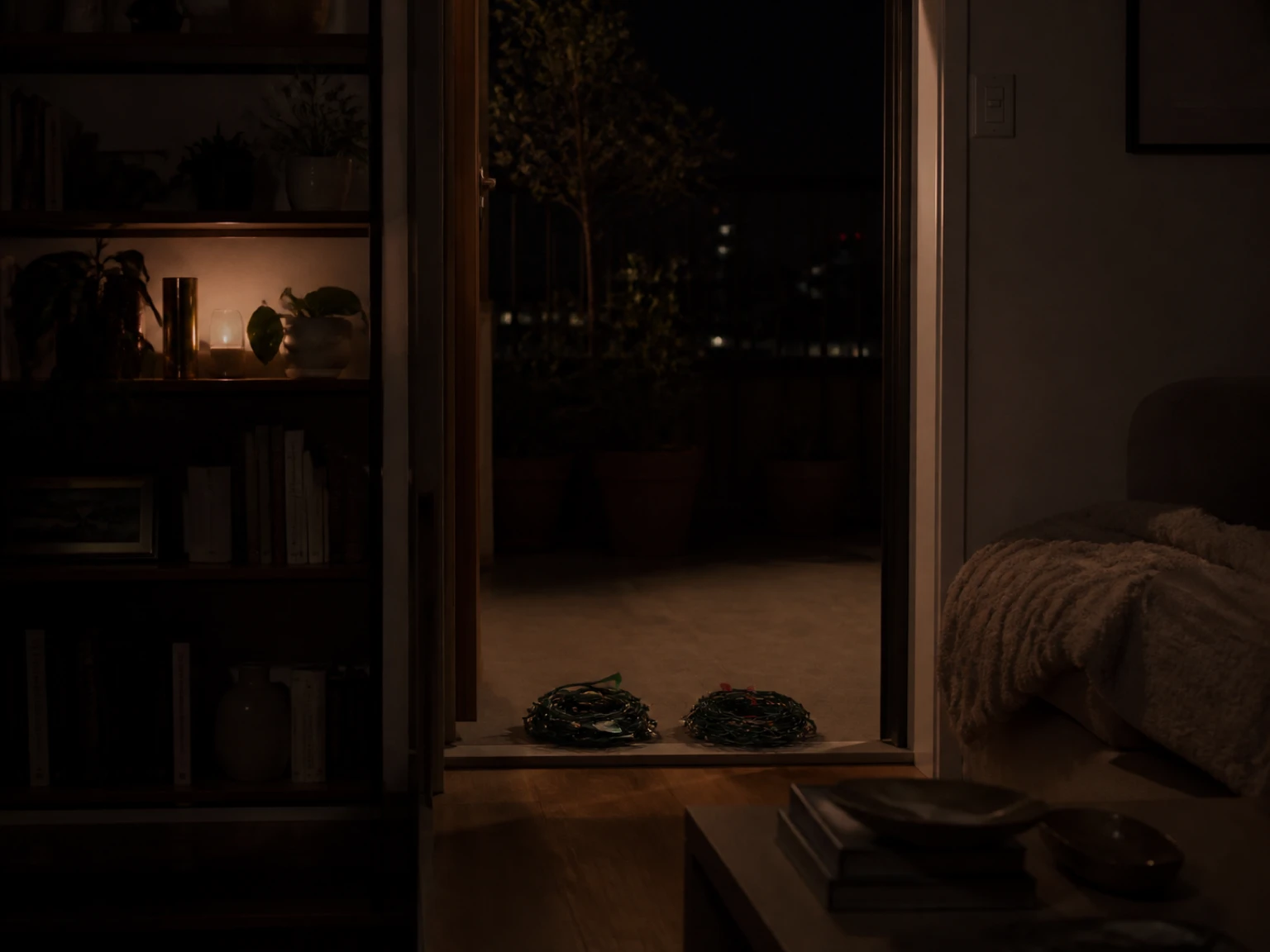
Do not read green as a style cue. It carries location information. Keep an indoor string inside even when a balcony door sits nearby or the covered patio looks protected. The product category follows the marked use, not the room's visual connection to outdoors.
The colour check works well before any hooks go onto the wall. Lay the string near its planned route, find the label, and confirm that indoor placement agrees with it. This order prevents a finished arrangement from deciding the product's use by accident.
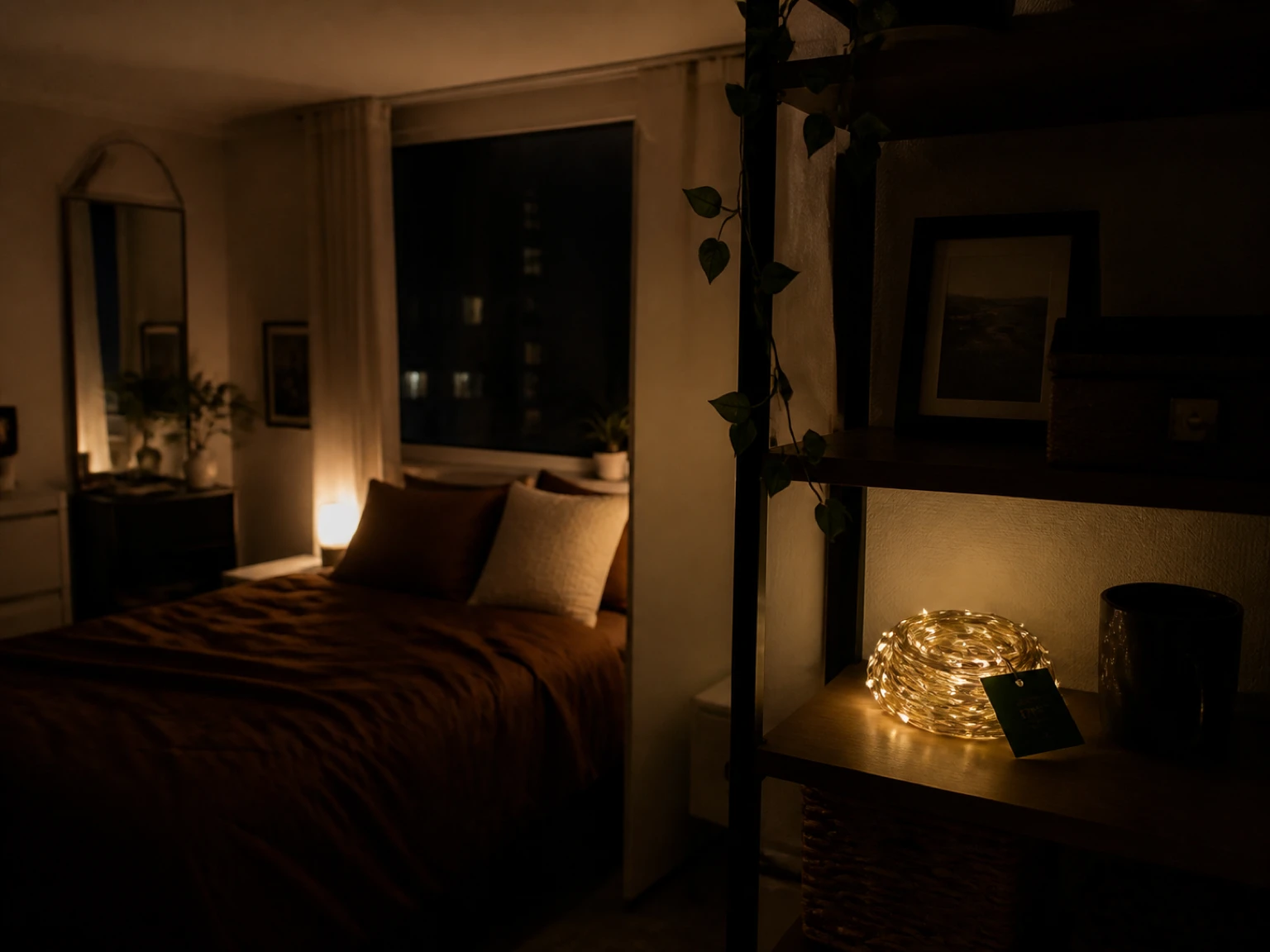
Red can move outdoors
A red holographic label from UL Solutions marks a certified indoor-or-outdoor light string. The mark gives a renter more placement range, subject to every direction on the product. Read the whole tag before choosing a balcony rail, patio edge, or interior wall.
Outdoor suitability does not answer the separate question about seasonal or year-round use. Check the location mark and the use category together. A red tag can guide where the string goes, while the category tells you how the product fits the calendar.
Bring the tag into good light and look at it directly. Colour can appear different in a dim room or through tinted packaging. If the mark remains unclear, keep the string out of the plan until the maker's information gives a firm answer.
Know what the listing mark tells you
Use the mark as an entry check
The UL Listing Mark means its engineers evaluated and tested representative product samples for stated hazards. The mark gives shoppers a practical certification screen. It does not replace the use details elsewhere on the tag, so continue reading after you find it.
Look for a clear mark on the product or its attached label. Keep the packaging during setup when it carries related directions. A listing mark with no readable use category still leaves the main decor question open: whether this string suits the place and duration you planned.
When shopping online, save the maker's product information until the lights arrive. Then compare that description with the label on the physical string. The attached mark controls the final placement decision because it travels with the product in your room.
Match the string to the room
Plan the home before the route
Decide whether the lights are seasonal decor or part of the room's regular lighting. Then decide whether their home is fully indoors or includes an outdoor space. These decisions narrow the label you need before colour, bulb style, or cord finish enters the choice.
For a bedroom, use the label check before choosing no-damage supports. The <a href="/articles/no-damage-curtain-and-lighting-ideas/">no-damage curtain and lighting guide</a> can help with a reversible route after the product itself fits the use. Keep the tag accessible when fabric or furniture sits nearby.
In a darker room, let the string support the broader light plan. The <a href="/articles/warm-lighting-ideas-small-room/">warm-lighting guide</a> helps place gentle accent light among useful lamps. The label remains the boundary for location and duration, while the room guide handles mood and balance.
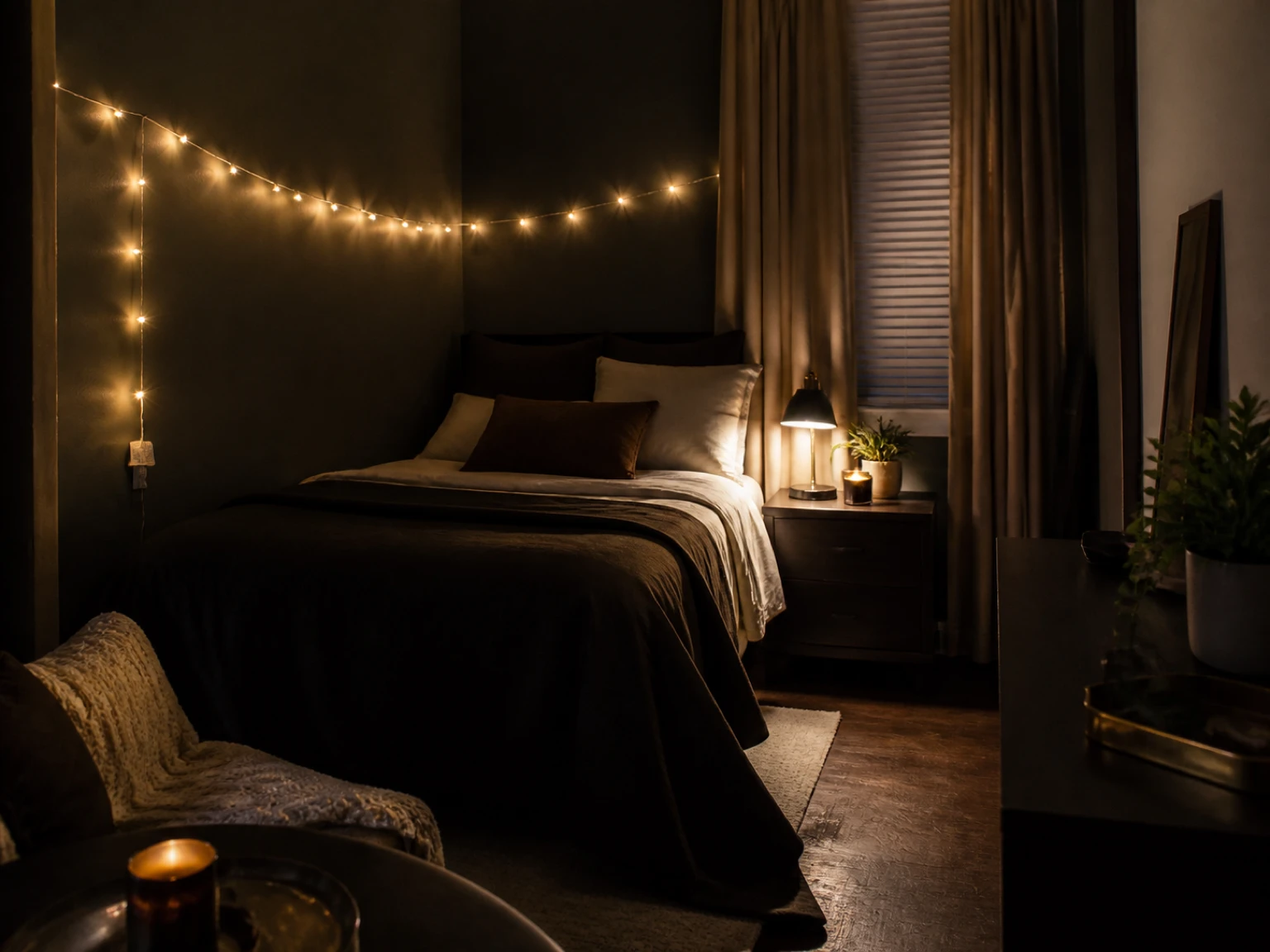
A moody bedroom can use string lights as a soft edge around another light source. See the <a href="/articles/moody-small-bedroom-ideas/">moody bedroom guide</a> for placement ideas that keep the room calm. Choose the light string from its mark before matching it to the room's colours.
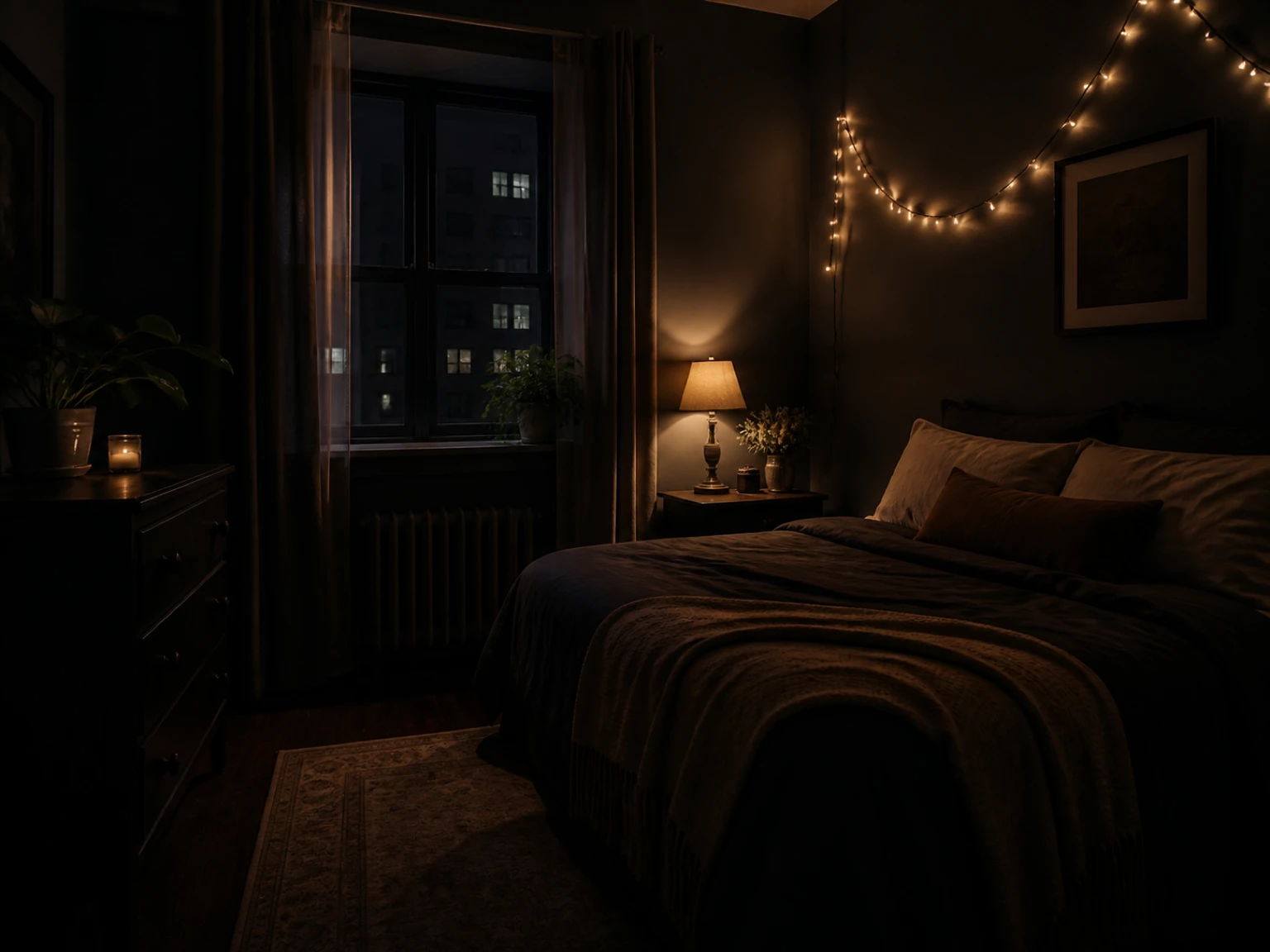
Keep the answer with the product
Leave the label attached unless the maker directs otherwise. Tuck it where it stays readable and does not sit under strain. When the lights move to another room, read the label again before choosing the new route. A familiar product can enter a different use after a move.
Store seasonal strings with their labels and directions. When they return to the room, the category and location marks remain available. This habit also helps housemates understand which string belongs indoors and which product can serve an outdoor setting.
If a label is damaged or missing, retire the string from the room plan until its intended use can be confirmed from the maker. A replacement with a clear mark makes future placement easier and keeps the decision attached to the product.
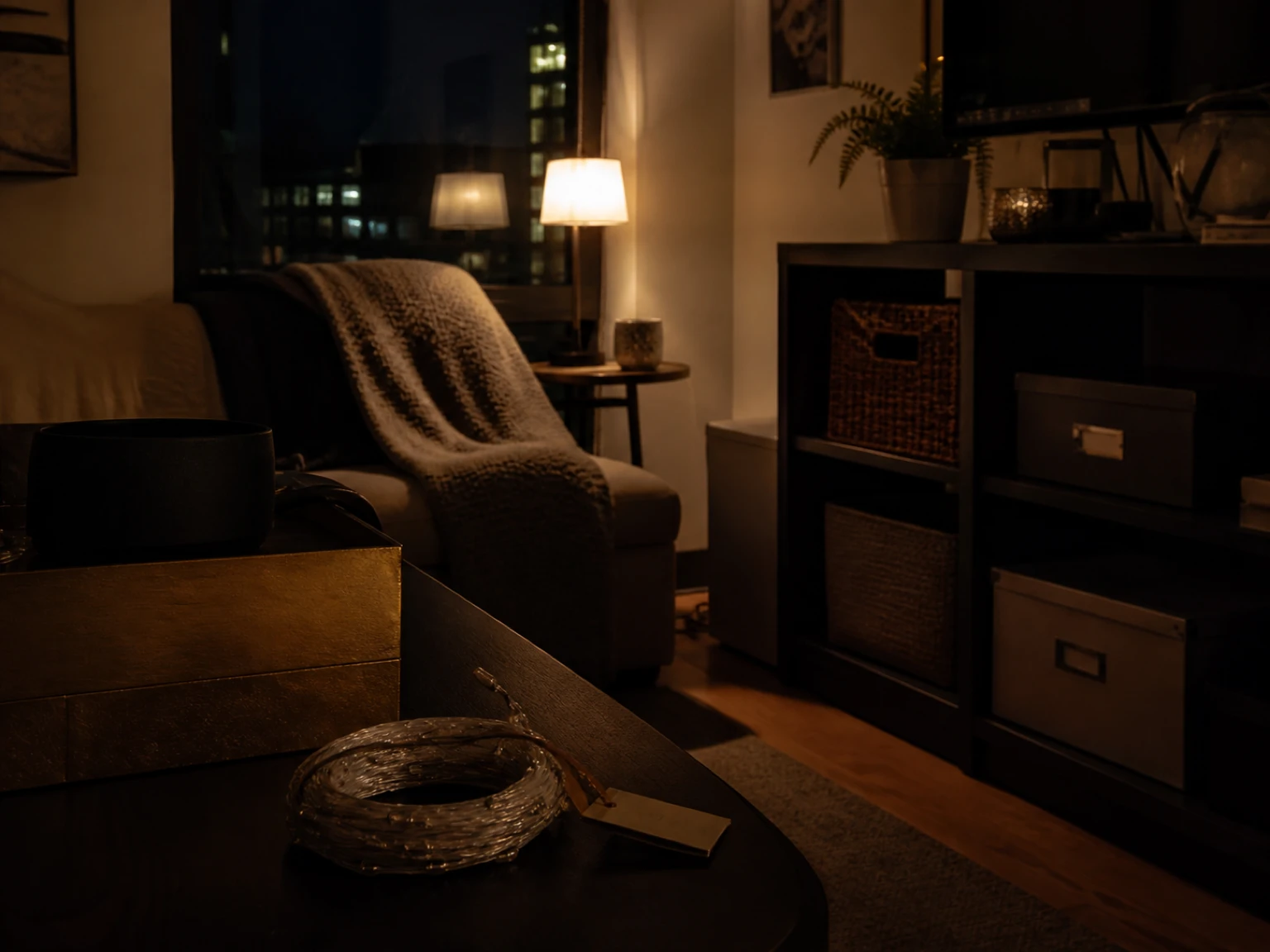
Warm string lights can remain an easy rental upgrade when the mark leads the decision. Read the use category, check the location colour, and keep the label with the cord. The room can then enjoy the glow within the purpose printed on the product.
Before the lights go up: decide whether they will serve a seasonal display or a lasting room setup. Find the use category and the green or red location mark. Confirm that both fit the planned home, keep the tag readable, and follow the maker's directions before mounting the string.